How to Burn Body Fat With Sustainable Nutrition
TL;DR
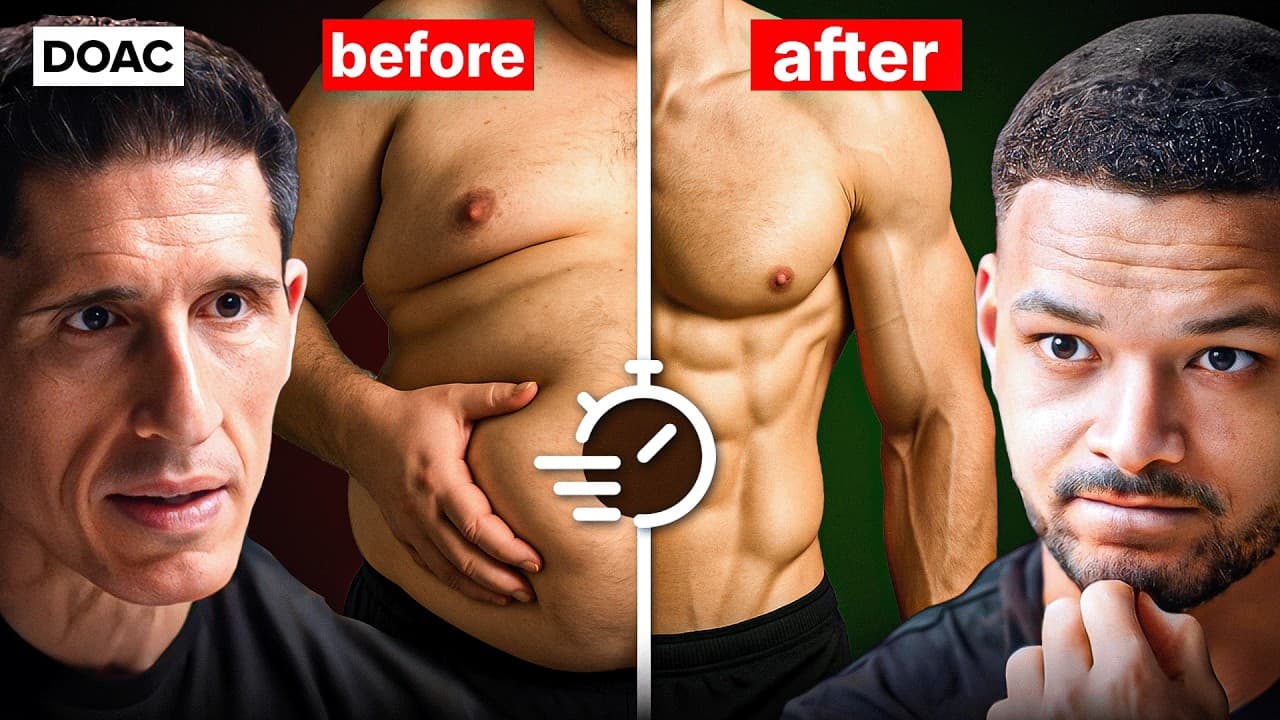
Start fat loss by removing obvious dietary problems, then maintain a calorie deficit while prioritizing protein and controlling portions of calorie-dense fats and easily overeaten carbohydrates. Lower belly fat cannot be targeted with sit-ups, so reducing it requires consistent nutrition long enough for overall body fat to fall.
Transcript
So let's start with fat and lean. If I want to be lean like you and I want to have low body fat. Where does one begin? What happened with me and what I always advise people to do is start just by looking at globally from 30,000 foot view. What do you know you're doing in like not well right now? Like are you drinking excessively? Um do you end ever... Read More
Key Insights
- Fat loss begins with identifying obvious dietary problems, such as excessive alcohol, nightly ice cream, or other habits a person already knows are unhelpful. Correcting the largest offenders for a few weeks can create noticeable early progress before a more detailed nutrition plan is needed.
- Carbohydrates are not inherently excluded from a fat-loss diet, but their portions require careful attention because rice and pasta can be easy to overeat. A person may select acceptable foods yet still prevent progress by consuming much larger servings than they realize.
- Foods marketed or perceived as healthy can contain substantial sugar. Flavored oatmeal packets and fruit-on-the-bottom yogurt are examples given where added sugar can make the product very different from plain oatmeal or a lower-sugar yogurt, despite its healthy image.
- Dietary fat is calorie dense, providing nine calories per gram compared with four calories per gram for protein or carbohydrates. Meals containing significant fat can therefore increase in calories quickly, which matters when the goal is consuming fewer calories than the body burns.
- Protein can support fat loss by improving fullness and helping maintain a favorable balance between lean muscle and fat. Prioritizing protein at every meal can make a person feel satisfied sooner than eating a meal based mainly on carbohydrates.
- Consistency can make an imperfect workout schedule workable. Training late at night was described as optimal only because it was the time that could be maintained reliably, showing that a repeatable routine may be more practical than an ideal schedule that conflicts with daily responsibilities.
- Sleep routine is presented as more important than focusing only on total sleep time. Eating close to bedtime may coincide with a higher overnight resting heart rate, while establishing a regular cutoff for food can support a more consistent bedtime routine.
- Lower belly fat cannot be reduced selectively through sit-ups. The abdomen may be the first place men gain fat and the last place they lose it, so removing the remaining pouch requires sustained overall fat loss rather than exercises directed only at the stomach.
Install to Summarize YouTube Videos and Get Transcripts
Explore YouTube Video Summarizer or Get YouTube Transcript Extractor
Questions & Answers
Q: How should someone begin losing body fat?
Begin by reviewing your current habits from a broad perspective and identifying the problems you already recognize. Excessive drinking, nightly ice cream, sugary foods, or consistently oversized portions may be the largest offenders. Remove or reduce those habits for a couple of weeks and observe the result. This first pass can produce quick weight loss and establish a practical starting point without immediately creating a complicated diet.
Q: What should you check on a food label for fat loss?
Check protein, sugar, and fat when reading a food label. Protein is useful because it supports fullness and the balance between lean muscle and fat. Sugar is often unnecessary and can make food difficult to stop eating. Fat deserves attention because it contains nine calories per gram, while protein and carbohydrates contain four, so fat can raise a meal's calorie content quickly.
Q: Do carbohydrates need to be eliminated to lose fat?
Carbohydrates do not need to be eliminated, and foods such as rice, pasta, oatmeal, and sweet potatoes can have a place in the diet. The main concern is portion size because carbohydrate-rich foods may be easier to overeat than foods such as steak. A healthy respect for portions helps prevent an otherwise reasonable meal from supplying more calories than intended.
Q: Which apparently healthy foods can contain hidden sugar?
Flavored oatmeal packets and fruit-on-the-bottom yogurt can contain more sugar than people expect. The transcript describes packaged oatmeal with brown sugar as substantially different from plain oats in a canister, even though both appear to be oatmeal. Sweetened yogurt presents a similar problem. Checking the sugar content helps distinguish a genuinely suitable choice from a product made more appealing through added sugar.
Q: Why is protein prioritized during fat loss?
Protein is prioritized because it can improve satiety and support a better ratio of lean muscle to body fat. A protein-rich food may help someone feel full sooner than a meal built mainly around carbohydrates. The sample diet places protein in every meal through foods such as egg whites, protein shakes, grilled chicken, Greek yogurt, steak, fish, and edamame.
Q: Can sit-ups remove stubborn lower belly fat?
Sit-ups cannot selectively remove fat from the lower abdomen. The stated solution is sustained nutritional consistency that reduces overall body fat. For men, the lower belly may be the first area where fat accumulates and the last area where it disappears. Continued fat loss may reveal upper abdominal definition first, while the lower pouch remains until a leaner overall condition is reached.
Q: Is working out late at night effective for fat loss?
A late workout can still be useful when it is the time a person can follow consistently. The example schedule places training around 10:30 or 11 at night because work and family responsibilities make earlier sessions difficult. The timing was described as optimal only in the practical sense of being sustainable, even though an earlier workout would be preferred if daily obligations allowed it.
Q: How can late eating affect sleep and recovery?
Eating close to bedtime was associated with a higher resting heart rate during the night on a sleep tracker, suggesting that the body was still working on the meal instead of fully settling into recovery. Setting a goal not to eat after 9:00 p.m. may help establish a more regular bedtime. The broader recommendation is to prioritize a consistent sleep routine.
Summary & Key Takeaways
-
Sustainable fat loss begins with an honest review of obvious dietary problems, such as excessive drinking, nightly ice cream, added sugar, or oversized portions. Removing the largest offenders for several weeks can produce quick initial progress while revealing which everyday habits were contributing most heavily to excess calorie intake.
-
Food labels become more useful when checked for protein, sugar, and fat. Protein supports fullness and a better ratio of lean muscle to fat, while added sugar can encourage continued eating. Dietary fat requires attention because it contains nine calories per gram, compared with four for protein or carbohydrates.
-
Lower belly fat cannot be removed through sit-ups or other exercises aimed at that area. For men, the abdomen may be the first place fat appears and the last place it disappears. Reaching greater leanness therefore depends on sustained dietary consistency and may also make the face and neck look leaner.
Read in Other Languages (beta)
Share This Summary 📚
Summarize YouTube Videos and Get Video Transcripts with 1-Click
Try YouTube Summary with ChatGPT & Claude or YouTube Transcript Generator
Explore More Summaries from The Diary Of A CEO Clips 📚






Summarize YouTube Videos and Get Video Transcripts with 1-Click
Try YouTube Summary with ChatGPT & Claude or YouTube Transcript Generator