How to Improve Sleep with 5 Simple Rules
TL;DR
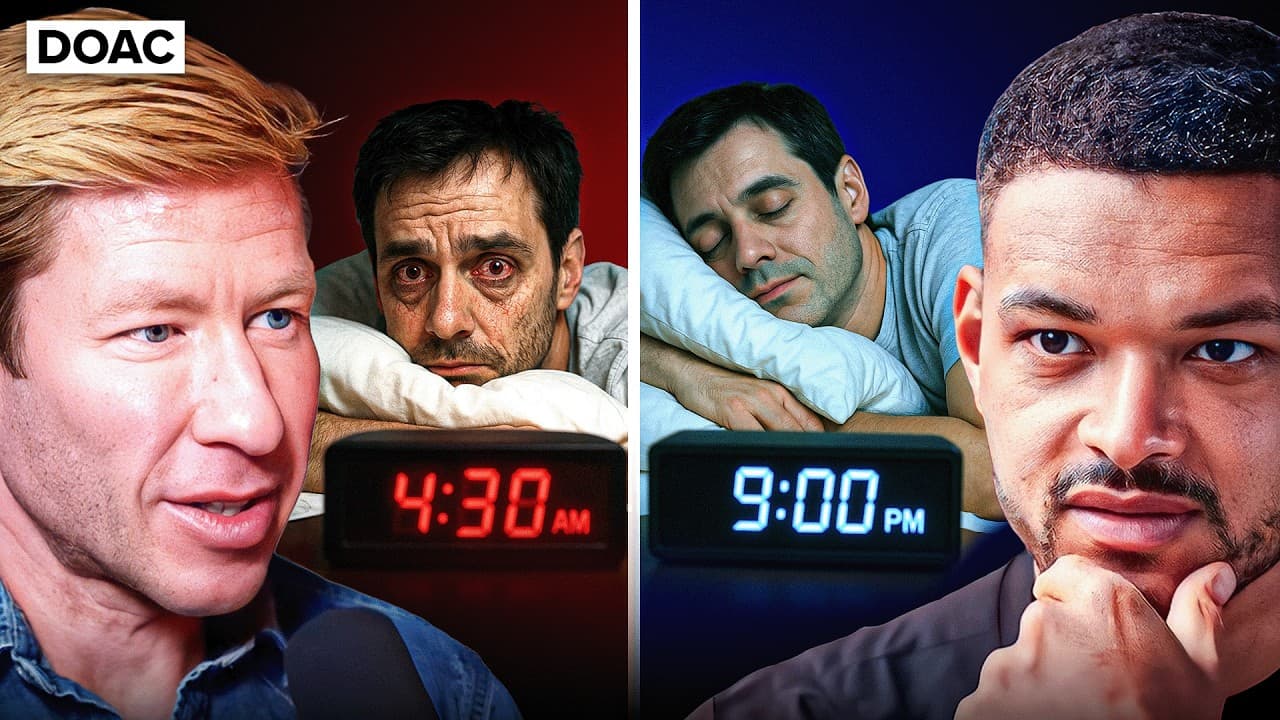
Regular sleep timing and a dark, cool bedroom improve sleep quality. Avoid late device use and alcohol close to bedtime, and limit caffeine. If you wake up, stand up and move rather than lying awake. These practices support deeper sleep and better overall health.
Transcript
my question is what are the things that in the modern society are standing in the way of sleep we've touched on some of them loosely but some of the like big obvious things the things that you would suggest doing very actionable things we could do straight away to improve our chances of having that healthy um deep sleep that we need to be um optima... Read More
Key Insights
- Regularity is essential for sleep. Going to bed and waking up at the same time every day trains the brain to recognize when to sleep, improving both quantity and quality of sleep.
- Darkness signals the brain that it is nighttime. Reducing light in the hour before bed acts as a behavioral cue that sleep is near, promoting easier sleep onset.
- A cooler bedroom around 18 degrees Celsius helps drop core body temperature, facilitating faster sleep onset and deeper sleep.
- Limiting or avoiding caffeine late in the day is important because it can delay sleep onset and fragment sleep, reducing sleep quality.
- Alcohol is not a true sleep aid. It can cause sleep fragmentation and reduce REM sleep, leading to a less restful night.
- Blue light from screens delays melatonin release, reduces total sleep, and weakens REM sleep, which impacts overall sleep health.
- Even if you use features like dark mode, the attention capture of devices can still delay sleep by keeping the brain active and delaying sleep onset.
- If you must use a device in the bedroom, standing use for short periods can discourage prolonged lighting and engagement, helping prevent sleep procrastination and early sleep disruption.
- More videos from this channel:
- More from this channel: The Diary Of A CEO Clips
Install to Summarize YouTube Videos and Get Transcripts
Explore YouTube Video Summarizer or Get YouTube Transcript Extractor
Questions & Answers
Q: What is the first step to improve sleep according to the video?
The first step is establishing regularity by going to bed at the same time and waking up at the same time every day, including weekends. This consistency trains the brain to expect sleep at a predictable schedule, which can increase the amount of sleep you get and improve its quality. Regular timing helps synchronize your circadian rhythm and supports better overall sleep health.
Q: Why is darkness in the hour before bed important?
Darkness in the last hour before bed signals to the brain that it is time to wind down. Reducing light exposure, including dimming or turning off lights, helps the body prepare for sleep. This behavioral cue can increase sleepiness and improve the timing of sleep onset by reinforcing the natural night signal that melatonin and other sleep mechanisms rely on.
Q: What role does room temperature play in falling asleep?
Room temperature plays a critical role because a cooler environment helps drop core body temperature, which signals the brain to initiate sleep. The recommended range is cool enough to feel comfortable yet chilly, around 18 degrees Celsius, which helps you fall asleep faster and stay asleep more solidly by supporting deeper sleep phases.
Q: What is the recommended response if you wake up during the night?
If you wake up during the night, the video recommends a walking or short activity approach instead of lying in bed and worrying. The idea is to gently reset your brain and body, avoid sleep anxiety, and then return to bed when sleepy. This practice reduces sleep fragmentation and improves overall sleep quality over time.
Q: How does caffeine affect sleep according to the video?
Caffeine timing matters because consuming caffeine late in the day can delay sleep onset and reduce sleep depth. By avoiding caffeine close to bedtime, you minimize the risk of delaying melatonin release and disrupting the natural sleep cycle, leading to a more consistent and restorative night’s sleep.
Q: What does the video say about alcohol and sleep?
The video states that alcohol is not a sleep aid. It acts as a sedative that can knock you out initially but fragments sleep later and reduces REM sleep. This leads to poorer sleep quality, more awakenings, and a less refreshing sleep overall, even if you feel sleepy at first.
Q: What is the effect of blue light from screens on sleep?
Blue light from screens delays melatonin release, reduces total sleep time, and decreases REM sleep, which can significantly disrupt sleep quality. Reading on a device before bed can push sleep onset later by up to about two hours and reduce the amount of sleep you obtain, according to the cited study.
Q: What is the standing rule for device use in the bedroom mentioned in the video?
The video mentions a standing rule for device use in the bedroom: if you must bring your phone into the bedroom, you should use it while standing for six to seven minutes. After that, you will likely choose to sit or lie down, at which point you should put the device away to prevent sleep procrastination and late-night engagement.
Summary & Key Takeaways
-
A cave like bedroom with a cool temperature signals the body to sleep and helps you fall asleep faster while maintaining steady sleep through the night. Regular bed and wake times train your brain to expect sleep at a predictable schedule. Dim lighting before bed reinforces the body clock and lowers wake signals.
-
Limiting bright screens and blue light before bed reduces delays in melatonin release and supports quicker sleep onset. Reading on a device delays sleep and reduces REM, so create a screen-free wind down or use standing use rules if devices must be present in the room.
-
A wakeful activity plan helps when you lie in bed awake. A 30 minute rule or similar routine encourages movement or mindful activity to reset the brain, reducing sleep fragmentation and improving overall sleep quality.
Read in Other Languages (beta)
Share This Summary 📚
Summarize YouTube Videos and Get Video Transcripts with 1-Click
Try YouTube Summary with ChatGPT & Claude or YouTube Transcript Generator
Explore More Summaries from The Diary Of A CEO Clips 📚






Summarize YouTube Videos and Get Video Transcripts with 1-Click
Try YouTube Summary with ChatGPT & Claude or YouTube Transcript Generator