How Could Water Scarcity Trigger Global Conflict?
TL;DR
Water scarcity is framed as the next major geopolitical flashpoint, potentially eclipsing oil. The analysis links semiconductor supply chains to global trade, highlights where wars are likely to erupt, and explains how aging populations, migration, and immigration policies could heighten domestic tensions. The discussion also examines Iran as a potential disruptor of global trade and its possible escalation.
Transcript
So this is a summary of the global supply chain network and we can see how it involves the entire world. You are not able to build semiconductors unless you have a globalized economy. So there's been a lot of talk about China controlling the elements, right? So, China manufactures about uh 70% of the world's silicon and rare earths. China controls ... Read More
Key Insights
- Water scarcity is identified as the next major geopolitical flash point that could trigger conflicts within 20 years.
- Semiconductors rely on a globalized economy and resource inputs like helium and quartz, linking tech progress to international trade stability.
- China's dominance in silicon and rare earths is counterbalanced by its need for imported helium, illustrating interdependencies in manufacturing ecosystems.
- A North-South divide is used to explain food security and fertilizer production differences, with the North supplying the South.
- Fertility rates in Africa and the Middle East are cited as drivers of migration toward Europe, potentially fueling domestic tensions in Western countries.
- Robots cannot fully replace human labor due to supply chain limitations for copper, lithium, silicon, and rare earths, making immigration a cheaper option in crisis times.
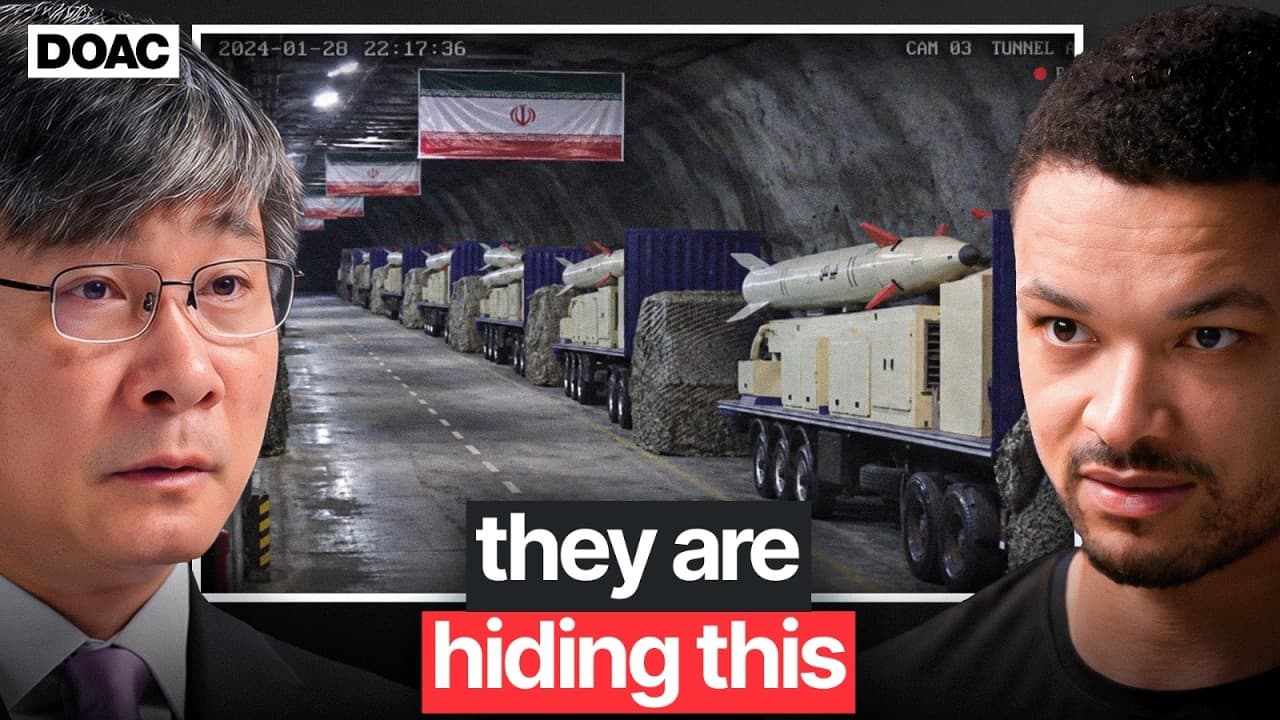
- Iran could play a pivotal role by attempting to disrupt global trade, prompting a US response that might target Iran’s critical infrastructure rather than ships alone.
- The overall argument predicts escalation rather than a simple resolution, with the US potentially forced to act in ways that could have civilization-scale impacts.
- More videos from this channel:
- More from this channel: The Diary Of A CEO Clips
Install to Summarize YouTube Videos and Get Transcripts
Explore YouTube Video Summarizer or Get YouTube Transcript Extractor
Questions & Answers
Q: What is the main driver of future global conflict according to the video?
The main driver is water scarcity, which is expected to become a major geopolitical flash point over the next 20 years. The analysis argues that water stress can spark political violence, migration, and international competition as nations contend for limited fresh water resources, affecting global stability.
Q: How are semiconductors connected to global trade in the discussion?
Semiconductors depend on a globalized economy and inputs like helium, silicon, and rare earths. If nations halt trade, technology progress and semiconductor manufacturing could stall, showing how fragile the supply chains are and how geopolitical tensions can ripple across multiple sectors.
Q: What role does China play in the semiconductor supply chain according to the transcript?
China produces about 70 percent of the world’s silicon and controls about 70 percent of rare earths, illustrating a significant but not one-sided dependency. The speaker notes that while China exports these materials, it also relies on imports like helium for cooling during manufacturing.
Q: What is the significance of Spruce Pine, North Carolina in the discussion?
Spruce Pine is highlighted as a key source that controls about 90 percent of the world’s high quality quartz used in silicon manufacturing. This point emphasizes how a single region can exert outsized influence on global tech production and illustrates geopolitical risk from concentrated resources.
Q: Why does the speaker discuss North and South divisions in relation to food and water?
The speaker argues that the North dominates fertilizer production and food supply while the global South imports much of its fertilizer. This creates a structural dependency that could lead to famine or conflict if global trade is disrupted, reinforcing the idea that resource distribution drives geopolitical risk.
Q: What demographic factors are linked to potential conflict in the video?
Fertility rates are highest in Africa and the Middle East, which correlates with higher potential migration toward Europe. Aging populations in developed regions create pressure to accept more immigrants, potentially triggering domestic friction and political shifts that could influence security and policy responses.
Q: Why are robots deemed insufficient to solve labor shortages in the scenario presented?
Robots require inputs like copper, lithium, silicon, and rare earths that are sourced from distant regions. In a breakdown of global supply chains, automating labor may be unfeasible or too costly, making immigration a cheaper and more immediate solution to address labor shortages.
Q: What is the predicted risk involving Iran and global trade?
Iran is described as having a strategic option to disrupt global trade by targeting multiple chokepoints and actors. The discussion explains that such disruption would threaten insurance and shipping confidence, potentially triggering a U.S. response that could escalate to damaging Iran’s critical infrastructure, with wide humanitarian implications.
Summary & Key Takeaways
-
The talk connects global supply chains and semiconductor manufacturing to water and resource dependencies, showing how disruptions could cascade worldwide.
-
It identifies a map of likely conflict zones, emphasizing water scarcity as a trigger for geopolitical tensions over the next two decades.
-
It discusses demographic pressures, immigration, and technology as intertwined factors that could influence policy responses and risk of civil conflict.
Read in Other Languages (beta)
Share This Summary 📚
Summarize YouTube Videos and Get Video Transcripts with 1-Click
Try YouTube Summary with ChatGPT & Claude or YouTube Transcript Generator
Explore More Summaries from The Diary Of A CEO Clips 📚






Summarize YouTube Videos and Get Video Transcripts with 1-Click
Try YouTube Summary with ChatGPT & Claude or YouTube Transcript Generator