What Is the Real Health Cost of Drinking Alcohol?
TL;DR
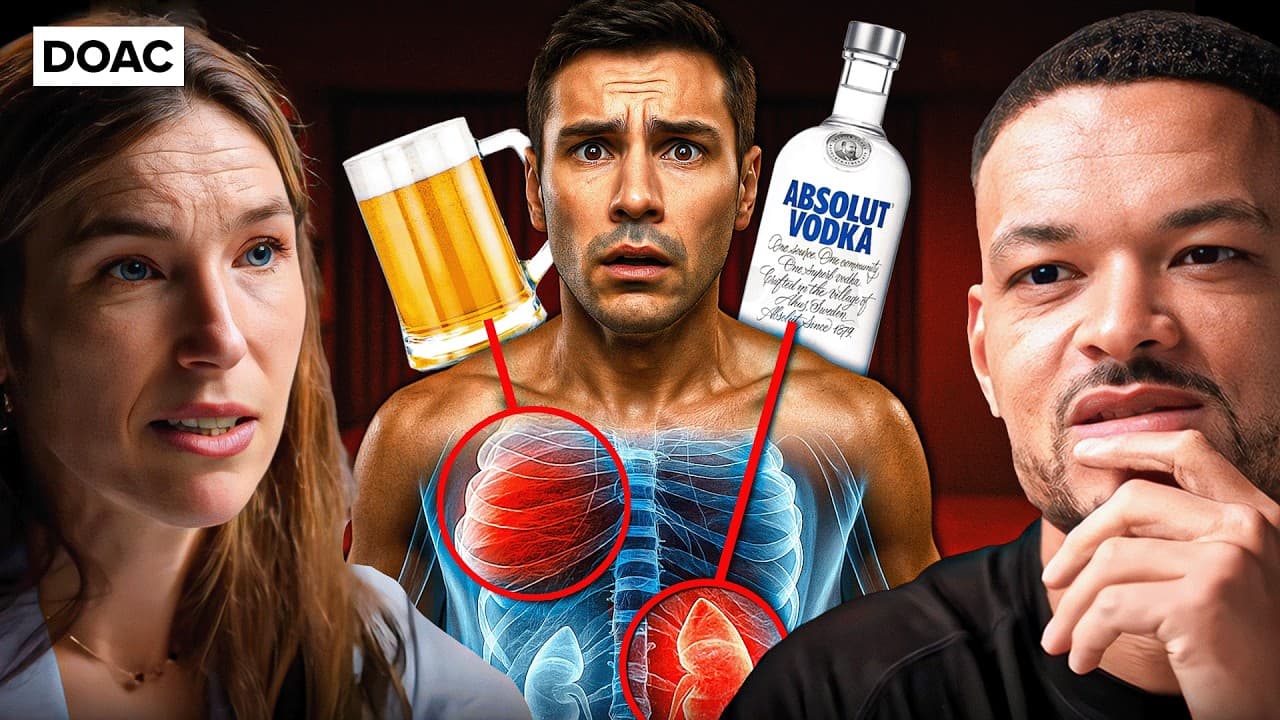
There is no healthy amount of alcohol for cancer risk, and even small amounts raise the risk for breast cancer and other cancers. The idea that moderate drinking benefits heart health fades when you compare to appropriate reference groups, showing that risk reduction is not reliably achieved. Alcohol carries risks similar to other desserts or risky behaviors and should be weighed carefully.
Transcript
So alcohol. Yes. There's I mean alcohol's been on a journey. Yes. It's been on a journey in terms of society's opinion about it. Can you take me on that journey and tell me where we are now and and in ter when I'm saying that I'm talking about society's opinion on its health benefits and what it is and and then and then also what we're getting wron... Read More
Key Insights
- Alcohol history shaped social norms, but health guidance now emphasizes risk awareness rather than supposed benefits.
- The classic J shaped curve is an artifact of how non drinkers are chosen as a reference group in studies.
- Moderate drinking does not imply a universal health benefit once comparisons account for underlying health status.
- Breast cancer risk increases with alcohol use even below traditional “low risk” thresholds.
- Certain cancers like breast and esophageal show risk increases at very low drinking levels.
- Alcohol affects cancer risk through DNA damage, inflammation, and reactive oxygen species rather than targeting a single organ.
- Two drinks a day would push many people into a higher risk category for cancer according to reported limits.
- Environmental and lifestyle factors interact with alcohol to influence overall cancer risk.
- More videos from this channel:
- More from this channel: The Diary Of A CEO Clips
Install to Summarize YouTube Videos and Get Transcripts
Explore YouTube Video Summarizer or Get YouTube Transcript Extractor
Questions & Answers
Q: What is the best way to understand the risk of drinking in terms of cancer?
The data indicate that there is no safe level of alcohol when considering cancer risk, and even small amounts can increase the risk for certain cancers such as breast and esophageal cancer. The effect is dose dependent, meaning more consumption generally leads to higher risk, and this holds across many cancer types. This framing helps people make informed choices about how much they drink.
Q: How did researchers misinterpret alcohol benefits in earlier studies?
Researchers often compared moderate drinkers to non drinkers, and non drinkers may include people who are unhealthy or abstaining due to illnesses or medications. This created a biased reference group, making moderate drinkers look healthier. When reference groups are adjusted to reflect healthier baseline risks, the supposed benefits disappear and the risk picture becomes clearer.
Q: What does the UK low risk drinking guidance imply about actual servings?
Low risk guidelines use units of alcohol to measure safe consumption, with a weekly limit. However, a typical glass of wine can contain multiple units, and people often drink more than one glass in a sitting or across multiple days. This means many people exceed low risk limits without realizing it, increasing cancer risk over time.
Q: Why is breast cancer risk highlighted in the discussion of alcohol?
Breast cancer shows a clear risk increase even at low to moderate drinking levels, with an approximate 5 percent rise in risk at typical consumption levels. Given the high lifetime risk of breast cancer in women, any increase translates into a meaningful relative impact on population risk, making this a critical area of concern when evaluating alcohol use.
Q: What role do other factors play in alcohol related health outcomes?
Other factors such as obesity, age of childbirth, and hormonal influences interact with alcohol to shape cancer risk. Environmental contributors like plastics and unidentified exposures may also be involved. These interactions mean alcohol is one of several contributing factors to cancer risk rather than a standalone determinant.
Q: How does alcohol affect brain health according to the discussion?
The discussion notes that regular alcohol use is linked to brain damage and aging, with risks including brain changes that may not be fully reversible. This adds to the broader picture of health costs beyond cancer, highlighting potential cognitive and neurological consequences of sustained drinking.
Q: What does the conversation say about liver health and alcohol?
Alcohol can cause liver damage that may become irreversible over time. The discussion emphasizes that even moderate drinking carries risks for liver function, and cumulative exposure can lead to significant long term health consequences. This challenges the notion that occasional or social drinking is harmless for liver health.
Q: What practical message should viewers take away about drinking and health?
Viewers should understand that alcohol carries measurable health risks, including cancer and brain or liver damage, that can accrue even with moderate use. There is no universal healthy amount, so individuals should weigh personal risks, consider family history, and potentially limit intake to reduce long term health consequences.
Summary & Key Takeaways
-
Alcohol has a long social history, but modern science shows there is no safe level of drinking with respect to cancer risk, especially for breast cancer. The apparent heart benefits were confounded by study design and reference groups, meaning moderate drinking is not a net health good. Consumers should understand the true risk profile to make informed choices.
-
Breast cancer risk increases with alcohol even at low levels for some people, and the overall cancer risk rises with higher consumption. The data suggest a dose response where more intake means higher risk, and environmental factors may also influence cancer trends beyond alcohol alone.
-
People often overestimate alcohol safety due to how studies lump non drinkers with healthier individuals. Adjusting for these factors reveals that the protective effect disappears, and high consumption leads to significant health risks, including liver issues and aging impacts, underscoring the need for cautious alcohol use.
Read in Other Languages (beta)
Share This Summary 📚
Summarize YouTube Videos and Get Video Transcripts with 1-Click
Try YouTube Summary with ChatGPT & Claude or YouTube Transcript Generator
Explore More Summaries from The Diary Of A CEO Clips 📚






Summarize YouTube Videos and Get Video Transcripts with 1-Click
Try YouTube Summary with ChatGPT & Claude or YouTube Transcript Generator