How to avoid Codex usage limits with Astra

TL;DR
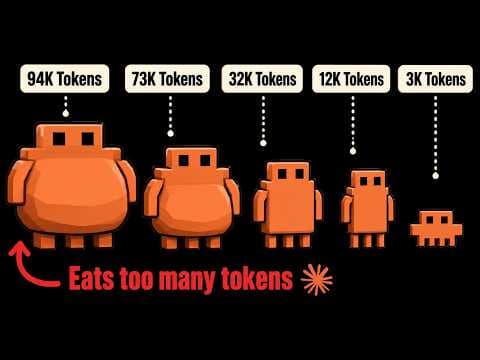
Astra can stay under usage limits by budgeting and running small experiments to optimize token use. The method combines budgeting prompts, delegating work to cheaper sub agents, saving reusable skills, and turning off unused features. A live demo shows the savings achieved and practical rules to apply weekly.
Transcript
I reduced my codec usage by up to 91.75%. And I did this by making GBT6 Astra run hundreds of tiny experiments to find ways to optimize the way I was using codecs. And what I found might actually surprise you. I used to hit CEX usage limits every single day. However, after implementing a few practical rules for how I use Codex, I haven't hit my lim... Read More
Key Insights
- Astra can see its own usage limits and operate within a budget.
- Budgeting prompts make Astra more conservative and efficient.
- Astra can manage cheaper sub agents to perform parallel tasks.
- Using a cron based trigger can shift the daily usage window to optimize resets.
- Turn repeated mechanics into reusable skills to cut rework.
- Save preferences and instructions to avoid repetitive prompting.
- Correcting mid run steers the task without wasting tokens.
- Switching off plugins and unused features reduces context usage.
- Tool calls generate long reports; keep only essential outputs to save tokens.
Install to Summarize YouTube Videos and Get Transcripts
Explore YouTube Video Summarizer or Get YouTube Transcript Extractor
Questions & Answers
Q: How can I avoid hitting Codex usage limits with Astra in daily tasks
You can avoid hitting Codex usage limits by giving Astra a clear usage budget and letting it monitor its own limits. By constraining the total allowed usage and prompting the model to stay within that budget, you reduce unnecessary experimentation and keep workflows efficient. This strategy works well for repetitive tasks like reading emails or drafting scripts, where you can set a target share of your weekly allowance and rely on Astra to stay within it.
Q: What role do sub agents like Luna Max play in reducing costs
Sub agents like Luna Max are cheaper and can handle narrow tasks in parallel, while Astra reviews and handles more complex parts. Delegating sorting or drafting to Luna Max beside Astra allows you to keep the overall cost down because Luna Max token rates are around 98 percent lower. The key is to break a task into narrower steps and have each agent handle a specific portion.
Q: How does saving and reusing skills help with token usage
Saving successful workflows as reusable skills reduces repeated prompting across tasks. At the start of a task, only the skill name and a short description are read, while full instructions load only when the skill is used. This means you pay little for keeping skills around and greatly reduce the tokens spent on repeatedly teaching the same process.
Q: What is the benefit of correcting during a task instead of after
Correcting during a task steers the current run rather than finishing a bad job. You can send a mid run steer message to adjust the task while it is in progress, which prevents token waste on a task that is headed in the wrong direction. This approach saves tokens and improves task accuracy without starting over.
Q: Why should you turn off plugins and features you don’t need
Plugins and extra features consume usage and context. Turning them off reduces the tokens spent per prompt and lowers the context that Astra must read, which directly lowers overall usage. If you are unsure which features are active, run a status check and disable anything not essential to the current task.
Q: What is the impact of long tool call reports on token usage
Tool calls return detailed reports that can include many files and checks. Reading full reports for many files wastes tokens, especially when most files are fine. Configure Astra to limit reports to essential findings, effectively reducing the amount of data processed and saved for each tool call.
Q: How can a cron based schedule help with token savings
A cron based schedule can shift your usage window to start after you wake up, giving Astra more time to optimize the task during a lower initial usage period. By organizing work around a specific reset time, you can minimize wasted tokens and maximize productive work within your allotted budget.
Q: What practical steps should I take to implement these rules
Start by budgeting a weekly usage limit and allowing Astra to monitor it. Next, enable sub agents for narrow tasks and save successful workflows as reusable skills. Then, review and disable unused plugins and tools, and finally practice mid run corrections. Regularly audit your agents.d and skills to remove duplicates and unused instructions.
Summary & Key Takeaways
-
Astra lets you budget usage and see limits in real time, enabling conservative, cost-efficient prompting. By treating usage as a constraint you can direct the model to stay within a planned percentage of your allowance. The approach scales through automation and careful control of prompts and tools.
-
Reusable workflows and skills reduce token waste. Once a process is proven effective, you save it as a reusable skill so future tasks require minimal setup. This eliminates repetitive prompting and speeds up routine tasks while preserving accuracy.
-
Selective feature usage and agent delegation cut overhead. Switching off plugins and unnecessary tools lowers context usage, while distributing tasks to cheaper sub agents like Luna Max dramatically reduces overall token consumption and improves throughput.
Read in Other Languages (beta)
Share This Summary 📚
Summarize YouTube Videos and Get Video Transcripts with 1-Click
Try YouTube Summary with ChatGPT & Claude or YouTube Transcript Generator
Explore More Summaries from Dubibubi 📚





Summarize YouTube Videos and Get Video Transcripts with 1-Click
Try YouTube Summary with ChatGPT & Claude or YouTube Transcript Generator