Who Was Vincent Van Gogh? His Life and Legacy
TL;DR
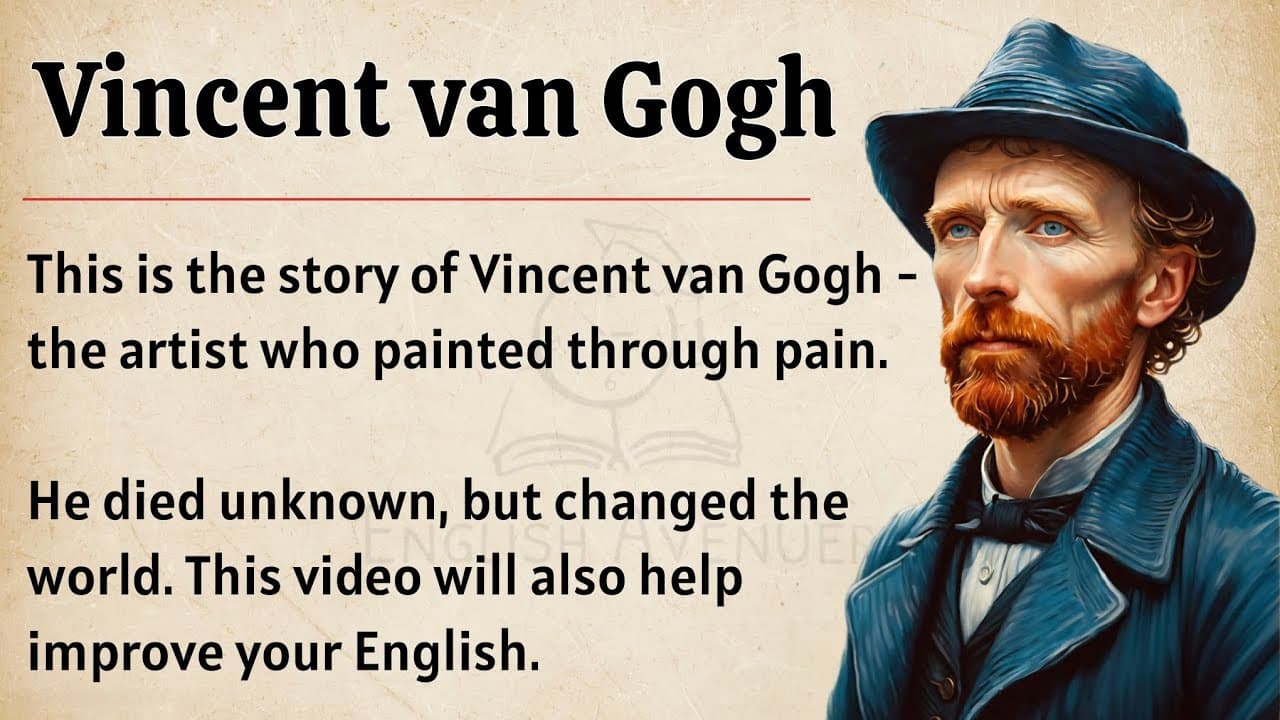
Vincent Van Gogh, a post-impressionist painter, created over 2,000 artworks despite a life filled with personal struggles and mental illness. Though he never achieved fame during his lifetime, his emotionally charged works, like 'Starry Night,' have since become iconic. His story is one of resilience, illustrating how beauty can emerge from adversity.
Transcript
Welcome to the story of a man who painted beauty with pain. A man who turned loneliness into light, who gave the world over 2,000 paintings, but died believing he was a failure. He never saw fame. He never felt success. He was rejected, misunderstood, and left alone in silence. But he never stopped painting. He painted until the very end, not for m... Read More
Key Insights
- Vincent Van Gogh was born on March 30, 1853, in the Netherlands, and faced a life of emotional and mental struggles.
- Vincent created over 2,000 artworks, including 860 oil paintings, many of which were completed in the last two years of his life.
- He was supported financially and emotionally by his brother Theo, who played a crucial role in his life and legacy.
- Vincent's work was largely unappreciated during his lifetime, but he is now recognized as a pioneer of modern art.
- His painting style evolved significantly after moving to Paris, where he encountered Impressionism and brightened his color palette.
- Vincent's mental health deteriorated over time, leading to his voluntary admission to a mental asylum where he painted 'Starry Night.'
- Despite his struggles, Vincent's art is celebrated for its emotional depth, vibrant colors, and innovative techniques.
- Vincent's legacy endures, teaching us that true art comes from honesty and emotional expression, not perfection.
Install to Summarize YouTube Videos and Get Transcripts
Explore YouTube Video Summarizer or Get YouTube Transcript Extractor
Questions & Answers
Q: How did Vincent Van Gogh's early life influence his art?
Vincent Van Gogh's early life was marked by isolation and emotional struggles, which deeply influenced his art. Born in the Netherlands, he was a sensitive and introverted child, misunderstood by those around him. This sense of loneliness and emotional turmoil fueled his creative expression, as he sought to capture the raw emotions and struggles he experienced. His early experiences with failure and rejection also contributed to the intense emotional depth found in his later works.
Q: What role did Theo Van Gogh play in Vincent's life?
Theo Van Gogh, Vincent's younger brother, played a crucial role in his life as both his emotional and financial support. Theo was an art dealer in Paris and provided Vincent with the funds necessary to continue his painting. He also offered unwavering belief in Vincent's talent, encouraging him through letters and promoting his work. Their correspondence reveals the deep bond between the brothers and highlights Theo's influence on Vincent's perseverance and artistic development.
Q: How did Vincent Van Gogh's style change after moving to Paris?
After moving to Paris in 1886, Vincent Van Gogh's style underwent a significant transformation. Influenced by the Impressionists and other contemporary artists, he began to use brighter colors and adopted a more vibrant palette. He moved away from the dark tones of his earlier works, experimenting with light, color, and brushwork. This period marked a departure from his focus on rural life to capturing the energy of city life and nature, resulting in some of his most famous and dynamic pieces.
Q: What is the significance of 'Starry Night' in Van Gogh's oeuvre?
'Starry Night' is one of Vincent Van Gogh's most iconic paintings and a masterpiece of post-impressionism. Created during his stay at the Saint-Paul-de-Mausole asylum, it reflects his emotional state, capturing the swirling energy of the night sky with vivid colors and dynamic brush strokes. The painting symbolizes Van Gogh's turbulent mind and his quest for peace and beauty amidst chaos. Its emotional intensity and innovative style have made it a symbol of his artistic legacy and enduring influence.
Q: Why did Vincent Van Gogh cut off his ear?
Vincent Van Gogh cut off his ear during a severe mental breakdown in December 1888, following a heated argument with fellow artist Paul Gauguin. This incident occurred in Arles, France, and marked a significant point in Van Gogh's struggle with mental illness. The act was likely a result of his deteriorating mental health, characterized by episodes of psychosis and depression. This dramatic event contributed to his reputation as a tortured artist and highlighted the depth of his personal struggles.
Q: How did Vincent Van Gogh's art gain recognition after his death?
After Vincent Van Gogh's death, his art gained recognition largely due to the efforts of his sister-in-law, Johanna Van Gogh-Bonger. She tirelessly promoted his work, organized exhibitions, and published his letters, which revealed his artistic vision and struggles. Over time, critics and collectors began to appreciate the emotional depth and innovative techniques of his paintings. By the early 20th century, Van Gogh's work was celebrated for its impact on modern art, making him one of the most influential artists in history.
Q: What impact did Vincent Van Gogh have on modern art?
Vincent Van Gogh had a profound impact on modern art, influencing countless artists and movements with his bold use of color, expressive brushwork, and emotional intensity. His willingness to break away from traditional techniques and explore new ways of seeing the world paved the way for future art movements like Expressionism and Fauvism. Van Gogh's work challenged perceptions of beauty and truth in art, emphasizing the importance of personal expression and emotional honesty, which continue to inspire artists today.
Q: How does Vincent Van Gogh's story inspire people today?
Vincent Van Gogh's story inspires people today by demonstrating resilience, passion, and the transformative power of art. Despite facing numerous personal challenges, including mental illness and lack of recognition during his lifetime, he remained dedicated to his craft. His story shows that creative expression can be a source of healing and that true value and impact are not always recognized in one's lifetime. Van Gogh's journey encourages individuals to pursue their passions and remain true to their vision, regardless of external validation.
Summary & Key Takeaways
-
Vincent Van Gogh's life was marked by personal struggles, but he produced over 2,000 pieces of art, including iconic works like 'Starry Night.' His emotionally charged paintings were not appreciated during his lifetime, but he is now celebrated as a pioneer of modern art.
-
Supported by his brother Theo, Van Gogh's style evolved after encountering Impressionism in Paris, leading to a brighter color palette and a focus on emotional expression. Despite mental health challenges, he continued to create art that conveyed deep emotion and truth.
-
Van Gogh's legacy teaches us that art is about honesty and emotional expression. His work, once overlooked, now comforts millions and demonstrates that beauty can emerge from adversity, making him an enduring figure in art history.
Read in Other Languages (beta)
Share This Summary 📚
Summarize YouTube Videos and Get Video Transcripts with 1-Click
Try YouTube Summary with ChatGPT & Claude or YouTube Transcript Generator
Explore More Summaries from English Avenue 📚

Summarize YouTube Videos and Get Video Transcripts with 1-Click
Try YouTube Summary with ChatGPT & Claude or YouTube Transcript Generator