How to Ask and Answer Common English Questions
TL;DR
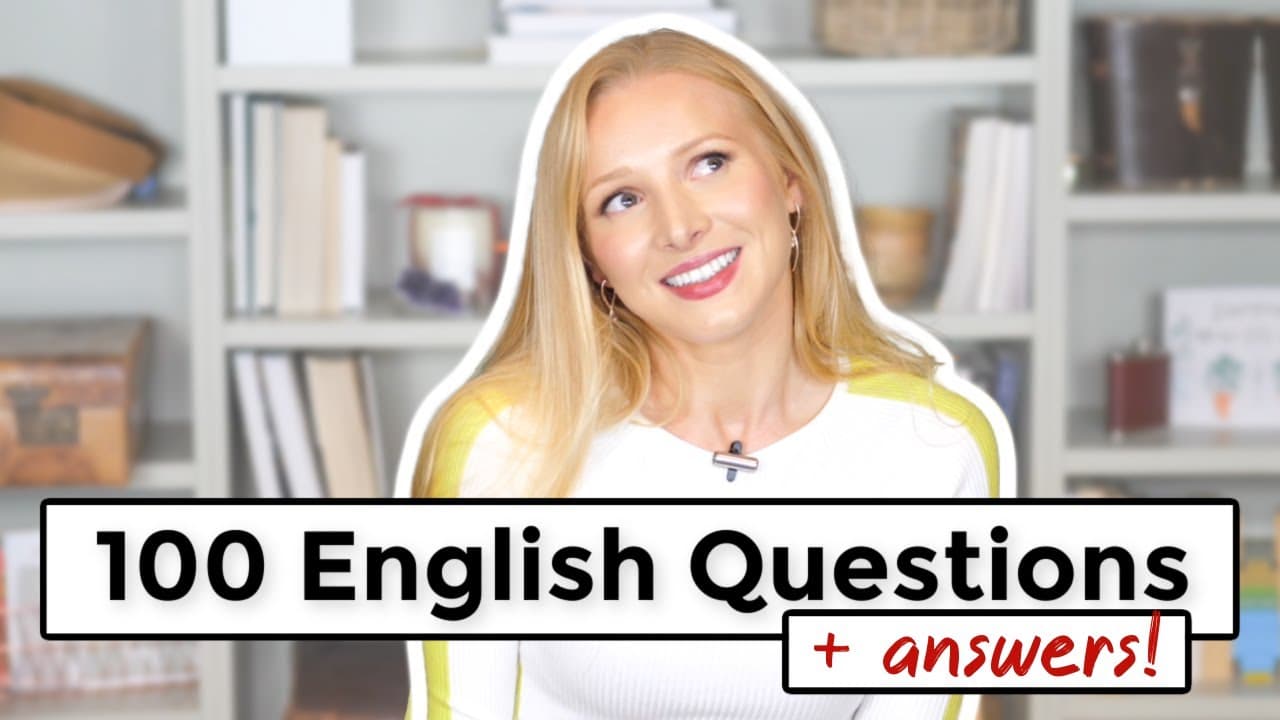
Common personal questions in English can be answered clearly with short, direct sentences such as “My favourite colour is orange” or “I was born in Milton Keynes.” Practising realistic exchanges about family, home, food, personality, travel, hobbies, and clothing helps learners build conversational responses and recognize frequently used question patterns.
Transcript
- Hello, lovely students. And welcome back to English with Lucy. Today I am going to teach you 100 of the most common questions in English and how someone is likely to answer them. I'm going to do this with the help of my lovely husband William. He is going to ask me the 100 questions, and I'm going to give so that you can learn from us. As always,... Read More
Key Insights
- Effective answers to personal questions are often short and direct. Lucy responds with complete patterns such as “My full name is Lucy Bella Simkins,” “My favourite colour is orange,” and “I currently live in the Cotswolds,” making the structures easy to reuse in conversation.
- Common English questions frequently begin with what, where, who, how, do, are, is, did, can, or have. The lesson demonstrates these forms across personal details, preferences, habits, past experiences, abilities, possessions, and future plans rather than presenting them as isolated grammar rules.
- A natural answer can combine a direct response with one supporting detail. Lucy says she prefers spring because she loves the new life, leaves, and flowers, and she prefers Spanish cuisine because it reminds her of living in Spain.
- Family questions cover siblings, marriage, children, parents, occupations, and shared activities. Lucy says she has a younger brother, is married, would love to have children, looks up to her parents and grandparents, and enjoys spending time and laughing with her family.
- Home questions can address location, housing type, rooms, pets, gardens, and household responsibilities. Lucy says she lives in a house in the Cotswolds, likes the dining room, has a garden, shares most household tasks, and owns a Maine Coon cat and Golden Retriever.
- Food questions explore routines and preferences through breakfast, drinks, shopping, cooking, restaurants, cuisine, and dinner plans. Lucy eats banana porridge every day, drinks coffee, shops through an online grocery website, enjoys cooking, and says she makes a strong beef Wellington.
- Travel answers become more informative when they include places, companions, activities, and preferences. Lucy describes a honeymoon in St Lucia, a two-week road trip in Spain, a preference for travelling with others, an interest in flying, and a tendency to pack heavily.
- Free-time and clothing questions reveal abilities, habits, and preferences. Lucy enjoys running, cycling, cooking, and making YouTube videos, plays the violin, rarely watches television, dislikes long movies, prefers buying clothes in person, donates unwanted clothing, and has no tattoos.
Install to Summarize YouTube Videos and Get Transcripts
Explore YouTube Video Summarizer or Get YouTube Transcript Extractor
Questions & Answers
Q: How should I answer common personal questions in English?
Answer the main point first with a complete, direct sentence, then add a relevant detail when useful. Lucy answers “Where were you born?” by saying she was born in Milton Keynes in England. For preference questions, she identifies the preference and sometimes explains it, such as choosing spring because she loves the new life, leaves, and flowers.
Q: What topics are useful for practising English conversation questions?
Useful topics in the lesson include general personal information, family, home, food and drink, self-description, travel, free time, sports, shopping, and clothing. These subjects support questions about identity, preferences, routines, abilities, possessions, experiences, and plans. Practising across these categories prepares learners for a broad range of everyday personal conversations.
Q: How can I answer English questions about my family?
Use direct statements that identify the relationship or provide the requested detail. Lucy says she has a younger brother and that he is 23. She confirms that she is married, describes her husband as lovely, handsome, tall, funny, and camera shy, and explains that she looks up to her parents and grandparents.
Q: How can I talk about my home and pets in English?
State where and how you live, then add concrete details about rooms, animals, or routines. Lucy says she currently lives in the Cotswolds and lives in a house. She identifies the dining room as a likely favourite room and says she has a Maine Coon cat named Alfonso and a Golden Retriever named Diego.
Q: How can I answer questions about food and cooking?
Describe regular habits, preferences, and specific examples. Lucy says she eats banana porridge every day for breakfast, drinks coffee, loves fruit, and shops through an online grocery website. She also says she loves cooking, makes a strong beef Wellington, enjoys eating out, prefers Spanish cuisine, and plans to have prawn linguine for dinner.
Q: How can I describe myself naturally in English?
Choose a few accurate qualities and support them with personal preferences or behaviour. Lucy describes herself as enthusiastic and always learning. She says she is sometimes shy, especially in big groups, and that she is more like her mother. She also identifies family, her husband, and fruit as things that make her happy.
Q: How can I answer English questions about travel?
Mention the destination, the type of trip, your companions, and what you enjoyed. Lucy names her honeymoon in St Lucia as a favourite trip because it included mountains and the beach. She also describes a two-week road trip in Spain, says she prefers travelling with others, likes flying, and tends to pack heavily.
Q: How can I practise these common English questions after watching?
Reuse the demonstrated question patterns and replace Lucy’s details with your own truthful answers. Practise questions about your name, birthplace, family, home, meals, personality, travel, hobbies, and clothing. The lesson also offers a free PDF containing the questions, extra notes, exercises, and additional questions, while the subtitled vlogs provide further practice material.
Summary & Key Takeaways
-
Lucy and her husband William demonstrate common English question-and-answer exchanges through a natural personal interview. The questions cover names, birthplace, preferences, music, seasons, family members, marriage, parents, and children. Lucy usually responds with short sentences, then sometimes adds a reason, description, qualification, or humorous personal detail.
-
The conversation moves through practical topics including homes, pets, household routines, breakfast, drinks, cooking, restaurants, and favourite foods. Lucy describes living in the Cotswolds, owning a cat and a dog, eating banana porridge, drinking coffee, enjoying cooking, and making beef Wellington as examples of natural personal answers.
-
Later questions focus on personality, books, languages, travel, hobbies, entertainment, sports, shopping, and clothing. Lucy discusses being enthusiastic, speaking three languages, enjoying travel, running, cycling, cooking, playing the violin, and shopping in person. A downloadable PDF provides the questions, extra notes, exercises, and additional practice material.
Read in Other Languages (beta)
Share This Summary 📚
Summarize YouTube Videos and Get Video Transcripts with 1-Click
Try YouTube Summary with ChatGPT & Claude or YouTube Transcript Generator
Explore More Summaries from English with Lucy 📚

Summarize YouTube Videos and Get Video Transcripts with 1-Click
Try YouTube Summary with ChatGPT & Claude or YouTube Transcript Generator