How Does ADHD Affect Anxiety Symptoms?
TL;DR
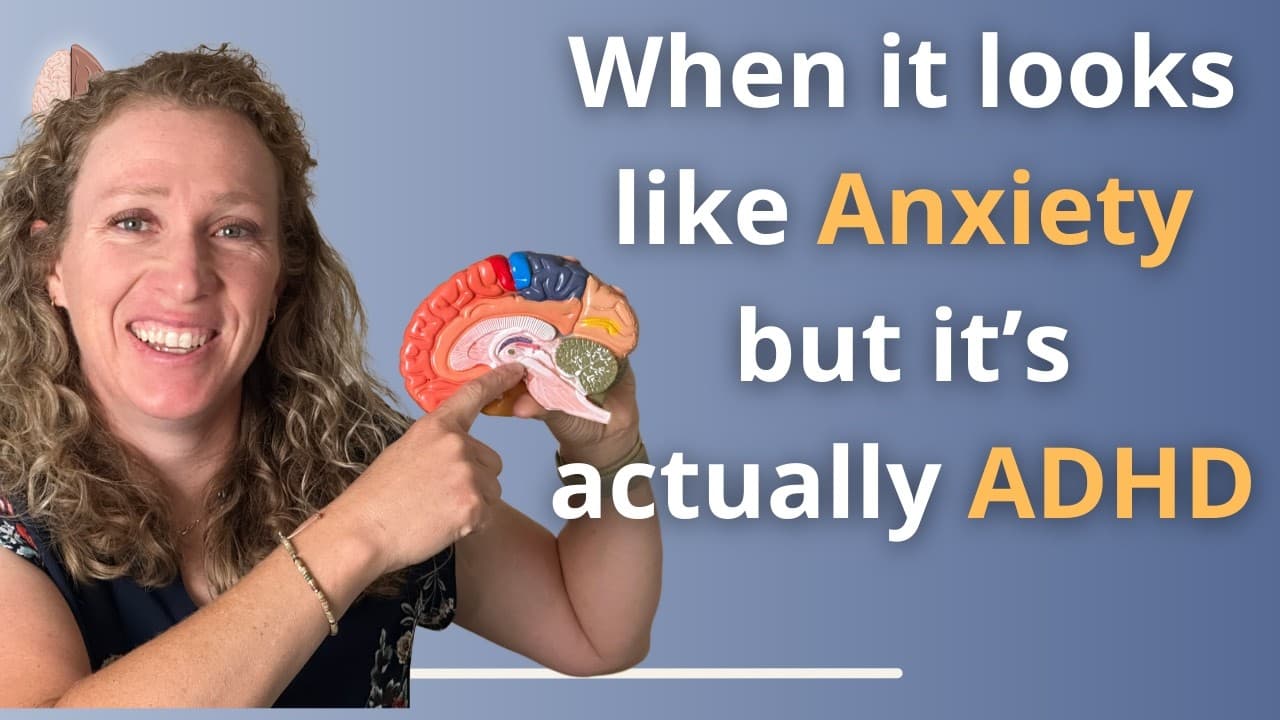
ADHD and anxiety often share symptoms like racing thoughts and sleep problems, but they stem from different brain functions. ADHD is linked to executive function deficits, while anxiety involves habitual avoidance. Improving executive function can help manage anxiety symptoms for those with ADHD.
Transcript
What if your symptoms of anxiety are better explained as ADHD? But first, check out this tree, guys. It's a nice tree. It's got nice leaves. But this tree represents anxiety. Let's call it the anxiety tree. Okay, that's such a bad joke. This tree is actually two different trees with two different roots. One of those trees is a lemon tree, and f... Read More
Key Insights
- ADHD and anxiety share many symptoms such as racing thoughts and sleep problems, but they originate from different brain functions.
- Up to 50% of people with ADHD also have an anxiety disorder, highlighting significant symptom overlap.
- Executive function deficits are central to ADHD, affecting the ability to manage thoughts and emotions.
- Anxiety often involves habitual avoidance and heightened fear responses, distinct from ADHD's executive function issues.
- Improving executive function can help manage anxiety symptoms in individuals with ADHD.
- ADHD involves cognitive profile scatter, leading to gaps in skills like processing speed and working memory.
- Emotion processing is crucial for managing ADHD symptoms, requiring structured support to slow down and organize thoughts.
- Practical strategies like exercise, meditation, and writing can help improve executive function and manage anxiety.
Install to Summarize YouTube Videos and Get Transcripts
Explore YouTube Video Summarizer or Get YouTube Transcript Extractor
Questions & Answers
Q: How do ADHD and anxiety symptoms overlap?
ADHD and anxiety share symptoms like racing thoughts, difficulty sleeping, and trouble focusing. Both conditions can lead to feeling overwhelmed and experiencing memory problems. Despite these similarities, the underlying causes differ, with ADHD linked to executive function deficits and anxiety involving habitual avoidance and heightened fear responses.
Q: What role does executive function play in ADHD?
Executive function is crucial in ADHD as it encompasses skills like planning, focusing attention, and regulating impulses. Individuals with ADHD often experience deficits in executive function, making it challenging to manage emotions and prioritize tasks. Addressing these deficits can help improve overall functioning and reduce anxiety symptoms.
Q: How can improving executive function help manage anxiety in ADHD?
Improving executive function can help individuals with ADHD manage anxiety by enhancing their ability to organize thoughts, regulate emotions, and prioritize tasks. Strategies like exercise, meditation, and structured writing can support executive function, helping to slow down racing thoughts and reduce feelings of overwhelm.
Q: What is cognitive profile scatter in ADHD?
Cognitive profile scatter refers to the uneven distribution of cognitive skills in individuals with ADHD. This often includes high processing speed but lower working memory, leading to challenges in holding multiple thoughts and regulating emotions. Understanding and addressing these disparities can improve executive function and reduce anxiety.
Q: Why is emotion processing important for managing ADHD?
Emotion processing is vital for managing ADHD because it involves slowing down, soothing oneself, and organizing thoughts and feelings. Individuals with ADHD often struggle with impulsivity and emotional regulation due to executive function deficits. Structured support and strategies can help improve emotion processing and reduce anxiety symptoms.
Q: What practical strategies can support executive function in ADHD?
Practical strategies to support executive function in ADHD include exercise, meditation, and structured writing. These activities help improve focus, regulate emotions, and organize thoughts. Additionally, using visual reminders, setting routines, and working with an executive function coach can provide further support for managing ADHD and anxiety.
Q: How does ADHD medication help with executive function?
ADHD medication, often stimulants, helps by stimulating the parts of the brain responsible for executive function. This can enhance focus, improve impulse control, and facilitate better emotional regulation. Medication, combined with behavioral strategies, can significantly aid in managing ADHD symptoms and reducing anxiety.
Q: What is the relationship between ADHD and anxiety in the brain?
In the brain, ADHD is linked to deficits in executive function, primarily involving the prefrontal cortex, while anxiety often involves an overactive amygdala or HPA axis, leading to heightened fear responses. Despite symptom overlap, these conditions stem from different brain functions, necessitating distinct approaches for management and treatment.
Summary & Key Takeaways
-
ADHD and anxiety share overlapping symptoms such as racing thoughts and difficulty sleeping, but they stem from different brain functions. ADHD is primarily linked to deficits in executive function, which affects the ability to manage thoughts and emotions effectively. Understanding these differences is crucial for developing effective treatment strategies.
-
Executive function plays a key role in managing both ADHD and anxiety. Improving executive function can help alleviate anxiety symptoms in individuals with ADHD. Practical strategies such as exercise, meditation, and structured writing can support executive function and reduce anxiety.
-
Cognitive profile scatter is common in ADHD, resulting in uneven skills like high processing speed but low working memory. This can lead to challenges in emotion regulation and task management. By addressing these deficits, individuals with ADHD can better manage anxiety and improve their overall functioning.
Read in Other Languages (beta)
Share This Summary 📚
Summarize YouTube Videos and Get Video Transcripts with 1-Click
Try YouTube Summary with ChatGPT & Claude or YouTube Transcript Generator
Explore More Summaries from Therapy in a Nutshell 📚



Summarize YouTube Videos and Get Video Transcripts with 1-Click
Try YouTube Summary with ChatGPT & Claude or YouTube Transcript Generator