How Did Afrikaans Evolve from Dutch?
TL;DR
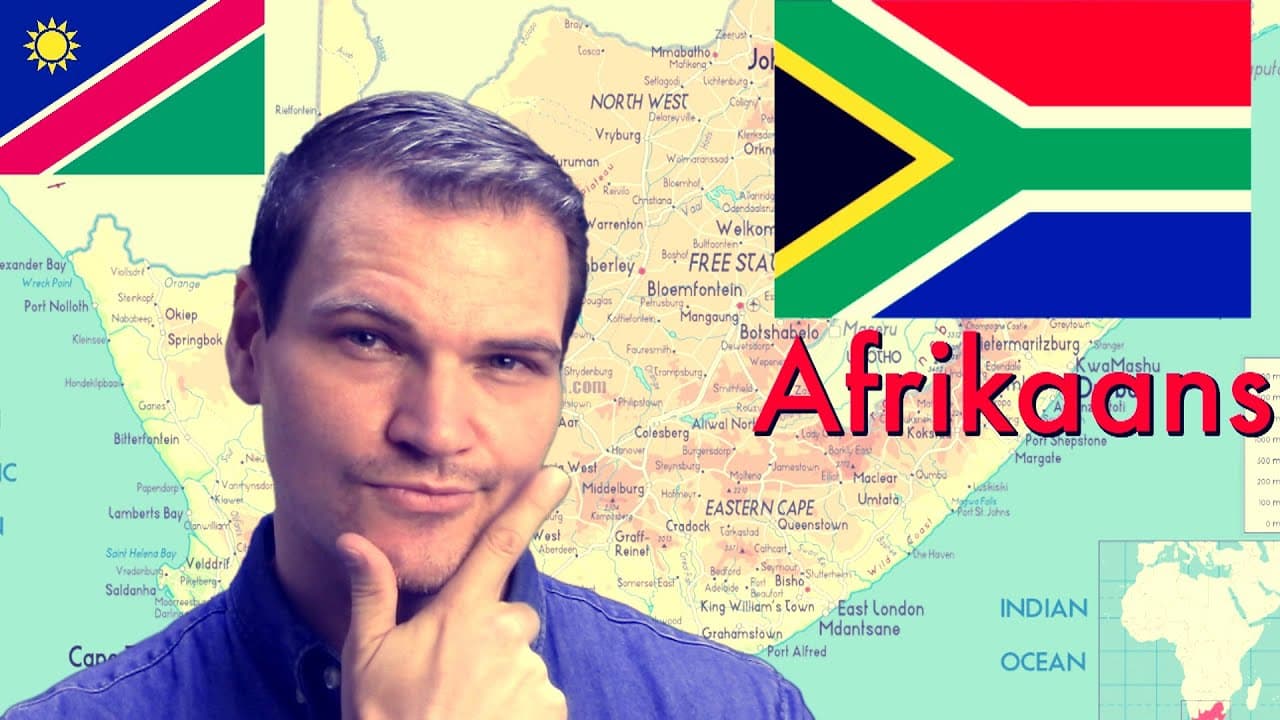
Afrikaans is a daughter language of Dutch, influenced by various languages due to historical migration and colonization in Southern Africa. It has simplified grammar compared to Dutch, yet retains a similar syntax and phonology. Despite debates on its origins, Afrikaans developed from a form of Dutch influenced by second language speakers rather than a pure creole language.
Transcript
If you're looking for affordable language lessons, give "italki" a try. Cut out the middleman and connect directly with native teachers internationally. Right now you can buy one lesson and get one free. Click the link in the description box. Hello everyone. Welcome to the Langfocus channel and my name is Paul. Today's topic is the Afrikaans langua... Read More
Key Insights
- Afrikaans is a West-Germanic language and a descendant of Dutch.
- It has about 7.1 million native speakers, primarily in South Africa.
- Afrikaans is the third most widely spoken language in South Africa.
- The language developed from Dutch due to historical migration and colonization.
- Debate exists whether Afrikaans is a direct descendant or a creole of Dutch.
- Afrikaans grammar is simplified compared to Dutch, lacking a simple past tense.
- Vocabulary is largely Dutch, with influences from Malay, Portuguese, and Khoisan languages.
- Afrikaans and Dutch are mutually intelligible to a moderate level, with Afrikaans speakers understanding Dutch better.
Install to Summarize YouTube Videos and Get Transcripts
Explore YouTube Video Summarizer or Get YouTube Transcript Extractor
Questions & Answers
Q: How did Afrikaans develop from Dutch?
Afrikaans developed from Dutch through historical migration and colonization in Southern Africa. Dutch settlers and a mix of European, Asian, and African influences contributed to its evolution. Although debated, Afrikaans is not a pure creole but developed from Dutch influenced by second language speakers, retaining similar syntax and phonology.
Q: What is the historical background of Afrikaans?
Afrikaans emerged in Southern Africa when Dutch-speaking settlers arrived in 1652. The language evolved as settlers expanded inland, interacting with indigenous Khoisan people, slaves from Africa, and immigrants from Europe and Asia. This mix of cultures and languages influenced Afrikaans' development, leading to its recognition as a distinct language in 1925.
Q: How similar are Afrikaans and Dutch?
Afrikaans and Dutch share significant similarities in vocabulary and syntax, making them mutually intelligible to a moderate extent. However, Afrikaans has a simplified grammar, lacking a simple past tense and using a more straightforward verb system. Afrikaans speakers generally find it easier to understand Dutch than vice versa, partly due to accent and register differences.
Q: What influences shaped Afrikaans vocabulary?
Afrikaans vocabulary is predominantly Dutch, with over 90% similarity. However, it also includes loanwords from Malay, Portuguese, and Khoisan languages due to historical interactions. For example, 'amper' (almost) comes from Malay 'hampir', and 'kraal' (cattle enclosure) from Portuguese 'curral'. These influences reflect the diverse linguistic environment in which Afrikaans developed.
Q: What are the key grammatical differences between Afrikaans and Dutch?
Afrikaans grammar is simpler than Dutch, notably lacking a simple past tense and using the perfect tense instead. It also features a more straightforward verb system, with verbs not conjugating for person or number. Additionally, Afrikaans does not have a pluperfect tense and uses a single verb form for infinitives, differing from Dutch's more complex verb conjugations.
Q: Why is the history of Afrikaans important?
Understanding the history of Afrikaans is crucial to grasp how it evolved from Dutch under unique conditions in Southern Africa. The language developed through interactions among Dutch settlers, indigenous Khoisan people, and slaves from diverse regions. This historical context explains the linguistic influences and debates surrounding Afrikaans' classification as a descendant or creole of Dutch.
Q: What factors affect mutual intelligibility between Afrikaans and Dutch speakers?
Mutual intelligibility between Afrikaans and Dutch speakers is influenced by accent and register. Certain Dutch dialects have pronunciations closer to Afrikaans, enhancing understanding. Additionally, using formal, standard language increases intelligibility, as informal speech and local slang can create barriers. Afrikaans speakers generally understand Dutch better due to these factors.
Q: Should one learn Afrikaans before Dutch?
Learning Afrikaans before Dutch is generally not recommended if the goal is to learn Dutch. While Afrikaans may provide some familiarity with Dutch vocabulary, its simplified grammar and differences could lead to confusion. It's advisable to learn Afrikaans if there's a specific cultural interest in South Africa or Namibia, rather than as a stepping stone to Dutch.
Summary & Key Takeaways
-
Afrikaans, a descendant of Dutch, has about 7.1 million native speakers, mainly in South Africa. It evolved through historical migration and colonization, influenced by languages like Malay and Portuguese. While its grammar is simplified compared to Dutch, it retains a similar syntax and phonology, sparking debate on whether it's a direct descendant or a creole.
-
Afrikaans grammar lacks a simple past tense and uses the perfect tense instead. Its vocabulary is primarily Dutch, with loanwords from Malay, Portuguese, and Khoisan languages. The language is mutually intelligible with Dutch to a moderate extent, with Afrikaans speakers generally understanding Dutch better.
-
The evolution of Afrikaans from Dutch involved extensive contact with native Dutch speakers. Despite debates on its creole nature, Afrikaans developed from a form of Dutch influenced by second language speakers. Its spelling underwent simplifications to better reflect pronunciation, and it was legally recognized as a language in 1925.
Read in Other Languages (beta)
Share This Summary 📚
Summarize YouTube Videos and Get Video Transcripts with 1-Click
Try YouTube Summary with ChatGPT & Claude or YouTube Transcript Generator
Explore More Summaries from Langfocus 📚
Summarize YouTube Videos and Get Video Transcripts with 1-Click
Try YouTube Summary with ChatGPT & Claude or YouTube Transcript Generator