How to use your surroundings to build better habits
TL;DR
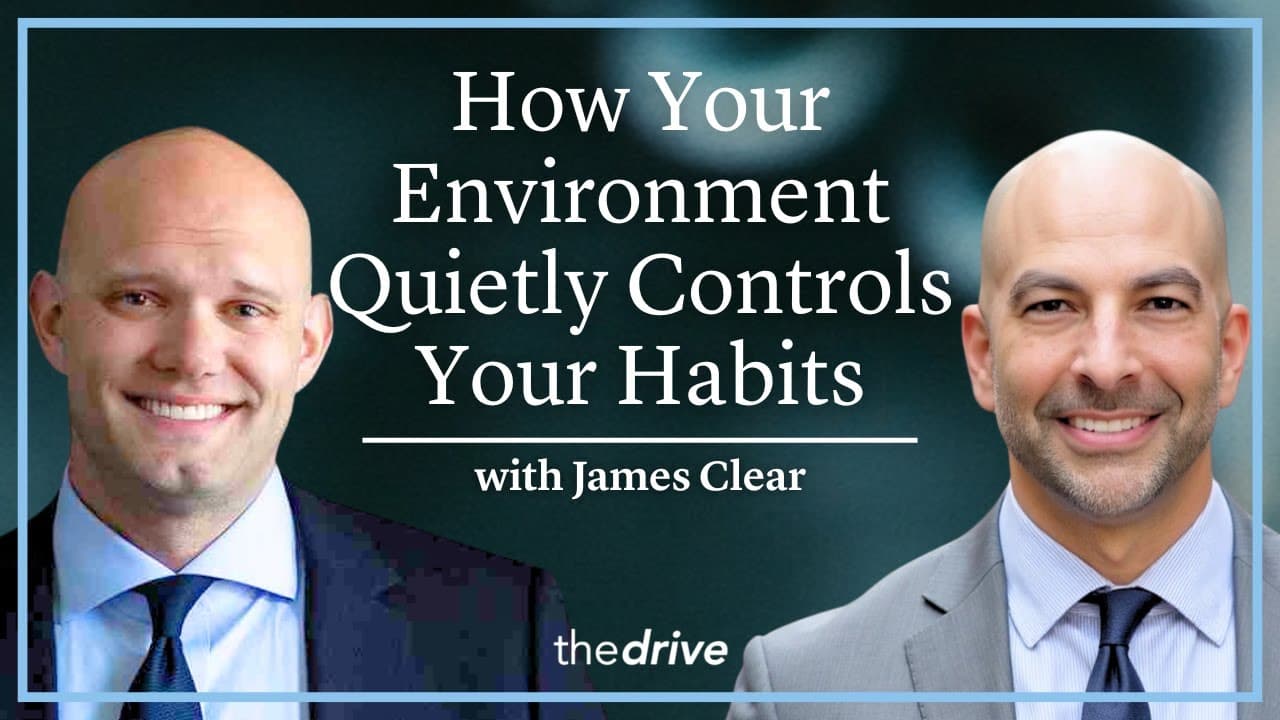
The environment acts like an invisible hand driving behavior, so make good habits the easy obvious choice and reduce cues for bad ones. Small, continuous changes in spaces and routines can create momentum, helping you sustain progress whether in daily life or challenging situations.
Transcript
the environment seems to be so potent and I I remember in my residency when people would come into the hospital with abscesses from IV drug use. So very you know in Baltimore which is where I did my residency there was you know just rampant IV drug use and you'd be amazed at how much that habit and that addiction could cause a person to do somethin... Read More
Key Insights
- Environment acts as a powerful, invisible force that shapes behavior and often overpowers willpower.
- Rehab removes cues, but returning to the same environment resets signals and makes relapse more likely.
- Low energy or limited time makes people choose the easiest option in their surroundings.
- Making good habits obvious and easy increases the likelihood they will be chosen.
- Small, repeated changes in physical and digital spaces compound to shift long term behavior.
- Designing environments to stack odds in favor of healthy choices is more effective than relying on willpower alone.
- Momentum created by upward habit spirals can sustain progress, while downward spirals require deliberate reversals.
- Interactions with others, like spouses or friends, can reinforce or undermine habit changes through shared routines and accountability.
Install to Summarize YouTube Videos and Get Transcripts
Explore YouTube Video Summarizer or Get YouTube Transcript Extractor
Questions & Answers
Q: What practical steps can I take to make good habits more visible in my environment?
You can start by arranging your spaces so that healthy choices are the first and easiest option to see and access. Place reminders where you spend time, reduce exposure to cues that trigger unwanted behavior, and create a small, frictionless path toward the habit you want to form. For example, keep a book on your desk to encourage reading, or move audiobooks to your home screen so you are reminded to listen instead of scrolling.
Q: Why does returning to the same environment after rehab increase relapse risk?
The relapse risk rises because the same environment carries cues that originally prompted the habit. When these cues are reintroduced, they act as automatic triggers, pulling you toward old behaviors even if you have detoxed. Changing surroundings eliminates or weakens these prompts, making the desired behavior easier to maintain long term.
Q: How does the Vietnam War example illustrate environment and habit change?
The example shows that many soldiers addicted to heroin stayed clean after returning home because they did not go back to the same environment with the same signals. Family and friends and a different setting reduced exposure to the addiction cues, allowing natural disengagement from the habit without heavy intervention.
Q: Can tiny changes in daily routines really add up over time?
Yes, dozens of small adjustments accumulate to create a new normal. Each minor change reduces friction for the desired behavior and increases friction for the undesired one. Over weeks and months, these small shifts compound and steer overall trajectory toward healthier patterns, making the habit more automatic and reliable.
Q: What role does energy or time play in habit formation according to the speaker?
When energy, willpower, or time are scarce, people default to the most obvious or easiest option available. By shaping the environment to make healthy choices the easiest option, you align external conditions with your intentions, increasing consistency even during busy or stressful periods.
Q: How can digital environments support better habits?
Digital spaces can be redesigned to promote positive behavior by rearranging apps, notifications, and content. For example, moving an audiobook app to the home screen reduces the pull of endless browsing. The goal is to minimize friction for the productive activity and increase it for distractions.
Q: What is the recommended starting point for changing behavior according to the discussion?
A practical starting point is to make behaviors obvious and easy. This involves removing or hiding cues for unwanted actions and making cues for desired actions highly visible. By stacking multiple small changes at once, you increase the likelihood that good habits arise naturally and consistently.
Q: How do relationships influence habit formation and maintenance?
Relationships contribute through accountability, shared routines, and mutual support. Partners can reinforce positive habits by encouraging consistent practice or providing friction when one member wants to slip. Conversely, if one person enables poor choices, it can undermine effort, making mutual alignment on goals crucial for long term success.
Summary & Key Takeaways
-
The first summary point explains how environmental cues power habit formation and how removing cues for bad behaviors can help. It emphasizes making the good choices obvious and easy, so they become the default path.
-
The second summary point describes the Vietnam War anecdote showing many soldiers stayed clean when returning home because cues changed, while rehab can miss those cues.
-
The third summary point highlights practical strategies for environment design, like organizing spaces and digital setups to favor productive actions and reduce friction for unhealthy ones.
Read in Other Languages (beta)
Share This Summary 📚
Summarize YouTube Videos and Get Video Transcripts with 1-Click
Try YouTube Summary with ChatGPT & Claude or YouTube Transcript Generator
Explore More Summaries from Peter Attia MD 📚





Summarize YouTube Videos and Get Video Transcripts with 1-Click
Try YouTube Summary with ChatGPT & Claude or YouTube Transcript Generator