What Are the Secrets of Real-Time Translation?
TL;DR
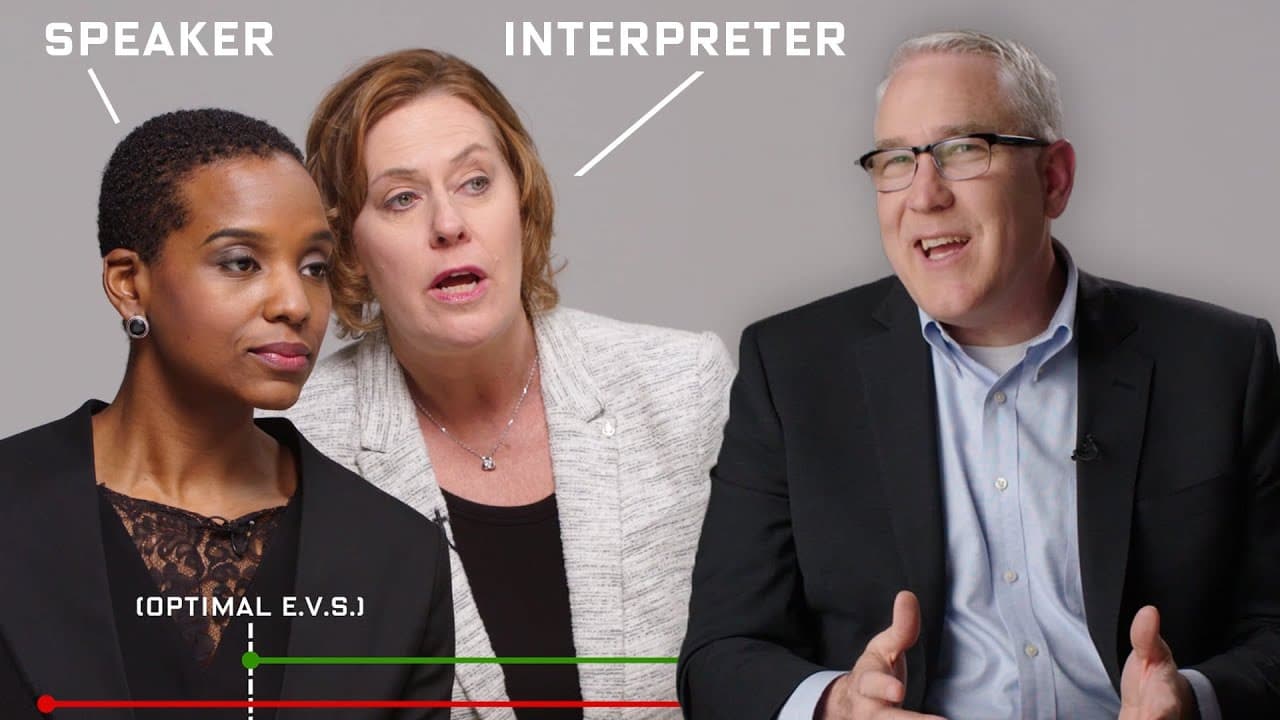
Real-time translation is vital in closed-door diplomatic meetings, where interpreters use simultaneous or consecutive methods to accurately convey messages. They face challenges like note-taking, emotional content, and translating untranslatable jokes, requiring unique skills to maintain effective communication.
Transcript
these two diplomats are about to begin a negotiation this one is from an unspecified spanish-speaking country hola and this one is from an unspecified english-speaking country hello and these are real interpreters and I'm Barry slaughter Olsen a conference interpreter with 25 years of experience interpreting for diplomats and world leaders at place... Read More
Key Insights
- 😚 Bilateral interpreting takes place in closed-door meetings, where interpreters play a crucial role in facilitating communication between diplomats.
- 😑 Interpreters strategize their position in meetings to avoid attention and being captured in press photos.
- 🛀 Simultaneous and consecutive interpretation are the two main styles used, with note-taking and pacing being important aspects.
- 😀 Interpreters face challenges such as fatigue, intense emotions, and the difficulty of translating jokes.
- 😚 Jokes often get lost in translation, presenting a unique challenge for interpreters.
- 👯 Bilateral interpreting is an important job that enables communication between countries and peoples.
- ⚖️ Interpreters must balance different tasks to ensure accurate and effective interpretation.
Install to Summarize YouTube Videos and Get Transcripts
Explore YouTube Video Summarizer or Get YouTube Transcript Extractor
Questions & Answers
Q: What is bilateral interpreting?
Bilateral interpreting is the process of interpreting in closed-door meetings between diplomats where only a limited number of people are present.
Q: How do interpreters strategize their position in a meeting?
Interpreters often position themselves on the sidelines to avoid being in press photos. They want to be able to easily crop themselves out of pictures published later.
Q: What are the two styles of interpretation?
The two main styles are simultaneous and consecutive interpretation. Simultaneous interpretation is often used with soundproof booths and equipment, while consecutive interpretation involves note-taking and interpreting after speaker pauses.
Q: How do interpreters handle emotional or rude speakers?
Interpreters are not mediators but rather faithful messengers. If a speaker becomes rude or emotional, interpreters accurately interpret their words, without parroting their behavior.
Summary & Key Takeaways
-
Bilateral interpreting is common in closed-door meetings, where interpreters facilitate communication between diplomats.
-
There are two main styles of interpretation: simultaneous and consecutive. Simultaneous interpretation is often used with equipment, while consecutive interpretation involves notes and pauses.
-
Interpreters face challenges such as note-taking, pacing, fatigue, emotional conversations, and translating jokes.
Read in Other Languages (beta)
Share This Summary 📚
Summarize YouTube Videos and Get Video Transcripts with 1-Click
Try YouTube Summary with ChatGPT & Claude or YouTube Transcript Generator
Explore More Summaries from WIRED 📚






Summarize YouTube Videos and Get Video Transcripts with 1-Click
Try YouTube Summary with ChatGPT & Claude or YouTube Transcript Generator