What Are Key Misconceptions About China?
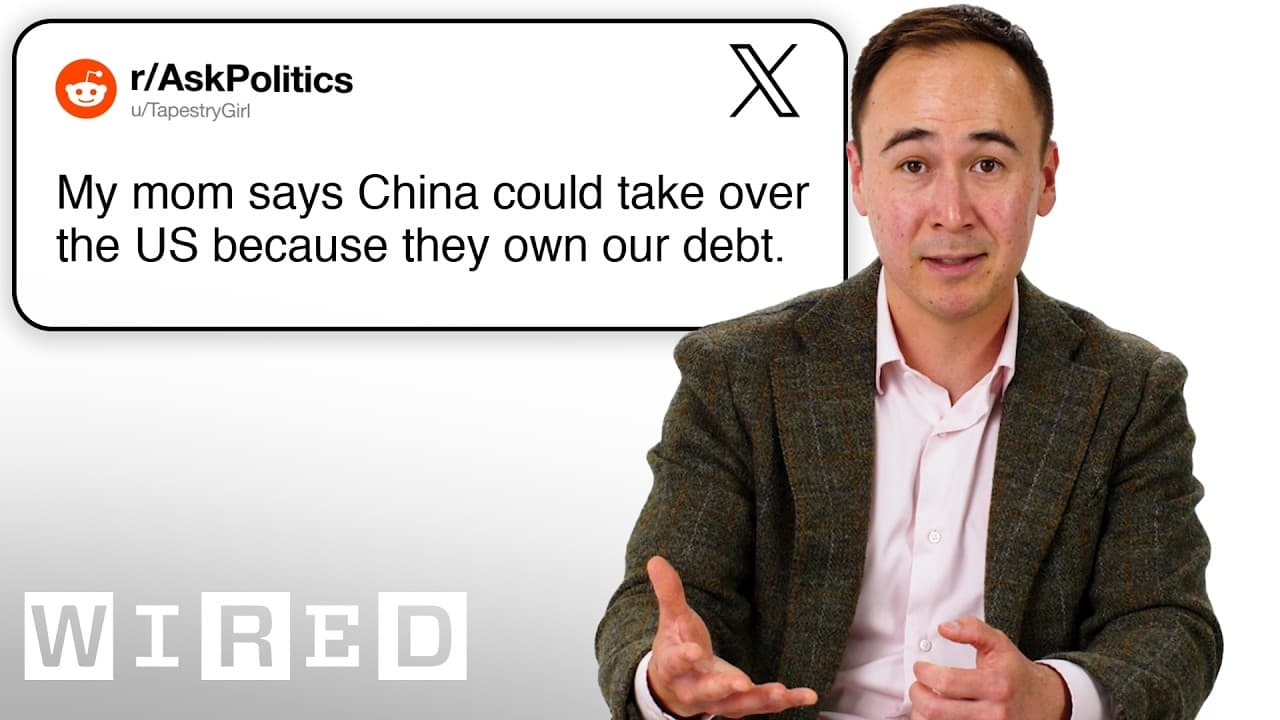
TL;DR
China's vast size and complex geopolitical landscape mean that Western perceptions often overlook its intricate challenges and strengths. While China has achieved significant economic and infrastructural growth, its political system remains tightly controlled, impacting both domestic and international relations. Understanding China's modern history, strategic interests, and socio-political dynamics is crucial for accurate global engagement.
Transcript
- "If Russian bots exist, do Chinese bots also exist?" I think first of all, you should look down at the comments in this video and you'll probably get a taste of whether there are any Chinese bots. I'm Michael Beckley. I study modern China. Let's answer your questions from the internet. This is China Support. [upbeat music] S-Sheepherder wants to ... Read More
Key Insights
- China's military and economic resources are spread thin due to its vast size and population, creating both assets and liabilities.
- Modern China's history begins with the 1911 collapse of the Qing dynasty, leading to significant political and social transformations.
- China's strategic interest in Taiwan is driven by geopolitical positioning and historical claims, with significant implications for US-China relations.
- China excels in mobilizing resources for national missions, achieving rapid infrastructure and economic development.
- The US-China trade war affects both economies, with China focusing on self-reliance and the US on reducing dependencies.
- China maintains a strong state presence in its economy, with the Communist Party controlling key sectors despite capitalist appearances.
- Mao Zedong is viewed as both a unifying figure and a controversial leader due to policies like the Great Leap Forward.
- China's one-child policy significantly impacted its demographic structure, contributing to economic growth but also future challenges.
Install to Summarize YouTube Videos and Get Transcripts
Explore YouTube Video Summarizer or Get YouTube Transcript Extractor
Questions & Answers
Q: What are common misconceptions Westerners have about China?
Westerners often misunderstand China's geopolitical strategies, overlooking how its vast size and population require significant resource allocation for defense and economic stability. China's rapid development and modern infrastructure are seen as purely capitalist, ignoring the strong state presence and control in key sectors.
Q: When did modern China begin and how did it evolve?
Modern China began with the 1911 collapse of the Qing dynasty, leading to the warlord era, Japanese aggression, and eventually the Chinese Civil War. The Communist victory in 1949 established the People's Republic of China, aligning initially with the Soviet Union before opening relations with the US, shaping its current global stance.
Q: Why is Taiwan important to China?
Taiwan holds strategic importance for China due to its location in crucial trade waterways and its status as a rival government. China's interest in Taiwan is driven by historical claims and the desire to assert control over what it considers a renegade province, impacting regional and global security dynamics.
Q: How does China excel in national resource mobilization?
China's centralized government effectively mobilizes resources for national missions, leading to rapid infrastructure development and economic growth. This approach has enabled China to become a leader in renewable energy and global trade, although it comes at the cost of limited civil and political freedoms for its citizens.
Q: What are the effects of the US-China trade war?
The trade war has strained both economies, with China focusing on developing self-reliant industries and the US seeking to reduce dependencies. While China's export-driven economy faces challenges, both nations view economic decoupling as a strategic move to enhance national security and reduce vulnerabilities.
Q: Is China truly a communist country?
China maintains a strong state presence in its economy, with the Communist Party controlling key sectors like land, energy, and banking. Despite capitalist elements and modern infrastructure, the party's influence ensures that economic activities align with state objectives, reflecting a unique blend of communism and capitalism.
Q: What is Mao Zedong's legacy in China?
Mao Zedong is both revered and criticized in China. He is credited with unifying the country and promoting literacy and women's participation in the workforce. However, his policies, such as the Great Leap Forward and the Cultural Revolution, resulted in significant human suffering and are viewed as major historical blunders.
Q: How did the one-child policy impact China's demographics?
The one-child policy led to a demographic shift, creating a large working-age population that fueled economic growth. However, it also resulted in an aging population and a shrinking workforce, posing future challenges for China's economic productivity and social welfare systems as the population structure becomes increasingly imbalanced.
Summary & Key Takeaways
-
China's geopolitical landscape is complex, with its military and economic resources stretched across vast borders, presenting both opportunities and challenges. Understanding its modern history, starting from the 1911 Qing dynasty collapse, is crucial for grasping its current global stance.
-
China's strategic interest in Taiwan is rooted in historical claims and geopolitical importance, impacting US-China relations. The trade war between the two nations highlights their focus on self-reliance and reducing mutual dependencies, affecting global economic dynamics.
-
China's rapid development is driven by state-controlled resource mobilization, despite its capitalist facade. The one-child policy, while boosting economic growth, poses future demographic challenges. Mao Zedong's legacy remains controversial, balancing national unification with harsh policies.
Read in Other Languages (beta)
Share This Summary 📚
Summarize YouTube Videos and Get Video Transcripts with 1-Click
Try YouTube Summary with ChatGPT & Claude or YouTube Transcript Generator
Explore More Summaries from WIRED 📚



Summarize YouTube Videos and Get Video Transcripts with 1-Click
Try YouTube Summary with ChatGPT & Claude or YouTube Transcript Generator