How Can You Interpret Body Language Effectively?
TL;DR
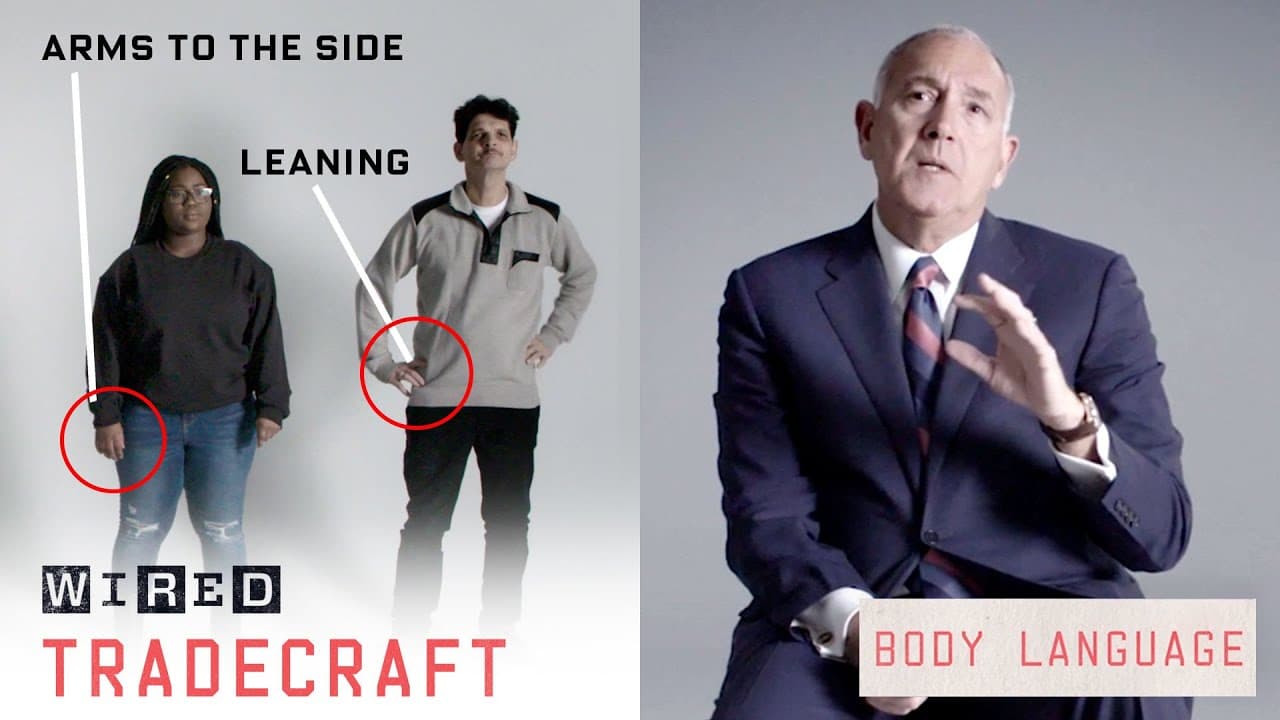
Interpreting body language involves analyzing nonverbal cues such as posture, grooming, and gestures to understand a person's thoughts and feelings. Many misconceptions, like crossed arms indicating defensiveness, are debunked; these actions often serve as self-soothing mechanisms. Observing subtle behaviors is crucial in high-stakes situations, offering deeper insights into an individual's emotions.
Transcript
nonverbals are anything that communicates but is not a word the public knows them as body language how we dress how we walk have meaning and we use that to interpret what's in the mind of the person my name is joe navarro and for 25 years i was a special agent with the fbi my job was to catch spies most of my career i spent within the national secu... Read More
Key Insights
- 😮 Nonverbals, such as body language and how we dress, transmit information about a person's thoughts and intentions. We rely on nonverbals to interpret others and make judgments.
- ♂️ Espionage work is not like what we see in movies. Detecting spies often involves observing subtle nonverbal cues, such as how individuals carry flowers or hold their hands.
- 🤝 Handshakes are a critical moment of touch and the release of bonding chemicals. They can influence our initial impressions of others and signal whether we like or dislike someone.
- 🤔 Many myths surround nonverbal cues, such as the notion that crossing arms indicates a blocking behavior or that certain looks or gestures are indicative of deception. In reality, these behaviors are often self-soothing or simply a result of information processing.
- 👣 Paying attention to micro-level nonverbal behaviors can provide valuable insights. Observing grooming, posture, eye movements, cheek rubbing, and other subtle cues can reveal information about a person's state of mind, stress levels, and reactions to stimuli.
- 🧠 In high-stakes situations like poker, body language becomes even more significant. Players exhibit nonverbal cues, like shifting in their chairs, touching their cards, or shuffling chips, that can reveal psychological discomfort, confidence, or engagement in the game.
- 🏢 Nonverbal communication extends beyond personal interactions and impacts how we present ourselves in various settings, including the workplace. Our nonverbal cues affect how others perceive and respond to us. ⏩ When studying nonverbals, it can be helpful to observe behaviors at double speed, as crucial nonverbal cues become more apparent. This quickened observation allows for a deeper understanding of the information being transmitted through nonverbals.
Install to Summarize YouTube Videos and Get Transcripts
Explore YouTube Video Summarizer or Get YouTube Transcript Extractor
Questions & Answers
Q: How can crossed arms be interpreted differently than as a sign of defensiveness?
Contrary to popular belief, crossing arms is not always a defensive behavior. It can also serve as a form of self-soothing or comfort, indicating a need for emotional support or protection.
Q: Can certain nonverbal cues, like touching the nose or clearing the throat, indicate deception?
No, these behaviors, known as pacifying behaviors, are often used to soothe or comfort oneself and do not necessarily indicate deception. Pinpointing deception solely based on such cues is scientifically unfounded.
Q: How do nonverbal cues play a role in espionage and law enforcement?
Nonverbal cues, when accurately interpreted, can provide valuable information during interrogations and investigations. From how someone carries flowers to small changes in behavior, these cues can reveal hidden motives or affiliations.
Q: Why is it important to pay attention to nonverbal cues during a poker game?
Monitoring nonverbal behavior during a poker game can provide insights into players' levels of comfort, confidence, and their reactions to the game. Observing cues like hand placement, body movements, and facial expressions can help identify patterns and predict players' moves.
Summary & Key Takeaways
-
Nonverbals, including body language and appearance, play a significant role in communication and can provide insight into someone's thoughts and feelings.
-
Many common myths about nonverbal behavior, such as crossed arms indicating defensiveness or certain eye movements indicating deception, are debunked.
-
Investigating nonverbal cues is crucial for law enforcement and espionage work, as they often reveal hidden information and can lead to meaningful interrogations.
Read in Other Languages (beta)
Share This Summary 📚
Summarize YouTube Videos and Get Video Transcripts with 1-Click
Try YouTube Summary with ChatGPT & Claude or YouTube Transcript Generator
Explore More Summaries from WIRED 📚





Summarize YouTube Videos and Get Video Transcripts with 1-Click
Try YouTube Summary with ChatGPT & Claude or YouTube Transcript Generator