Can Body Language Reveal How Long Couples Dated?
TL;DR
Relationship length cannot be determined reliably from a single body-language cue because behavior depends heavily on context. The experts instead compare clusters of signals, including mirroring, proximity, reciprocal movement, touching, self-soothing, foot position, and perception management, while acknowledging that strong comfort or mimicry can develop quickly and nervousness can have several causes.
Transcript
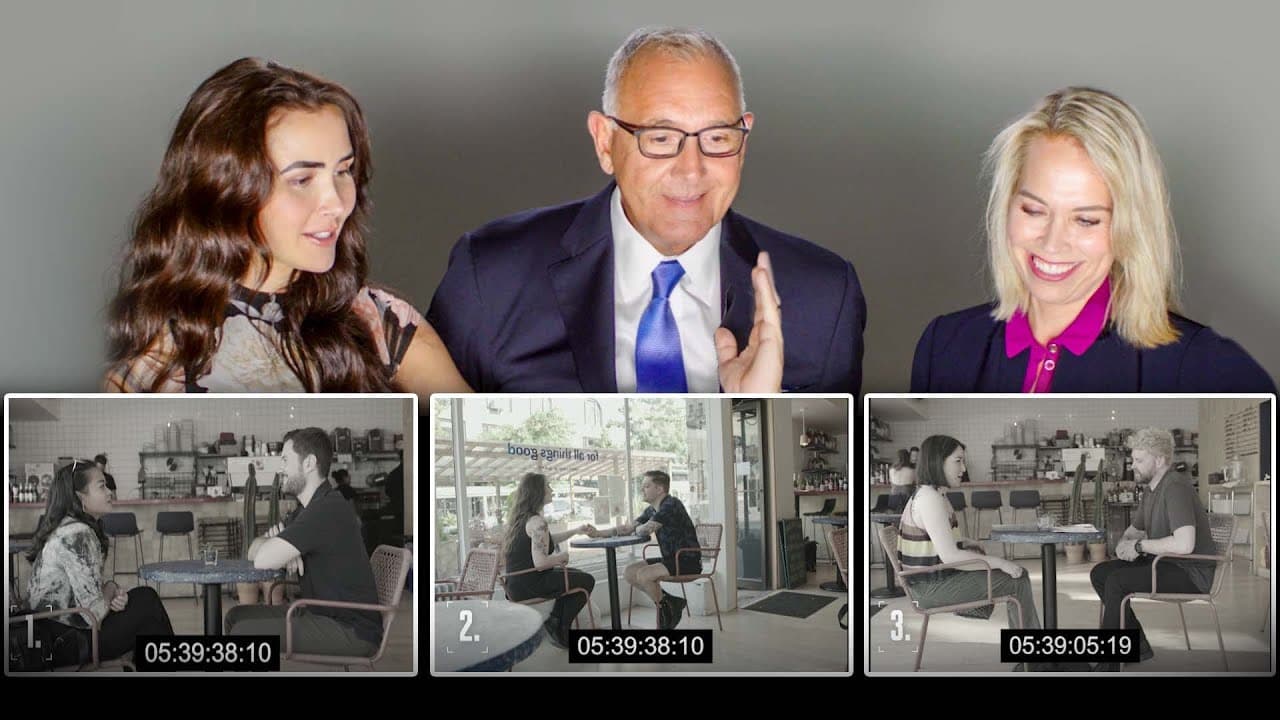
- Oh, can you pause it there? She put her purse next to the guy, so she's coming closer towards his proximity. Putting an object near somebody would not be happening on a first date. - And a trust signal too, because it's her wallet. - [Narrator] These three body language experts will watch these five couples going on dates. Can they guess accurate... Read More
Key Insights
- Body-language interpretation is context dependent, so one posture, gesture, or expression cannot reliably establish how long two people have dated. The experts compare multiple behaviors and watch how those behaviors change before forming a tentative judgment.
- Nonverbal mimicry is presented as a well-supported indicator of interpersonal closeness. Partners who lean, smile, nod, or shift in coordinated ways can appear comfortable and connected, although the experts note that people who get along well may begin mirroring within weeks.
- Proximity is a useful clue when it appears alongside other comfort signals. Moving closer, occupying a partner's space, placing a purse nearby, clearing objects from the line of sight, or positioning feet near another person can suggest trust and ease.
- Reciprocity reveals whether engagement is mutual. When one person smiles, leans, or moves and the other responds similarly, the exchange suggests shared enjoyment, while absent reciprocity may indicate unequal attraction, distraction, negative feelings, or an unsuccessful attempt to draw someone out.
- Self-soothing behaviors can signal nervousness or discomfort. Finger picking, neck touching, gripping or scratching a knee, holding the table, keeping hands between the legs, touching menus, and restricted lower-body posture are interpreted cautiously because each action may have another explanation.
- Established comfort can reduce perception management during a date. Talking with food in the mouth, laughing while eating, taking a partner's food, swapping plates, moving a partner's glass, and caring for someone with a napkin were treated as signs unlikely to occur on a first date.
- Feet can communicate comfort that facial expressions do not fully reveal. Unveiling feet, moving them close to a partner, or engaging in foot cradling was interpreted as evidence of trust, while withdrawing feet was considered less important when many other behaviors indicated ease.
- Behavioral change over time is more informative than a frozen moment. Food arrival made some couples more animated and comfortable, showing that hunger, filming conditions, or situational tension could resemble relationship problems or first-date nervousness until the broader context became visible.
Install to Summarize YouTube Videos and Get Transcripts
Explore YouTube Video Summarizer or Get YouTube Transcript Extractor
Questions & Answers
Q: Can body language reveal how long a couple has dated?
Body language can support a tentative estimate, but it cannot reliably reveal an exact relationship length. The experts examine clusters of cues such as mirroring, proximity, touching, reciprocity, self-soothing, foot position, and impression management. They also emphasize that behavior is driven by context and that couples who connect quickly may display comfortable, coordinated behavior within weeks.
Q: What body-language signs suggest that a couple is comfortable together?
Comfort may appear through relaxed proximity, fluid changes in posture, mutual smiling, coordinated movement, shared personal space, and unguarded behavior while eating. The experts also notice partners exchanging food, swapping plates, moving objects for each other, touching for longer periods, placing their feet close together, and showing less concern about carefully managing the impression they create.
Q: Why is mirroring important when analyzing couples?
Mirroring matters because coordinated posture, smiles, leaning, nodding, and movement can indicate interpersonal closeness. The experts describe highly synchronized interaction as a movement dance in which partners appear tuned to one another. However, mirroring does not prove a long relationship because people who get along especially well may begin copying each other's behavior within weeks.
Q: What do self-soothing gestures mean on a date?
Self-soothing gestures may indicate nervousness, anxiety, or discomfort, but their meaning depends on surrounding behavior. The experts identify finger picking, neck touching, gripping a knee, scratching, holding the table, keeping hands low between the legs, and repeatedly touching menus. Smiles and positive engagement can coexist with these behaviors, especially when someone is interested but still uneasy.
Q: How does reciprocity show mutual interest between partners?
Reciprocity occurs when one person's smile, movement, gesture, or attempt to engage receives a comparable response. The experts treat this mutual exchange as evidence that both people enjoy the interaction. When one person moves forward and backward without a response, the asymmetry may reflect unequal attraction, distraction, negative feelings, or one partner trying unsuccessfully to encourage engagement.
Q: What intimate gestures suggest a date is not the first one?
The experts treat several caring or unguarded actions as unlikely on a first date. These include handing a partner a napkin at close range, taking food from the other person's plate, swapping plates, moving a glass out of the way, touching fingertips, maintaining longer touches, and placing a purse containing a wallet close to the partner.
Q: Why do the experts examine feet as well as faces?
Feet can reveal comfort and proximity that may be less carefully managed than facial expressions. The experts notice whether people unveil their feet, move them close to a partner, keep them near a leg, or cradle each other's feet. Foot cradling is described as a high-comfort display involving trust, although foot withdrawal should be interpreted alongside the couple's other behaviors.
Q: Why can closed posture be misleading on a date?
Closed posture may suggest discomfort, but it can also appear when partners mirror one another or react to temporary circumstances. One couple initially looked reserved, crossed their arms, and remained relatively still, yet became more animated after food arrived, exchanged plates, and showed greater comfort. The experts considered hunger and filming conditions as possible explanations for the earlier negativity.
Summary & Key Takeaways
-
Three experts examine five couples on dates and try to estimate how long each pair has been together. They compare interpersonal distance, posture, hand activity, touching, facial expressions, feet, object placement, and changes over time. They repeatedly stress that isolated behaviors are ambiguous because context and individual differences shape every visible action.
-
Mirroring, reciprocal responses, relaxed movement, shared personal space, and intimate gestures are treated as possible signs of closeness. Examples include exchanging food, swapping plates, moving objects aside, placing a purse near a partner, touching fingertips, and cradling feet. Longer touches and reduced efforts to manage impressions also suggest established comfort.
-
Self-soothing and restricted behavior may indicate nervousness or discomfort, but they do not reveal a relationship timeline by themselves. Finger picking, gripping a knee, touching menus, heavy breathing, closed posture, and limited movement require comparison with smiles, engagement, reciprocity, and behavioral changes. The revealed first couple had been married one year.
Read in Other Languages (beta)
Share This Summary 📚
Summarize YouTube Videos and Get Video Transcripts with 1-Click
Try YouTube Summary with ChatGPT & Claude or YouTube Transcript Generator
Explore More Summaries from WIRED 📚




Summarize YouTube Videos and Get Video Transcripts with 1-Click
Try YouTube Summary with ChatGPT & Claude or YouTube Transcript Generator