How Does Chinese Manufacturing Dominate Globally?

TL;DR
Temu's low prices stem from its demand aggregation strategy, which utilizes excess manufacturing capacity in Chinese factories. This approach highlights China's ability to produce a wide range of goods efficiently due to its interconnected manufacturing ecosystems. The country's rapid economic growth since the 1980s is attributed to strategic investments in infrastructure and technology, which have made it a manufacturing powerhouse.
Transcript
- I'm Aaron Alpeter. I'm a supply chain expert who helps founders start, scale, and exit their businesses. Let's answer your questions from the internet. This is "Chinese Manufacturing Support." [upbeat music] DLVermeer asked, "How is Temu so cheap? Me trying to figure out how Temu can afford a commercial every break when my cart of 104,564 items c... Read More
Key Insights
- Temu's demand aggregation model allows it to offer low prices by utilizing factories' excess capacity.
- China's manufacturing ecosystem is highly competitive, operating on razor-thin margins to keep factories running.
- The interconnectedness of Chinese manufacturing hubs enables efficient production of diverse goods.
- China's rapid economic growth is due to strategic investments and opening up to Western companies.
- Western brands historically denoted quality, but Chinese brands are gaining traction domestically.
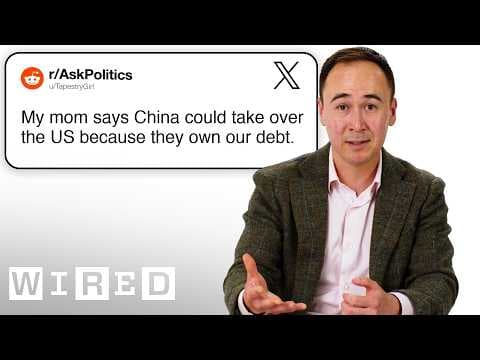
- China's Belt and Road Initiative aims to secure resources and expand geopolitical influence.
- The Made in China 2025 plan focuses on reducing dependency on foreign technology and enhancing domestic capabilities.
- China's demographic challenges may lead to increased automation and potential policy shifts on immigration.
Install to Summarize YouTube Videos and Get Transcripts
Explore YouTube Video Summarizer or Get YouTube Transcript Extractor
Questions & Answers
Q: How does Temu offer such low prices?
Temu offers low prices by operating as a demand aggregation platform, utilizing excess manufacturing capacity in Chinese factories. This allows factories to keep production lines running and avoid losses from idle capacity. By aggregating demand and selling excess capacity, Temu can offer products at significantly reduced prices.
Q: What would happen if all Chinese-made goods disappeared?
If all Chinese-made goods disappeared, there would be a significant impact on global supply chains. Many consumer electronics, apparel, and other goods rely on Chinese manufacturing or components. Prices for these products would likely increase due to scarcity, and alternative manufacturing hubs would struggle to meet global demand in the short term.
Q: Why is nearly everything made in China?
China's dominance in manufacturing is due to its well-developed and interconnected ecosystems, where specific regions specialize in different industries. This specialization, combined with strategic investments in infrastructure and technology, allows for efficient production and quick scaling. Additionally, China's competitive labor market and government support have attracted global companies.
Q: How has China's economy grown so rapidly since 1980?
China's rapid economic growth since 1980 can be attributed to strategic reforms that opened the country to foreign investment and trade. The establishment of special economic zones, coupled with significant investments in infrastructure and manufacturing capabilities, attracted Western companies. China's accession to the World Trade Organization further accelerated its integration into the global economy.
Q: What is the Made in China 2025 plan?
The Made in China 2025 plan is a strategic initiative launched by the Chinese government to enhance the country's manufacturing capabilities and reduce dependency on foreign technology. The plan focuses on developing high-tech industries, such as semiconductors and renewable energy, to create a more resilient and self-sufficient economy.
Q: How does China's Belt and Road Initiative impact global trade?
China's Belt and Road Initiative aims to expand trade routes and strengthen economic ties by investing in infrastructure projects worldwide. This initiative seeks to secure resources, enhance China's geopolitical influence, and create new markets for Chinese goods. It also aims to establish China as a central player in global trade networks.
Q: What are the working conditions like in Chinese factories?
Working conditions in Chinese factories vary, with larger companies often adhering to higher standards due to international scrutiny. However, smaller factories may still have challenging conditions. Over time, labor standards have improved as the workforce becomes more skilled and selective. Western companies often influence these improvements through supply chain management and ethical sourcing practices.
Q: How is China addressing its aging population crisis?
China is facing a demographic challenge due to its aging population, a result of the one-child policy. To address this, the country is focusing on automation and technological advancements to compensate for the shrinking workforce. Additionally, there may be potential policy shifts to encourage immigration and increase the labor force, although this is less common in China's current approach.
Summary & Key Takeaways
-
Temu offers low prices by utilizing excess capacity in Chinese factories, highlighting China's efficient manufacturing ecosystem. The country's rapid economic growth since the 1980s is a result of strategic investments in infrastructure and technology, making it a global manufacturing leader.
-
China's interconnected manufacturing hubs enable the production of a wide range of goods, maintaining competitiveness through razor-thin margins. The country's Belt and Road Initiative and Made in China 2025 plan aim to secure resources and enhance domestic capabilities, reducing reliance on foreign technology.
-
China's demographic challenges, such as an aging population, may lead to increased automation and potential policy shifts on immigration. Meanwhile, Chinese brands are gaining traction domestically as Western brands' perceived quality advantage diminishes.
Read in Other Languages (beta)
Share This Summary 📚
Summarize YouTube Videos and Get Video Transcripts with 1-Click
Try YouTube Summary with ChatGPT & Claude or YouTube Transcript Generator
Explore More Summaries from WIRED 📚




Summarize YouTube Videos and Get Video Transcripts with 1-Click
Try YouTube Summary with ChatGPT & Claude or YouTube Transcript Generator