How Does Music Change the Brain and Emotions?
TL;DR
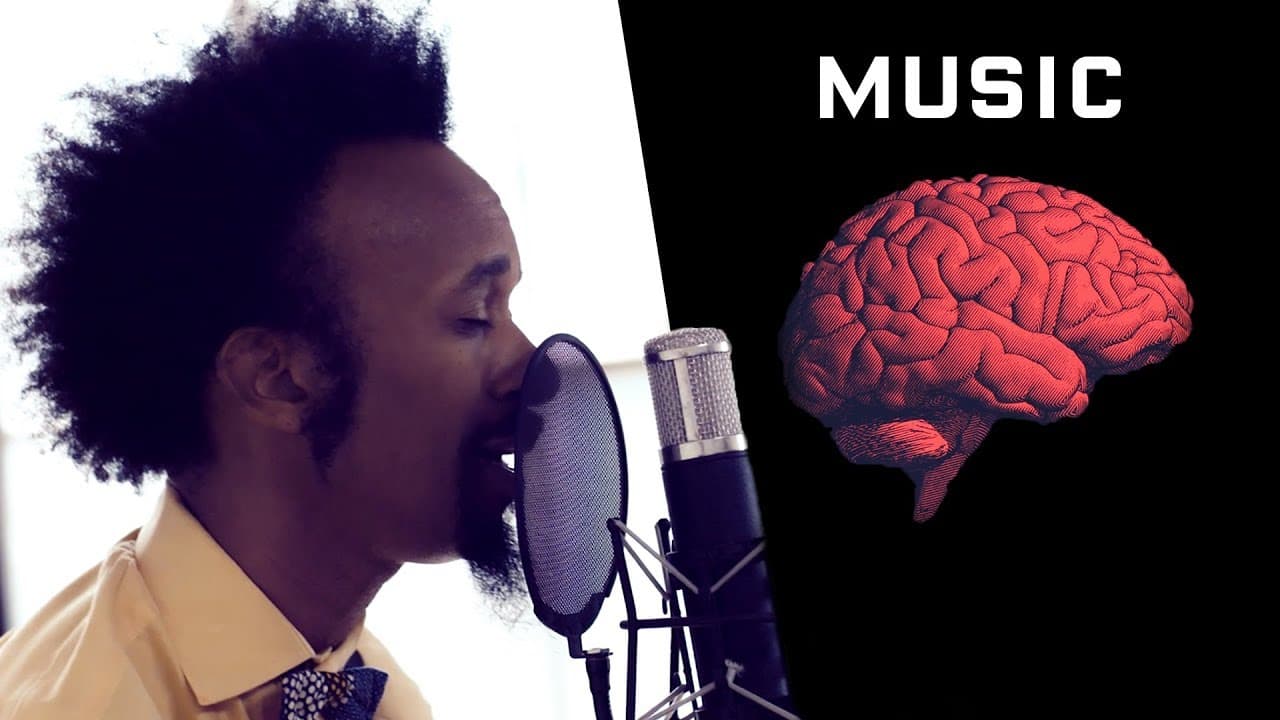
Music activates distributed networks across the brain, connecting hearing with movement, memory, emotion, vision, and decision-making. Listening can produce pleasure, stress, or chills, while sustained musical training can strengthen connections between brain hemispheres. Music therapy may also help people recover speech by engaging alternative neural pathways, and improvisation appears to reduce conscious self-monitoring during creative performance.
Transcript
these days we hear music all the time it wakes us up motivates our workouts keeps us company on our commutes doesn't matter what kind of music it is music itself has the ability to affect our moods and our bodies in all sorts of ways we not our heads we sway dance music and give us chills even make us cry music activates every area of the brain tha... Read More
Key Insights
- Music activates every mapped area of the brain in some way, according to the researchers featured. Its effects extend across both hemispheres and involve the front, back, inside, and outside of the brain rather than being confined to a single specialized music region.
- The auditory cortex processes musical properties such as loudness, pitch, and timbre. Music can also engage the visual cortex when someone reads or watches music, the motor cortex during rhythmic movement, the hippocampus during recognition, and the cerebellum in emotional responses.
- Playing music is a demanding form of neural multitasking. A performer must coordinate motor systems, timing, memory, hearing, posture, pitch, articulation, intonation, sound quality, and expression, causing many brain systems to operate together during a single performance.
- Music training can produce measurable developmental changes in children. Over five years, researchers observed benefits involving cognitive skills, decision-making, and social behavior, along with changes in associated brain structures and stronger connections between the right and left hemispheres.
- Musical chills are linked to communication between auditory and emotional brain regions. People who experience these chills were described as having a stronger connecting tract, with more fibers, which may allow closer communication between what they hear and what they feel.
- A startling musical sound can become pleasurable after cognitive reappraisal. A high vocal note may initially resemble a scream and trigger attention, but the prefrontal cortex recognizes that the listener is safe, allowing the initial response to be experienced as enjoyment.
- Music therapy can provide an alternative pathway to language after brain injury. Gabrielle Giffords struggled to speak following severe damage to the left side of her brain, yet singing helped her produce a difficult word by accessing other brain regions with musical capabilities.
- Musical improvisation reduces activity in brain regions associated with effortful planning and conscious self-monitoring. During an original performance, sensory, sound, and motor areas became more active while the prefrontal cortex became less active, reflecting a release of conscious self-censorship.
Install to Summarize YouTube Videos and Get Transcripts
Explore YouTube Video Summarizer or Get YouTube Transcript Extractor
Questions & Answers
Q: How does music affect different areas of the brain?
Music affects distributed systems throughout the brain rather than one isolated region. The auditory cortex analyzes loudness, pitch, timbre, and related sound features. The motor cortex participates when listeners tap, clap, or move, while the hippocampus helps retrieve familiar passages from memory. Visual areas may activate when musicians read music, and the cerebellum contributes to emotional responses.
Q: Is music processed only in the right side of the brain?
Music is not processed only on the right side of the brain. The program explains that researchers once contrasted language on the left with music on the right, but improved neuroimaging and experimental methods overturned that simple division. Music engages both hemispheres, along with areas in the front, back, inside, and outside of the brain.
Q: How does learning music change a child's brain?
Long-term music training was associated with both functional benefits and structural brain changes in the children studied. Over five years, researchers observed benefits in cognitive skills, decision-making, and social behavior. They also found stronger connections between the right and left hemispheres, which the program links to improved, more creative approaches to solving problems.
Q: Why does music sometimes cause chills or goosebumps?
Musical chills, also called frisson in the transcript, reflect a strong emotional and physiological response to sound. Researchers described a pathway connecting auditory and emotional regions of the brain. That tract was stronger and contained more fibers in people who experienced chills, suggesting more effective communication between what those listeners heard and what they felt.
Q: Why can a scream-like musical note feel pleasurable?
A high musical note may resemble a scream, which is important for attracting attention and preparing a person to run or fight. The brain then rapidly reassesses the situation. When the prefrontal cortex recognizes that the listener is safe and merely hearing recorded music, that reappraisal can transform the initial startle response into a pleasurable experience.
Q: Can music therapy help someone recover speech?
Music therapy can help some patients regain access to language through alternative brain pathways. After Gabrielle Giffords suffered severe damage to the left side of her brain and developed aphasia, she struggled to speak but could sing a difficult word. Her therapist compared music to a feeder road that bypasses blocked traffic and reaches the same destination.
Q: What happens in the brain during musical improvisation?
Improvisation increases activity in regions involved in sound, sensory processing, and motor control while reducing activity in the prefrontal cortex. That frontal region is associated with effortful planning and conscious self-monitoring. Its reduced activity during original creation suggests that performers temporarily loosen normal self-censorship and control, allowing new musical ideas to emerge more freely.
Q: How do enjoyable and disliked music affect the body?
Music that a person enjoys can activate the brain's internal opioid system. The chemicals involved were described as producing good feelings and helping with pain. Music that a listener strongly dislikes can instead release cortisol, which the program identifies as a stress-related chemical. Musical preference can therefore produce notably different emotional and bodily responses.
Summary & Key Takeaways
-
Music does not belong exclusively to one side of the brain. Listening engages specialized areas that process pitch, loudness, and timbre, while also involving networks associated with movement, visual information, memory, and emotion. Brain scans therefore show widespread activity rather than a single isolated music center.
-
Playing music simultaneously demands posture, timing, motor control, listening, memory, intonation, and interpretation. A five-year study described in the program associated childhood music training with cognitive, decision-making, and social benefits, as well as structural changes and stronger connections between the brain's right and left hemispheres.
-
Music can support recovery and creativity by changing how brain systems are engaged. Therapy helped Gabrielle Giffords access words through singing after damage affected her speech. During musical improvisation, sensory and motor regions became more active while the prefrontal cortex became less active, suggesting reduced planning and conscious self-monitoring.
Read in Other Languages (beta)
Share This Summary 📚
Summarize YouTube Videos and Get Video Transcripts with 1-Click
Try YouTube Summary with ChatGPT & Claude or YouTube Transcript Generator
Explore More Summaries from WIRED 📚




Summarize YouTube Videos and Get Video Transcripts with 1-Click
Try YouTube Summary with ChatGPT & Claude or YouTube Transcript Generator