How can hackers hijack a Jeep via the Internet
TL;DR
Hackers demonstrated remote control over a Jeep Cherokee by exploiting an internet connected head unit, showing possible control of steering, brakes, and transmission. The demonstration used a controlled test and prompted a security patch from Chrysler, highlighting the need for better protection as cars become more connected.
Transcript
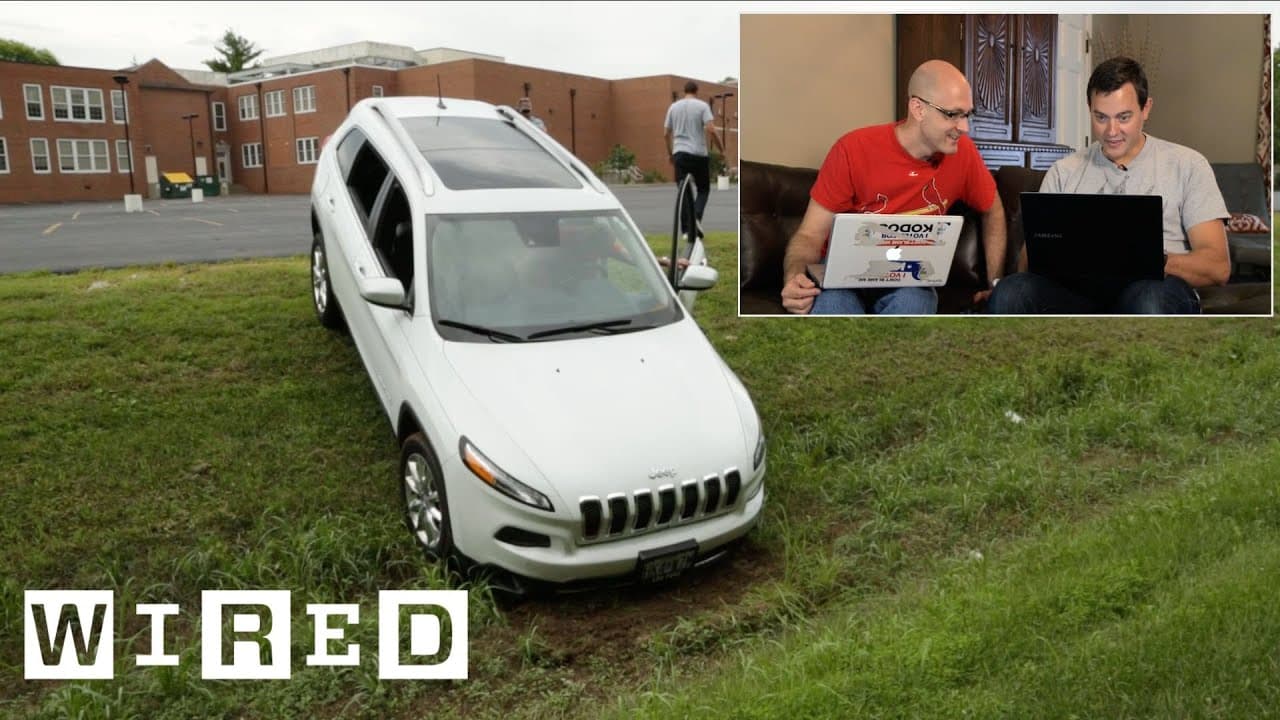
it's not fun to have your two-ton SUVs brakes hacked just as your birth in front of a ditch okay oh that's a hold on that's what I've learned from Charlie Miller and Chris valasek a pair of hackers who have spent the last year developing a piece of software that can wirelessly sabotage this 2014 Jeep Cherokee it hasn't been altered in any way there... Read More
Key Insights
- Hackers showed that a car can be controlled remotely through the internet connected dashboard system.
- The attack targets the head unit inside the vehicle that connects to the internet and may run commands.
- Attacks can affect steering, braking, and transmission once the intruder breaches the car from the cellular network.
- Researchers demonstrated the attack from miles away, not in a physical ported setup.
- A safe demonstration was used to illustrate potential dangers and push for fixes.
- Hybrids of software and vehicle architecture can create new security risks as cars become more connected.
- Manufacturers were alerted and a security patch was issued as a response to the demonstration.
- The event aims to raise awareness and spur broader efforts to secure connected vehicles.
Install to Summarize YouTube Videos and Get Transcripts
Explore YouTube Video Summarizer or Get YouTube Transcript Extractor
Questions & Answers
Q: A real search query question about the video (e.g. 'How to...', 'What is...', 'Why does...', 'When should...'). Question 1
How can a car be controlled remotely through its internet connected head unit, and what parts of the vehicle can be affected once access is gained? The demonstration shows that the head unit can be exploited to issue commands to systems like steering, braking, and even the speedometer. This illustrates a potential remote control chain from a cellular network to in car controls.
Q: Question 2
What specific component in the jeep connects to the internet and becomes a potential vulnerability in connected cars? The component is the head unit, an internet connected computer in the dashboard that allows information queries but can also be used to run commands, creating a path for unauthorized access if breached remotely.
Q: Question 3
What did the researchers plan to do at the Black Hat conference and how does that relate to vehicle security? They planned to release a portion of their exploit code at the annual Black Hat conference to inform the public and industry, which underscores the need for swift security improvements in modern cars and encourages broader focus on this problem.
Q: Question 4
How did the researchers ensure safety during the test, and what was the purpose of the demonstration? They used a controlled, safe demonstration to show serious consequences and to avoid harming the driver, emphasizing that their goal is to push for fixes and to raise awareness about vulnerabilities in connected vehicles.
Q: Question 5
What is the potential impact on a car’s critical systems during a remote attack, as shown in the video? The attackers demonstrated the ability to manipulate the accelerator, windshield wipers, and brakes, and could cause the vehicle to slow down or stop, demonstrating how a remote intrusion can severely affect safety on the road.
Q: Question 6
What response did Chrysler and manufacturers have to the demonstration? Chrysler issued a security patch after the demonstration, signaling that more needs to be done, and that car makers must enhance protections for the increasingly connected fleet of vehicles.
Q: Question 7
Why is there a push for more research into vehicle security beyond a single car or model? Because hundreds of thousands of late model Chrysler vehicles may be vulnerable through internet connected features, highlighting that broader, systemic fixes are needed to protect a wide range of connected cars and prevent remote attacks.
Q: Question 8
What lesson does the video convey about the future of automotive technology and security? The lesson is that as cars become more connected, they also become more exposed to cyber threats, and robust, ongoing security measures are essential to prevent remote control over essential vehicle functions.
Summary & Key Takeaways
-
A demonstration shows remote hacking of a Jeep via its internet connected head unit, illustrating how critical vehicle functions can be affected. The hackers planned to reveal exploit code at a conference and urged manufacturers to improve protection. The event emphasizes vulnerability in connected cars.
-
Chrysler vehicles with internet connected features may be vulnerable, and security patches are being issued while researchers push for broader fixes. The experiment was conducted safely to avoid harm, with the goal of raising awareness about real-world risks.
-
The video underscores the growing security challenges in connected cars and the importance of promptly addressing vulnerabilities to prevent remote manipulation of essential vehicle systems.
Read in Other Languages (beta)
Share This Summary 📚
Summarize YouTube Videos and Get Video Transcripts with 1-Click
Try YouTube Summary with ChatGPT & Claude or YouTube Transcript Generator
Explore More Summaries from WIRED 📚






Summarize YouTube Videos and Get Video Transcripts with 1-Click
Try YouTube Summary with ChatGPT & Claude or YouTube Transcript Generator