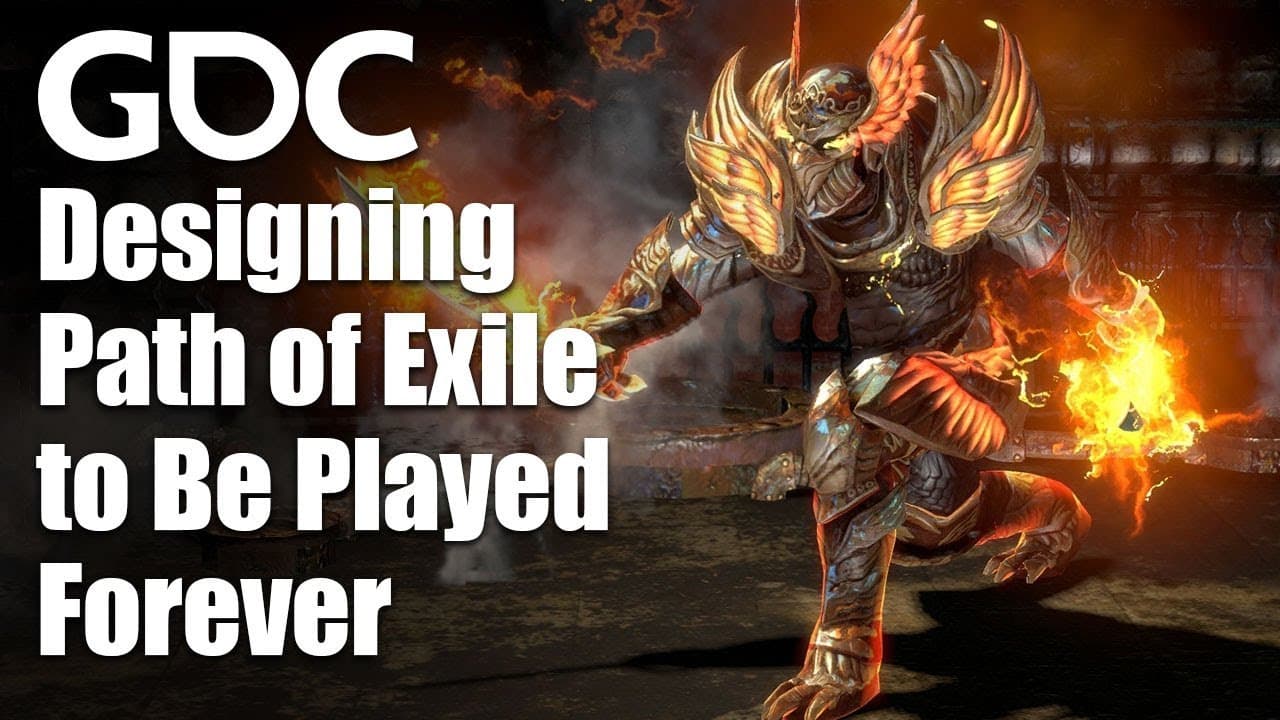
How to design an endless PvE game like Path of Exile
TL;DR
To sustain long term growth, design a live service that updates weekly with new items and content while enforcing a secure, player driven economy and deep customization. Replayability comes from random levels and items, visceral action, and a flexible class system where the playstyle matters more than the specific class.
Transcript
reindeer games and today I'm gonna talk about how we design path of Exile to be played forever I'd like to thank Jonathan my co-founder for helping me extensively with this talk half of it as him I'm just presenting it I've been asked to make sure that everyone mutes their phones so it's quiet and thank you very much from staying to the last day of... Read More
Key Insights
- PvE games struggle to grow over time because they typically have a fixed content ladder and limited replay value.
- Path of Exile adopts a live service model to continuously refresh content, enabling year after year growth even with a small team.
- Random levels dramatically boost replayability by making each playthrough feel different and worth many hours of exploration.
- Randomly generated items are crucial because items are the core progression in action RPGs and drive player motivation beyond level itself.
- A secure online economy with item trading gives items weight and fosters player interaction, while strong security protects against abuse and exploits.
- Deep character customization expands replay value by enabling many distinct playstyles beyond a few classes.
- A visceral action combat system helps players feel immediate impact during battles, increasing engagement and satisfaction.
- The game was designed to run on a skeleton crew in New Zealand, showing that a lean operation can sustain long-term growth with the right design choices.
Install to Summarize YouTube Videos and Get Transcripts
Explore YouTube Video Summarizer or Get YouTube Transcript Extractor
Questions & Answers
Q: How does Path of Exile plan to keep players returning over many years?
Path of Exile keeps players returning by treating the game as a live service that updates weekly with new items, Keystone passives, and skills. This approach creates ongoing value, keeps the economy active, and continually reshapes endgame goals. Even with a small team, this cadence sustains engagement and growth over time.
Q: What design pillars shaped Path of Exile as an action RPG?
The game focuses on visceral action combat for immediacy, randomly generated levels for replayability, randomly generated items to diversify progression, a secure online economy to preserve item value and integrity, and deep character customization to support many playstyles. These pillars aim to address common PvE growth challenges.
Q: Why are randomly generated levels and items important in this design?
Random levels and items prevent early exhaustion of content by ensuring each run and item feels new. This leads to long tail engagement where players can discover different paths, builds, and rewards, extending the gameplay horizon and encouraging countless hours of exploration and optimization.
Q: How is item economy treated in Path of Exile?
The item economy is treated as secure and central to progression. Items have real value due to tradable exchanges and protected integrity, ensuring items can be bought, sold, or traded with confidence and that their existence meaningfully influences player success and social interaction.
Q: What role does deep customization play in player retention?
Deep customization allows players to experiment with thousands of builds and playstyles, so even experienced players can continually discover new ways to play. This variety reduces stagnation and sustains long-term interest as the most effective strategies evolve over time.
Q: What is the significance of a lean development crew for a live service game?
A lean crew demonstrates that sustainable live service growth is possible without large funding by focusing on core design pillars, tight balance, secure systems, and frequent content updates. This approach can maintain engagement and growth with careful prioritization and efficient workflows.
Q: How does the talk describe the appeal of trading in the game?
Trading gives items tangible value and enables social interaction among players. A secure system that supports trade ensures that items feel meaningful, as players can exchange loot and builds, reinforcing player agency and community activity within the game.
Q: What lesson about player motivation is highlighted by the talk?
The talk emphasizes that player motivation is driven by meaningful progression, frequent fresh content, secure economies, and the freedom to experiment with different playstyles. By combining these elements, a PvE game can maintain engagement and grow its audience over many years.
Summary & Key Takeaways
-
A long-term, live service approach is essential for a PvE game to grow beyond its initial release window and keep players engaged over years.
-
A weekly update cadence with new items, Keystone passives, and skills can maintain momentum and appeal to an audience that keeps returning for fresh content.
-
A secure online economy that supports meaningful item trade and strict integrity helps items retain worth and motivates players to engage with player to player exchanges.
Read in Other Languages (beta)
Share This Summary 📚
Summarize YouTube Videos and Get Video Transcripts with 1-Click
Try YouTube Summary with ChatGPT & Claude or YouTube Transcript Generator
Explore More Summaries from GDC Festival of Gaming 📚





Summarize YouTube Videos and Get Video Transcripts with 1-Click
Try YouTube Summary with ChatGPT & Claude or YouTube Transcript Generator