The Persian Language and What Makes It Fascinating
TL;DR
Persian is a historically rich and globally influential language.
Transcript
So let's get into today's topic. I'm going to talk about the Persian language. It's sometimes known as Farsi but I'm going to call it Persian. Persian is a language that is widely spoken in parts of the Middle East and in Central Asia and it has a long history stretching back thousands of years with a few different stages along the way. The Per... Read More
Key Insights
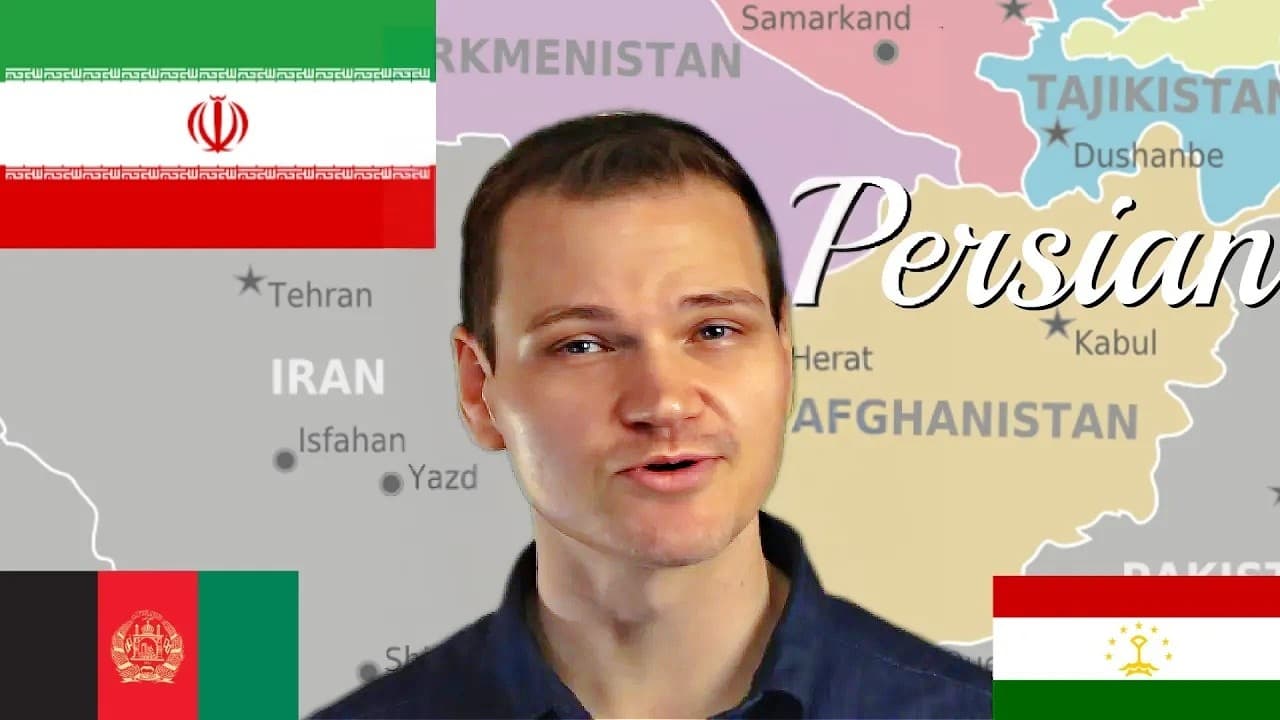
- Persian, also known as Farsi, is the official language of Iran and is spoken by about 38.5 million native speakers in the country. It is also spoken in Afghanistan as Dari and in Tajikistan as Tajik.
- The Persian language has a long history, originating in southwestern Persia and evolving through stages like Old Persian, Middle Persian, and Modern Persian, with significant cultural and literary contributions.
- Persian is part of the Indo-European language family, sharing historical origins with many European languages, making it easier for speakers of these languages to learn compared to Arabic.
- Despite being in the Middle East, Persian is not related to Arabic but has been influenced by it, particularly in vocabulary, due to historical interactions.
- The Persian language has influenced many languages, including Urdu and Turkish, and has contributed several words to English, such as 'bazaar,' 'lemon,' and 'shawl.'
- Persian literature, especially the epic poem Shahnameh by Ferdowsi, has played a crucial role in preserving the language and influencing cultural identity.
- The Persian language spread across a wide geographic area, becoming the official language of empires like the Seljuk and Ottoman, and influencing regions as far as the Indian subcontinent.
- Learning Persian opens access to a rich literary history and provides a foundation for learning Arabic due to shared vocabulary.
Install to Summarize YouTube Videos and Get Transcripts
Explore YouTube Video Summarizer or Get YouTube Transcript Extractor
Questions & Answers
Q: What are the different names for the Persian language in various countries?
In Iran, the language is called Persian or Farsi. In Afghanistan, it is referred to as Dari due to political reasons, although speakers often call it Farsi. In Tajikistan, the language is known as Tajik, a name given by Soviet Union conquerors to emphasize regional distinctions.
Q: How has the Persian language evolved over time?
Persian has evolved through several stages: Old Persian, used during the first Persian Empire and inscribed in cuneiform script; Middle Persian or Pahlavi, found mainly in Zoroastrian religious texts; and Modern Persian, which emerged around 800 CE after a period of Arab influence that introduced Arabic vocabulary.
Q: What impact did the Shahnameh have on the Persian language?
The Shahnameh, an epic poem by Ferdowsi, is a cornerstone of Persian literature. It played a crucial role in preserving the Persian language by intentionally minimizing Arabic loanwords, thus maintaining the language's integrity. The poem's cultural significance has helped keep the Persian language relatively unchanged since its creation.
Q: How does Persian differ from Arabic?
Persian and Arabic belong to different language families; Persian is Indo-European, while Arabic is Afro-Asiatic. Although Persian uses the Arabic script (except in Tajikistan), it is grammatically closer to European languages. This makes Persian easier to learn for speakers of Indo-European languages compared to Arabic.
Q: What are some Persian words that have entered the English language?
Several Persian words have entered English, either directly or through other languages. Examples include 'bazaar,' 'lemon,' 'shawl,' 'serendipity,' 'khaki,' 'caravan,' and 'paradise.' These words reflect the cultural exchanges between Persian-speaking regions and the rest of the world over centuries.
Q: How did Persian influence other languages?
Persian has had a significant impact on languages such as Urdu and Turkish, contributing to their vocabulary. Persian was the official language of empires like the Seljuk and Ottoman, facilitating its spread and influence across a wide geographic area, including the Indian subcontinent and parts of Central Asia.
Q: Why is learning Persian beneficial?
Learning Persian allows communication with over 110 million speakers worldwide and provides access to a rich literary and cultural heritage. It also lays a foundation for learning Arabic, as many Arabic words are already familiar to Persian speakers due to historical influences.
Q: What were the 'two centuries of silence' in Persian history?
The 'two centuries of silence' refer to a period following the Islamic conquest of Persia when there was little to no literature available in Persian. This era, from 651 AD onwards, marked a transition from Middle to Modern Persian and was characterized by the influence of Arabic on the language.
Summary & Key Takeaways
-
The Persian language, also called Farsi, is a significant language in the Middle East and Central Asia, with a rich history and cultural impact. It is spoken in Iran, Afghanistan, and Tajikistan, among other regions, and has evolved through various historical stages.
-
Persian is part of the Indo-European language family, making it more accessible to European language speakers than Arabic. Despite this, Persian has been influenced by Arabic, especially in vocabulary, due to historical interactions.
-
Persian has significantly influenced other languages, including Urdu and Turkish, and has contributed words to English. Its literature, particularly the Shahnameh, has played a key role in cultural preservation and identity.
Read in Other Languages (beta)
Share This Summary 📚
Summarize YouTube Videos and Get Video Transcripts with 1-Click
Try YouTube Summary with ChatGPT & Claude or YouTube Transcript Generator
Explore More Summaries from Langfocus 📚





Summarize YouTube Videos and Get Video Transcripts with 1-Click
Try YouTube Summary with ChatGPT & Claude or YouTube Transcript Generator