What Is the Difference Between 'Used To' and 'Would'?
TL;DR
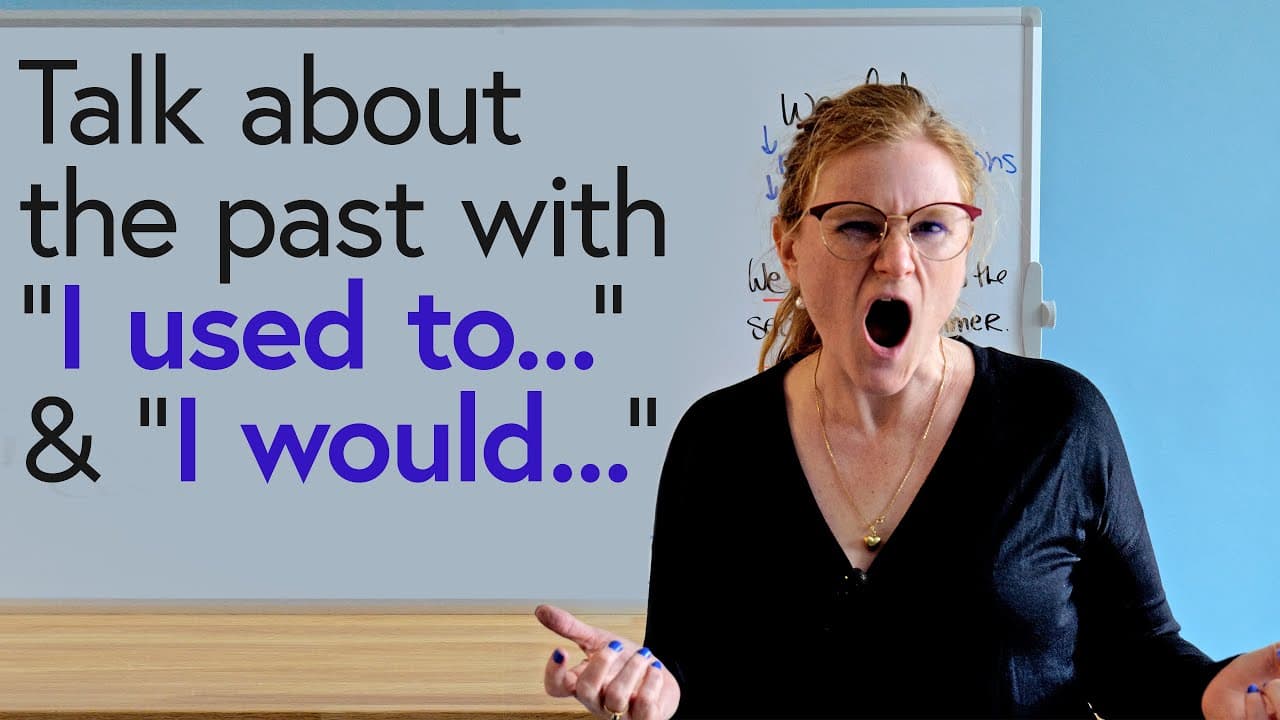
'Used to' indicates a past habit that has ceased, while 'would' refers to repeated actions or routines that may or may not continue. For example, saying 'I used to play soccer' suggests you no longer play, whereas 'I would play soccer every Saturday' describes a routine without indicating if it still occurs.
Transcript
Hey. I have a question for you. Hi. Hi, board. How's it going? This is a very curious thing that I've been thinking about as a native speaker of English, and I want to know what you think. We have two ways to talk about our past -- well, probably more than two, but let's not get into that. The two phrases that we use a lot in English are "used to" ... Read More
Key Insights
- 🍝 "Used to" indicates past habits no longer continued, while "would" references repeated actions or routines in the past.
- 😑 Native English speakers often abbreviate "used to" and use contractions like "we'd" when expressing past actions.
- ⌛ Understanding the context and time period associated with the action helps distinguish between "used to" and "would."
- 🍝 "Would" is used for actions done regularly, while "used to" signifies actions performed in the past but ceased.
- 😒 Listening for speech patterns, such as the use of contractions, can assist in identifying whether "used to" or "would" is being used.
- 🪜 The nuanced differences between "used to" and "would" add depth to language proficiency and effective communication.
- 😒 Recognizing when actions were habitual in the past versus routines can help determine whether to use "used to" or "would."
Install to Summarize YouTube Videos and Get Transcripts
Explore YouTube Video Summarizer or Get YouTube Transcript Extractor
Questions & Answers
Q: What does the phrase "used to" signify in English?
"Used to" denotes past actions that were habitual but are no longer part of one's routine, signaling a completed past practice.
Q: When should one use "would" instead of "used to" in English?
"Would" is employed for recurring actions or routines in the past without confirming if the practice is still ongoing, contrasting with the definite cessation denoted by "used to."
Q: How can speech patterns aid in distinguishing between "used to" and "would"?
Native English speakers often abbreviate "used to" to "used to" and use "would" with contractions like "we'd," signaling the type of past action being described.
Q: Why is it crucial to understand the nuances between "used to" and "would" in language learning?
Differentiating between "used to" and "would" enhances comprehension of past actions in English discourse and aids in communicating past habits accurately.
Summary & Key Takeaways
-
English speakers use "used to" for past habits that are no longer done and "would" for repeated actions or routines in the past.
-
The distinction between "used to" and "would" lies in whether the action is ongoing or has ceased.
-
Observing speech patterns can help learners decipher between the two constructs in everyday conversation.
Read in Other Languages (beta)
Share This Summary 📚
Summarize YouTube Videos and Get Video Transcripts with 1-Click
Try YouTube Summary with ChatGPT & Claude or YouTube Transcript Generator
Explore More Summaries from English with Ronnie · EnglishLessons4U with engVid 📚





Summarize YouTube Videos and Get Video Transcripts with 1-Click
Try YouTube Summary with ChatGPT & Claude or YouTube Transcript Generator