Which English Words Originated from Japanese?
TL;DR
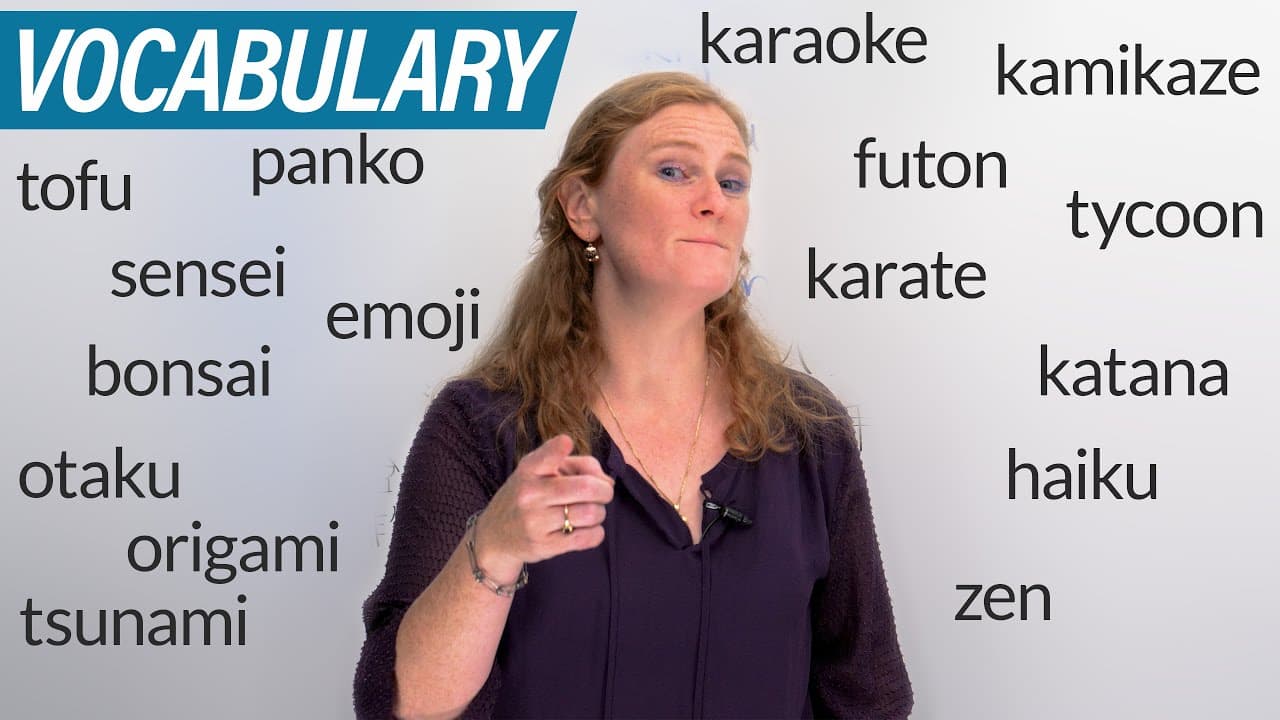
English has adopted several words from Japanese, including karaoke, emoji, and tsunami, each with distinct meanings. For instance, 'karaoke' translates to 'empty orchestra' in Japanese, while 'emoji' means 'face letter'. Understanding these borrowed words can enrich English vocabulary and provide cultural insights.
Transcript
Konnichiwa. Genki desu ka? My name's Ronnie, and I'm here to teach you some Japanese. Huh? What? No. What? Am I here to teach you Japanese or English or both? So, do you like Japanese? Are you interested in Japanese manga, which means comic book? Do you like sushi, which means sushi? Do you like singing karaoke, which is karaoke? Guess what? In Eng... Read More
Key Insights
- 🙂 English has borrowed several words from the Japanese language and given them slightly different meanings.
- 👶 Recognizing borrowed words can help in expanding vocabulary and learning new terms.
- 😀 Some common examples include karaoke (meaning "empty orchestra"), emoji (meaning "face letter"), and tsunami (meaning "harbor water").
- 🏯 Japanese words like futon, katana, and bonsai have different meanings in Japanese than in English.
- 🥋 English has also borrowed words relating to martial arts, such as karate and samurai, from the Japanese language.
- 🔑 Understanding borrowed words can help in cultural exchange and language learning.
- 🏣 Words like otaku and sensei have different usage and connotations in English compared to Japanese.
Install to Summarize YouTube Videos and Get Transcripts
Explore YouTube Video Summarizer or Get YouTube Transcript Extractor
Questions & Answers
Q: How can recognizing borrowed Japanese words help English speakers expand their vocabulary?
Recognizing borrowed Japanese words in English can help English speakers expand their vocabulary because they already have a basic understanding of the meaning of these words. This familiarity can make it easier to remember and learn new vocabulary.
Q: What does the word "tsunami" mean in Japanese and how is it used in English?
In Japanese, "tsunami" means "harbor water". In English, it refers to a natural disaster where destructive water washes away the countryside along the shore. The meaning and usage of the word are the same in both languages.
Q: How is the word "karaoke" pronounced in Japanese and what does it mean?
In Japanese, "karaoke" is pronounced differently from its English counterpart. It means "empty orchestra", indicating that there is no live band playing behind the singer. In English, "karaoke" refers to the activity of singing popular songs along to pre-recorded instrumental tracks.
Q: What is the difference in meaning between the English and Japanese usage of the word "otaku"?
In English, "otaku" is used to describe someone who loves video games and comic books, whereas in Japanese, it refers to a nerd or someone who stays at home with no social life. The meaning of the word is slightly different between the two languages.
Summary & Key Takeaways
-
English has borrowed several words from the Japanese language, such as karaoke, emoji, and futon, and has given them slightly different meanings.
-
By recognizing these borrowed words, English speakers can expand their vocabulary and remember new terms more easily.
-
Some examples of Japanese words in English include karaoke (meaning "empty orchestra"), emoji (meaning "face letter"), and tsunami (meaning "harbor water").
Read in Other Languages (beta)
Share This Summary 📚
Summarize YouTube Videos and Get Video Transcripts with 1-Click
Try YouTube Summary with ChatGPT & Claude or YouTube Transcript Generator
Explore More Summaries from English with Ronnie · EnglishLessons4U with engVid 📚





Summarize YouTube Videos and Get Video Transcripts with 1-Click
Try YouTube Summary with ChatGPT & Claude or YouTube Transcript Generator