How to decide between deadlifts and alternatives for longevity and injury risk
TL;DR
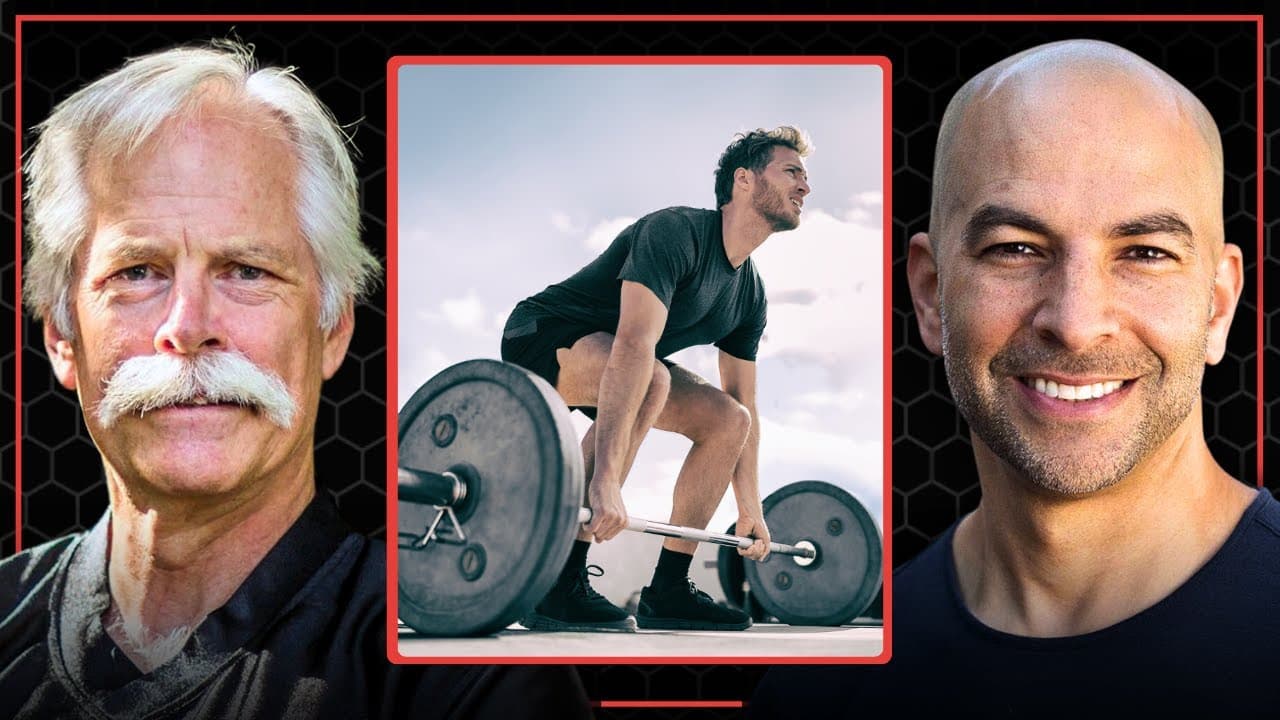
The core takeaway is that deadlifts can be valuable for stability and movement auditing but carry a risk if pushed beyond a patient, sustainable limit. The preferred approach is to emphasize sufficient strength and mobility, using alternative exercises like monster walks or hill walking when needed, to protect joints while preserving function.
Transcript
I have to tell you steuart I'm a bit conflicted personally and and I'll explain why um I obviously have no desire to do anything that I deem stupid anymore right so the my days of gritting through painful anything are long over um I know the difference between discomfort that is worth pushing through and pain that is not but when I when I think abo... Read More
Key Insights
- Deadlifts provide a useful stability audit but carry potential injury risk if performed with poor technique or excessive loading.
- Long term training should focus on sufficient strength and mobility rather than maximal effort, especially for middle aged athletes.
- Alternative methods such as hill walks and monster walks can maintain athleticism with lower joint stress.
- Proper movement patterns and intra abdominal pressure are crucial for safe lifting.
- Grip strength and VO2 max are strong, integrative biomarkers of longevity due to reflecting real work capacity.
- Old powerlifters often sustain injuries from repeated high load training; balancing load and recovery is key.
- The concept of sufficient fitness emphasizes functional outcomes like playing with grandchildren rather than chasing max weights.
- Athletes can adapt by removing squats or deadlifts for certain individuals and replacing with supportive training that preserves strength and endurance.
Install to Summarize YouTube Videos and Get Transcripts
Explore YouTube Video Summarizer or Get YouTube Transcript Extractor
Questions & Answers
Q: How should a middle aged person think about deadlifts for longevity and safety?
A middle aged person should weigh the benefits of deadlift as an audit of stability against the risk of injury from high loading. The discussion suggests that if you can maintain sufficient strength and mobility with lower risk alternatives, you should adopt those options. The approach emphasizes gradual adaptation, listening to the body, and using movement patterns that protect joints while preserving functional capacity for daily life and family activities.
Q: What is meant by sufficient fitness in this video?
Sufficient fitness is described as having enough strength, mobility, and endurance to perform life tasks and protect joints over time. It is a shift away from chasing maximum lifts toward workouts that preserve function, reduce injury risk, and enable everyday activities, like lifting grandchildren or walking hills, without excessive stress on the body.
Q: Why might grip strength be a better longevity predictor than other factors?
Grip strength is highlighted as a strong longevity predictor because it, along with VO2 max, integrates overall work capacity and stability. It reflects consistent, functional work done over time rather than short term or isolated efforts, making it a practical proxy for general health and aging resilience.
Q: What alternatives to deadlifts are suggested for joint health?
Alternatives include monster walks, hill walking backwards to engage muscles differently, and sled work. These options reduce axial loading while still training the neuromuscular system, improving stability and endurance, and potentially preserving athleticism without stressing the spine and hips to the same extent as heavy deadlifts.
Q: How does the speakers view the role of neuromuscular exhaustion in training?
Neuromuscular exhaustion is used as a training strategy to recruit different muscle groups and force adaptation. By fatiguing the brain and muscles in a controlled way, athletes can stimulate glute engagement and endurance, improving overall movement quality and efficiency without necessarily increasing peak lift loads.
Q: What does the video suggest about personal bests and long term health?
The video suggests that pursuing personal bests can undermine long term health by pushing the body toward injuries like micro fractures. It advocates shifting goals toward sustainable, life long fitness, where the focus is on functional strength and safe, progressive training rather than breaking max records every session.
Q: How should training adapt for people with back pain or injuries?
For individuals with back pain or prior injuries, the guidance is to replace high risk lifts with safer, controllable movements that still build strength and function. This may include step wise progressions, alternative loading patterns, and movements such as hill walking that promote stability and endurance while minimizing spinal load.
Q: What role does movement patterning play in preventing injuries during lifting?
Correct movement patterns are essential to preventing injuries during lifting. The emphasis is on stability, intra abdominal pressure, foot pressure distribution, and synchronized hip, knee, and ankle function. By training to optimize these patterns, athletes can perform tasks with less injury risk and better long term joint health.
Summary & Key Takeaways
-
A sustainable training approach balances strength, mobility, and safety by prioritizing sufficient fitness over maximal lifting loads, using alternatives when needed.
-
Grip strength and VO2 max emerge as strong longevity indicators because they reflect real work capacity and overall work done, not just isolated training.
-
The conversation favors long term goals over chasing personal bests, suggesting a shift away from frequent maximal deadlift testing toward functional, joint friendly activity.
Read in Other Languages (beta)
Share This Summary 📚
Summarize YouTube Videos and Get Video Transcripts with 1-Click
Try YouTube Summary with ChatGPT & Claude or YouTube Transcript Generator
Explore More Summaries from Peter Attia MD 📚


Summarize YouTube Videos and Get Video Transcripts with 1-Click
Try YouTube Summary with ChatGPT & Claude or YouTube Transcript Generator