How to Judge Economic Policy Beyond Today
TL;DR
Judge economic policy by examining its effects on all groups over both the short and long term, including costs and opportunities that are easy to overlook. Destruction does not create wealth, public spending does not automatically increase employment, and technology can eliminate existing roles while lowering production costs and creating new industries. Sound analysis considers purchasing power, displaced private activity, and consumer consequences.
Transcript
Knowledge of economics enables you to look beyond the present, toward a future that very few can see. Economics is probably the most misunderstood field in the world. Even acclaimed experts in the field still have difficulty understanding certain aspects of it. Its dynamic nature makes it so, and it's even worse because economics affects our greedy... Read More
Key Insights
- Economic analysis is the practice of examining both immediate and long-term consequences for all affected groups. A policy that visibly benefits one constituency may impose less visible costs on taxpayers, businesses, consumers, or workers elsewhere, so its broader effects determine whether it serves society.
- Self-interest is a major source of unstable economic policy because economic decisions directly affect material benefits. Governments and organized groups may support measures that favor themselves, even when other citizens bear substantial costs, making impartial evaluation essential.
- The broken-window fallacy is the mistaken belief that repairing destruction adds to society's wealth. The glazier receives income, but the shopkeeper loses money intended for another purchase, leaving fewer total goods than would have existed without the damage.
- Economic demand requires sufficient purchasing power to support it. Damage, war, terrorism, and inflation may create urgent needs and additional spending, but people must give up other purchases to meet those needs, so greater necessity does not itself represent greater prosperity.
- Public employment is not automatically a net addition to total employment because government projects are primarily financed through taxes, reserves, or borrowing. Higher taxation can reduce the willingness and capacity of individuals and businesses to establish companies and create private-sector jobs.
- Necessary public projects are more defensible when their main purpose is to benefit society and employment follows as a result. Treating job creation as the primary objective can encourage unnecessary projects, wasteful spending, weaker accountability, and benefits concentrated among government-connected groups.
- Private lenders screen borrowers carefully because their funds and capacity to absorb losses are limited. The summary argues that public lending programs may approve borrowers rejected by private institutions without equivalent investigation, increasing the likelihood that taxpayer-funded loans will remain unrepaid.
- Technological adoption can initially eliminate jobs while reducing production costs and expanding output. As competitors adopt the same machines, product prices fall, machine producers require labor, new industries appear, and displaced workers can preserve their market value by adapting and acquiring needed skills.
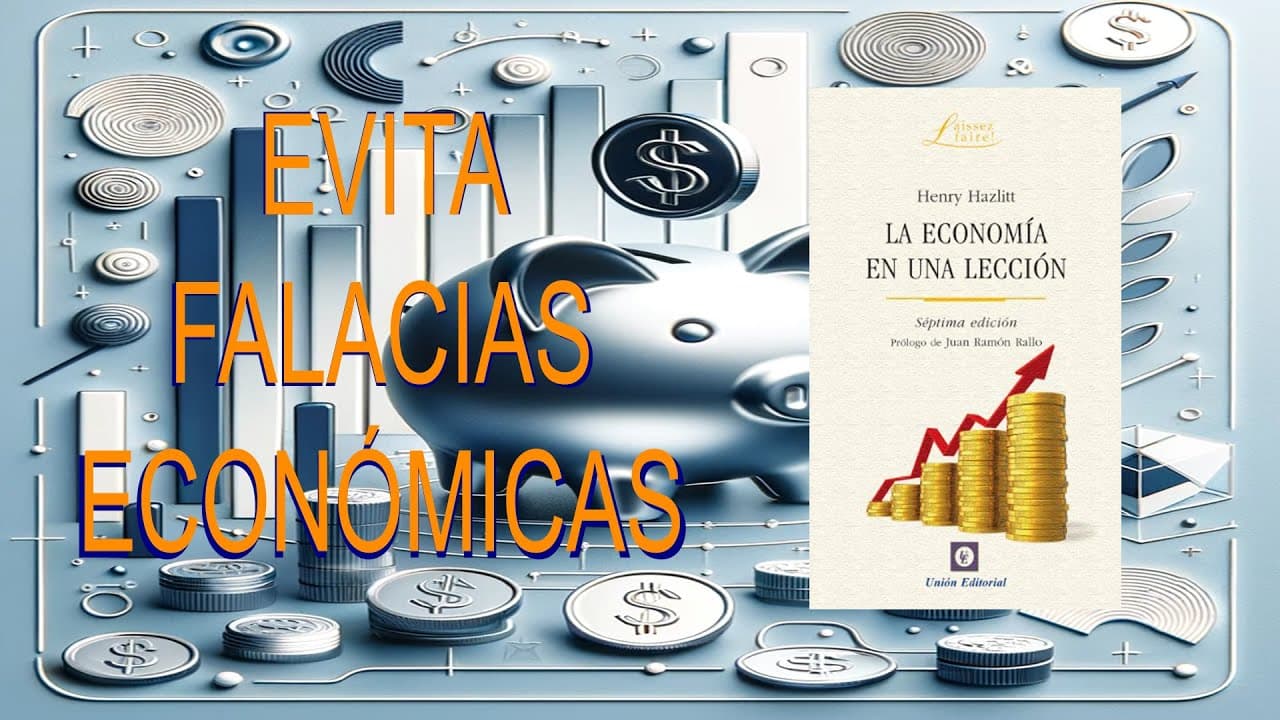
- Libro relacionado: La economía en una lección
- Export your Kindle highlights to Glasp: How to Download Highlights and Notes from Kindle
- More videos about this book:
- More from this channel: Resumen Libros
Install to Summarize YouTube Videos and Get Transcripts
Explore YouTube Video Summarizer or Get YouTube Transcript Extractor
Questions & Answers
Q: How should an economic policy be evaluated?
An economic policy should be evaluated by tracing its effects across all affected groups and across both the short and long term. Immediate benefits to one constituency are insufficient evidence of success because taxpayers, consumers, workers, or businesses may bear hidden costs. The strongest policy is beneficial beyond the present and serves society broadly rather than protecting a narrow group's material interests.
Q: What is the broken-window fallacy in economics?
The broken-window fallacy is the belief that destruction benefits the economy because repairs create paid work. In the example, a broken shop window gives business to a glazier, but the shopkeeper must spend money previously intended for food. Without the damage, the shopkeeper could have retained the intact window and purchased food, so repairing destruction replaces lost value rather than creating additional wealth.
Q: Why does economic need not always equal demand?
Economic need becomes effective demand only when sufficient purchasing power exists to satisfy it. Damage can make repairs urgently necessary, and inflation can force people to spend more, but neither condition gives people additional resources. They must abandon other planned purchases to meet the new expense. Greater need therefore reflects scarcity or loss rather than an automatic improvement in economic activity.
Q: Why should governments not fund projects only to create jobs?
Governments should not fund projects solely to create jobs because the money primarily comes from taxes, national reserves, or borrowing. A project can visibly employ workers while higher taxes reduce the income available for private investment and discourage new businesses. Public projects are more defensible when society actually needs their results and employment occurs as a consequence rather than serving as the only objective.
Q: How can higher taxes reduce private-sector employment?
Higher taxes reduce the share of personal and business income available for new ventures. According to the summary, individuals and companies may become less willing to establish businesses when they expect a larger portion of their earnings to be taxed. Government efforts to finance additional public jobs can therefore reduce private-sector job creation, undermining the employment objective that justified the spending.
Q: Why does the book favor private lending over public lending?
The book's argument favors private lending because banks carefully investigate borrowers before risking limited funds. Public programs may lend taxpayer money to applicants rejected by private institutions without equally rigorous screening, including farmers who have not reliably shown that they can repay. When loans are granted without proper evaluation, public funds may remain unreimbursed and the wider economy bears the loss.
Q: How does technology affect jobs and consumer prices?
Technology can eliminate existing jobs when a machine performs work previously done by many employees, creating genuine short-term disruption. It can also lower production costs, improve output, and initially increase a manufacturer's profits. As competitors adopt the technology, competition pushes product prices downward, machine producers require more labor, and new industries and vacancies can emerge around the changed production system.
Q: Why can occupational union restrictions harm consumers?
Occupational restrictions can harm consumers when they prevent one qualified worker from completing tasks assigned to another trade. The description gives examples in which carpenters, painters, electricians, and plumbers are confined to separate jurisdictions. Consumers may then need to hire two or more professionals for work one person could have completed, increasing costs even though the rules aim to protect existing jobs.
Summary & Key Takeaways
-
Economic reasoning requires looking beyond visible and immediate results. A policy should be evaluated by its short-term and long-term effects on every affected group, not merely by benefits delivered to a favored constituency. Self-interest often distorts this analysis because individuals and organizations naturally seek policies that preserve their own material advantages.
-
The broken-window example shows why destruction cannot enrich society. Repairing a shop window gives work to a glazier, but it forces the shopkeeper to abandon another intended purchase. Damage creates an urgent need without adding purchasing power, leaving society with a repaired asset instead of both the original asset and another useful purchase.
-
Government projects, public lending, technology, and labor restrictions all produce effects beyond their stated purposes. Public spending can displace private activity through taxation, poorly screened loans can remain unpaid, and machines can initially eliminate jobs while reducing costs and encouraging new industries. Occupational restrictions can also raise consumer costs by requiring unnecessary specialists.
Read in Other Languages (beta)
Share This Summary 📚
Summarize YouTube Videos and Get Video Transcripts with 1-Click
Try YouTube Summary with ChatGPT & Claude or YouTube Transcript Generator
Explore More Summaries from Resumen Libros 📚

Summarize YouTube Videos and Get Video Transcripts with 1-Click
Try YouTube Summary with ChatGPT & Claude or YouTube Transcript Generator