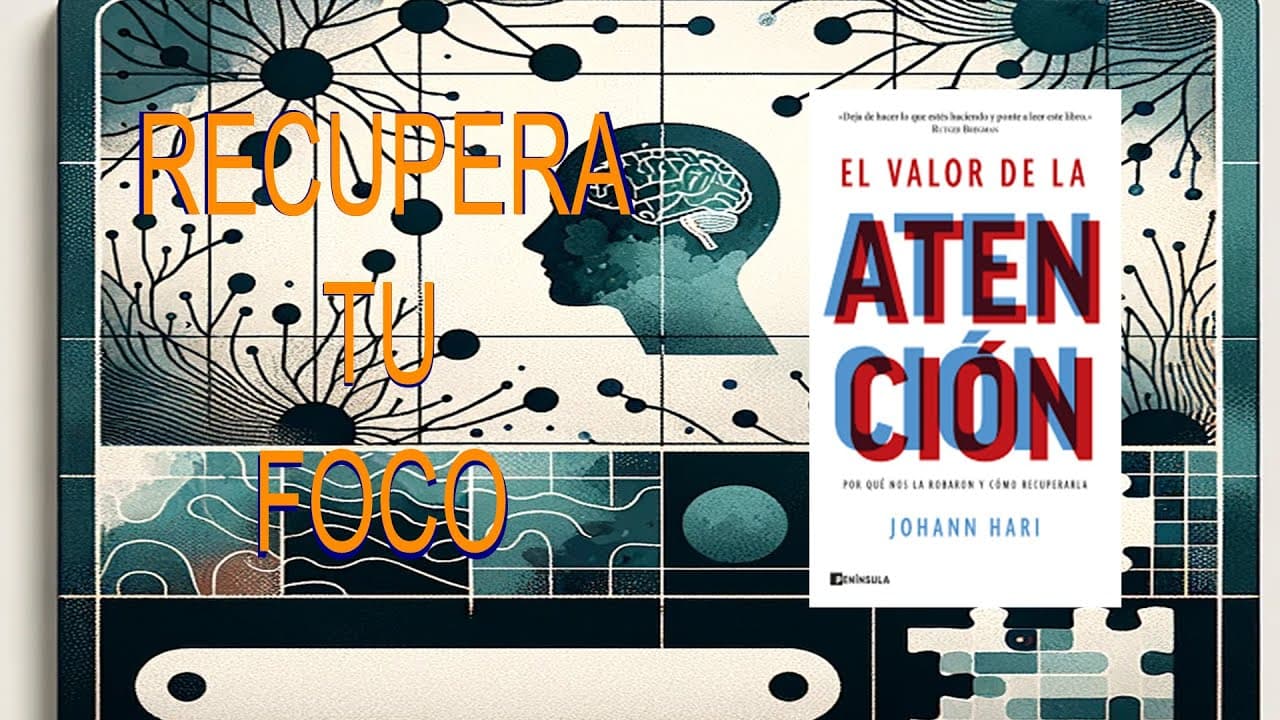
How to Reclaim Focus in the Attention Economy
TL;DR
Recovering attention requires both healthier personal habits and collective changes to environments designed to keep people distracted. Protect sleep, remove notifications, delay social media checks, plan focused periods, and pursue meaningful tasks that stretch your abilities, but recognize that individual discipline alone cannot overcome business models that profit from capturing attention.
Transcript
Understand how your attention and concentration suffer We live in an era of screens that reflect our reality. The Internet and devices prevent face-to-face communication and make you less present. Because of this, you can't do your work effectively, enjoy time with family and friends, or even read a book. When you are focused on an activity and sud... Read More
Key Insights
- Attention loss is shaped by both personal habits and environmental pressures. Turning off a phone may help temporarily, but it does not address platforms, economic incentives, sleep disruption, and constant stimulation that continually weaken concentration.
- A single interruption can impose a substantial concentration cost. After an email or message breaks focused work, the transcript states that returning to the previous level of concentration can take twenty-three minutes.
- Flow is an extreme form of sustained attention in which a person becomes deeply absorbed and loses awareness of time and surroundings. It depends on concentration, not mere relaxation, and cannot coexist with multitasking.
- The conditions for flow are a specific goal, personal meaning, and an appropriate level of difficulty. The activity should challenge current abilities without being so difficult that anxiety overwhelms the effort.
- Sleep is essential for attention, memory, creativity, and physical regulation. During sleep, the brain renews itself and connects recent experiences with older ones, producing associations that can support new ideas and problem solving.
- Eighteen hours without sleep can impair reactions to a degree compared in the transcript with a blood alcohol level of 0.05%. Sleep deprivation also raises blood pressure and encourages greater consumption of sugar and fast food.
- Technology platforms capture attention because prolonged screen time increases advertising exposure and revenue. They analyze searches, messages, images, and other online behavior to construct detailed profiles, predict desires, and present material likely to sustain engagement.
- Individual discipline is useful but insufficient in an environment engineered to monopolize attention. The crisis requires collective effort because information hygiene and personal routines cannot reliably counter increasingly sophisticated systems built around capturing user attention.
- More videos with Johann Hari:
Install to Summarize YouTube Videos and Get Transcripts
Explore YouTube Video Summarizer or Get YouTube Transcript Extractor
Questions & Answers
Q: How can I recover my ability to concentrate?
Begin by planning focused work and free time, turning off unnecessary notifications, unsubscribing from newsletters, and using a ten-minute delay whenever you feel an urge to check social media. Protect regular sleep and choose one meaningful, clearly defined task at a time. These habits can recover some attention, but lasting improvement also depends on changing environments and platforms designed to interrupt you.
Q: Why does an interruption damage concentration?
An interruption forces the mind to leave its current task and redirect attention toward a new stimulus, such as an email or message. According to the transcript, returning to the same level of concentration can take twenty-three minutes. Frequent interruptions therefore consume large portions of productive time and prevent the prolonged monotasking needed for deep engagement and flow.
Q: What conditions are needed to enter a flow state?
Flow requires three conditions: a clearly defined activity, a goal that feels valuable and meaningful, and a challenge near the limit of your abilities. The task should not be so easy that it becomes unengaging or so difficult that it creates excessive anxiety. You must also set aside competing tasks because flow depends on using your attention for one purpose.
Q: How does sleep loss affect attention and thinking?
Sleep loss weakens concentration, reactions, memory, creativity, and the ability to function effectively at work, during study, or with family. The body treats inadequate rest as an emergency, increasing blood pressure and encouraging consumption of sugar and fast food. Sleep also allows the brain to renew itself and connect new experiences with older ones, which supports creative problem solving.
Q: How do technology companies capture attention?
Technology companies profit when people spend more time looking at screens and seeing advertisements. Their designers study psychology and build systems intended to sustain interest. Platforms analyze searches, messages, images, and other online behavior to create detailed profiles, predict desires, and present content or advertising likely to keep each user engaged for longer periods.
Q: Why do online platforms often show negative content?
Platforms prioritize material that holds attention rather than independently deciding that negative content is preferable. The transcript says human beings tend to watch frightening or tragic material longer because of a negative bias. Engagement-driven algorithms therefore serve more sad, threatening, or alarming content, which can increase stress and make people feel endangered, producing still more distraction.
Q: Are phones and the Internet the main cause of lost attention?
Phones, computers, and the Internet are not presented as inherently harmful. The deeper issue is how many websites and social networks operate. Their business models reward prolonged engagement, so their algorithms, notifications, advertisements, and design choices repeatedly pull users back toward screens. Sleep loss, information overload, stress, and the broader environment also contribute to declining concentration.
Q: Why are personal habits not enough to solve the attention crisis?
Personal habits can reduce distraction, but individuals remain surrounded by companies developing increasingly effective ways to capture attention. The transcript describes cruel optimism as offering personal routines for a large structural problem while leaving the harmful environment unchanged. Because attention is shaped by external systems as well as individual responsibility, durable solutions require collective effort and changes to those systems.
Summary & Key Takeaways
-
Attention loss is not simply a failure of willpower. Constant messages, advertising, artificial light, information overload, poor sleep, and platforms optimized for prolonged engagement create conditions that repeatedly interrupt concentration. Personal choices can reduce exposure, but the surrounding technological and economic environment strongly shapes whether those choices remain effective over time.
-
Flow is an intense form of attention that emerges when a person pursues one clearly defined, meaningful goal near the limit of their abilities. It requires monotasking rather than switching between activities. Emails, reminders, advertisements, and other external stimuli break this absorption, limiting both sustained concentration and the fulfillment associated with focused work.
-
Practical defenses include delaying social media checks for ten minutes, planning work and leisure, disabling unnecessary notifications, unsubscribing from newsletters, and protecting sleep. These measures can recover some attention, but lasting improvement also requires collective action to change systems that profit from distraction, much as societies previously regulated profitable products that caused harm.
Read in Other Languages (beta)
Share This Summary 📚
Summarize YouTube Videos and Get Video Transcripts with 1-Click
Try YouTube Summary with ChatGPT & Claude or YouTube Transcript Generator
Explore More Summaries from Resumen Libros 📚
Summarize YouTube Videos and Get Video Transcripts with 1-Click
Try YouTube Summary with ChatGPT & Claude or YouTube Transcript Generator