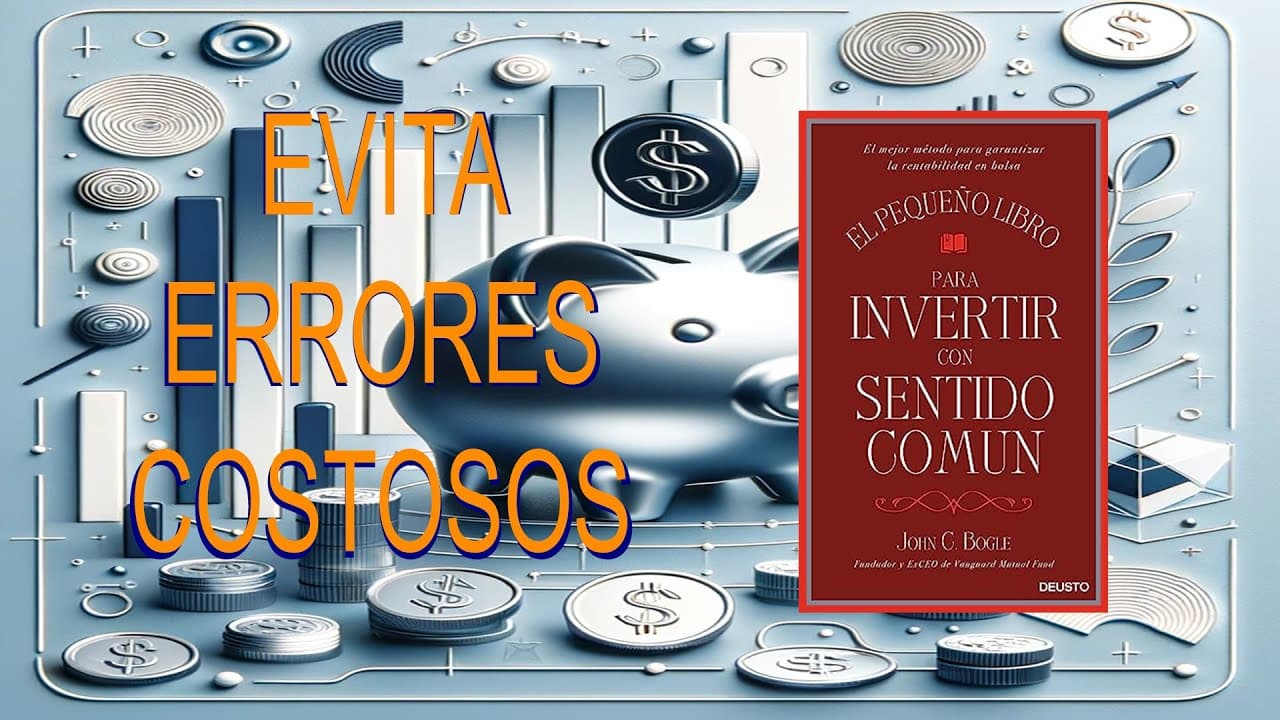
What Does John C. Bogle Recommend in El pequeño libro para invertir con sentido común?
TL;DR
John C. Bogle recommends holding a broadly diversified, low-cost index fund for the long term instead of selecting individual stocks or timing the market. The S&P 500 covers 500 large US companies and represents 80% of stock-market value, while passive investing limits fees, turnover, taxes, and emotion-driven decisions. Read on to see how costs and compounding can dramatically change an investor’s results.
Transcript
Study investment opportunities to discover the gems that will generate a considerable return. There are many opportunities to make a considerable profit on your investments. However, this does not mean that there is no risk of losing a significant percentage of your funds. You will need a good strategy to stay one step ahead of the financial market... Read More
Key Insights
- Index funds are baskets of securities designed to track and imitate the behavior of a market or market sector. A broadly diversified fund gives investors ownership across many public companies, allowing them to participate in collective business growth without selecting individual stocks.
- Long-term ownership is the foundation of Bogle’s strategy because investment returns traditionally come from interest, dividends, profit growth, and increasing security values. Frequent buying and selling adds speculation and expenses that can separate an investor’s results from the underlying returns produced by businesses.
- The broad United States corporate market generated approximately 9.5% annual returns during the last century, according to the figures presented. Compounding that rate for five decades would turn each initially invested dollar into $93.48, although this calculation does not account for inflation.
- Investment costs are a major cause of lower portfolio returns because intermediaries collect fees whether investors profit or lose. The transcript estimates that an average stock investor may spend 1.5% annually on transaction costs, while frequent market participants may pay as much as 3%.
- Short-term market prices are influenced by frenzy, greed, expectations, and other emotions. These forces create temporary rises and falls that can distract investors from business value, encourage poorly timed transactions, and impose performance penalties that diversified, long-term index ownership helps investors avoid.
- Taxes are reduced by lower turnover because fewer short-term transactions create fewer taxable events. From 1996 to 2005, the average equity fund’s stated 8.5% annual net return lost 1.7 percentage points to taxes, leaving investors with a substantially lower return of 6.8%.
- Past fund performance is an unreliable selection tool because successful records may not persist and funds can disappear. Among 355 equity funds originating in 1970, only 132 remained, while just 24 outperformed the S&P 500 by more than one percentage point.
- The S&P 500 is presented as a practical alternative to hand-picking stocks because it represents 500 large United States companies and 80% of stock-market value. The broader Dow Jones Wilshire Total Stock Market Index tracks 4,971 stocks, including those represented by the S&P 500.
- Libro relacionado: El pequeño libro para invertir con sentido común
- Export your Kindle highlights to Glasp: How to Download Highlights and Notes from Kindle
- More videos about this book:
- More from this channel: Resumen Libros
Install to Summarize YouTube Videos and Get Transcripts
Explore YouTube Video Summarizer or Get YouTube Transcript Extractor
Questions & Answers
Q: How does John C. Bogle recommend investing?
Bogle recommends owning a broadly diversified index fund representing the entire market or a major portion of it and holding it for the long term. This approach seeks returns from business profit growth, dividends, and increasing value while limiting fees, taxes, turnover, and emotionally driven trading.
Q: Why does Bogle favor index funds over individual stocks?
Index funds act as baskets of securities that track a market or market sector, providing ownership across many public companies without requiring investors to select individual winners. Their passive structure also reduces trading and the need for intermediaries, helping investors retain more of the returns generated by businesses.
Q: How can investment costs affect long-term returns?
Fees reduce the market return investors keep, and their impact compounds over time. The transcript estimates annual transaction costs of 1.5% for an average stock investor and as much as 3% for investors who trade frequently.
Q: Why does frequent trading hurt investment performance?
Frequent trading adds transaction expenses, portfolio turnover, and potential tax obligations. It can also encourage decisions based on short-term price movements influenced by frenzy, greed, and expectations rather than the underlying value of businesses.
Q: Can past mutual fund performance identify future winners?
Past performance is presented as an unreliable guide because funds can underperform, disappear, change managers, or be absorbed. Of 355 equity funds that existed in 1970, only 132 survived, and only 24 beat the S&P 500 by more than one percentage point.
Q: How do taxes reduce mutual fund returns?
Active selling can generate taxable income that lowers the return investors ultimately keep. From 1996 to 2005, the average equity fund’s stated annual net return of 8.5% lost 1.7 percentage points to taxes, leaving 6.8%.
Q: What is the difference between investment and speculation in Bogle’s approach?
Investment means owning securities and receiving returns through interest, dividends, profit growth, and increasing value. Speculation focuses on short-term price changes; from 1900 to 1999, stock-market returns were 9.6% annually versus 9.5% for investment returns, with the 0.1 percentage-point difference attributed to speculation.
Q: Which broad market indexes are highlighted?
The S&P 500 tracks 500 large US companies and represents 80% of stock-market value. The broader Dow Jones Wilshire Total Stock Market Index tracks 4,971 stocks, including the 500 represented by the S&P 500.
Summary & Key Takeaways
-
John Bogle recommends owning a broadly diversified portfolio that represents the entire stock market or a major portion of it. Index funds provide this exposure by tracking baskets of securities. Holding them for the long term allows investors to benefit from corporate profit growth, dividends, and increasing business value instead of speculation.
-
Costs are among the most important determinants of an investor’s net return. Active strategies create brokerage charges, management expenses, taxes, and other intermediary fees. Although annual percentages may appear small, their effects compound over decades. Passive index funds reduce these deductions because they require less trading, professional intervention, and portfolio turnover.
-
Past fund performance is an unreliable guide to future success. Of 355 equity funds that existed in 1970, only 132 survived, and only 24 beat the S&P 500 by more than one percentage point. Rather than trying to identify rare winners, investors can hold the market, control costs, and avoid emotional decisions.
Read in Other Languages (beta)
Share This Summary 📚
Summarize YouTube Videos and Get Video Transcripts with 1-Click
Try YouTube Summary with ChatGPT & Claude or YouTube Transcript Generator
Explore More Summaries from Resumen Libros 📚


Summarize YouTube Videos and Get Video Transcripts with 1-Click
Try YouTube Summary with ChatGPT & Claude or YouTube Transcript Generator