How Does MDMA Work and What Are Its Therapeutic Benefits?
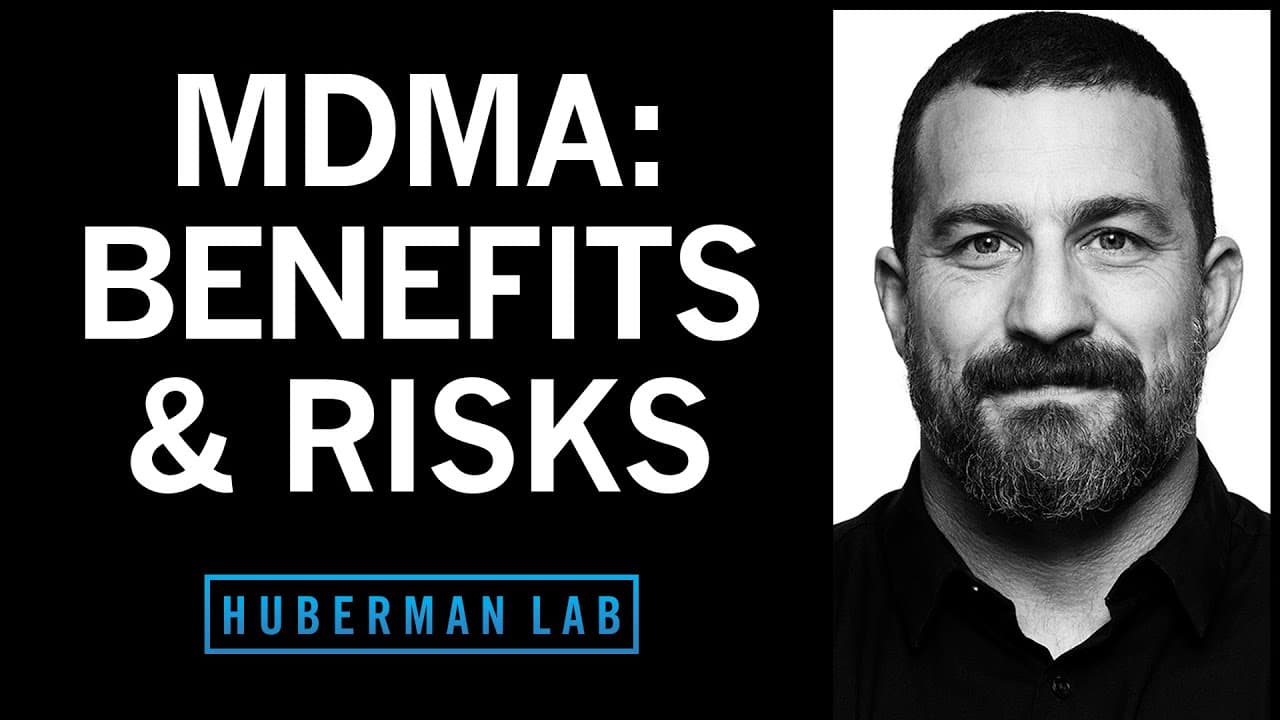
TL;DR
MDMA, a synthetic compound, significantly increases dopamine and serotonin levels, promoting heightened mood, energy, and social connectedness. Unlike classic psychedelics, it acts as an empathogen, enhancing empathy both towards others and oneself. Clinical trials indicate that MDMA, especially when used alongside therapy, is promising for treating PTSD and improving mental health outcomes.
Transcript
welcome to the huberman Lab podcast where we discuss science and science-based tools for everyday life I'm Andrew huberman and I'm a professor of neurobiology and Ophthalmology at Stanford School of Medicine today we are discussing MDMA sometimes referred to as ecstasy or Mali MDMA stands for methylene dioxy methamphetamine that's right you heard t... Read More
Key Insights
- ❓ MDMA's chemical structure and unique properties distinguish it from other drugs.
- 🥺 It increases dopamine and serotonin release, leading to stimulant and empathogenic effects.
- 🛀 MDMA has shown promising results in clinical trials as a treatment for PTSD when combined with therapy.
- 🍉 Short-term and long-term changes in brain connectivity and activation contribute to the therapeutic effects of MDMA.
Install to Summarize YouTube Videos and Get Transcripts
Explore YouTube Video Summarizer or Get YouTube Transcript Extractor
Questions & Answers
Q: How does MDMA differ from other drugs like psilocybin and LSD?
MDMA, unlike classic psychedelics, increases both dopamine and serotonin levels, leading to stimulant and empathogenic effects. It promotes social connectedness and empathy, making it a unique compound.
Q: Is MDMA neurotoxic?
While MDMA can be neurotoxic, especially when used in high doses or frequently, therapeutic use of MDMA in controlled settings can minimize potential toxicity. However, there is still ongoing research on its long-term effects.
Q: How does MDMA affect the brain?
MDMA increases dopamine and serotonin levels in the brain, leading to increased energy, mood elevation, and enhanced social engagement. It also modulates brain circuits involved in threat detection and memory.
Q: Can MDMA alone cure PTSD?
No, MDMA on its own does not cure PTSD. It enhances the effects of therapy by reducing fear responses, promoting trust, and allowing individuals to revisit traumatic memories in a safe and empathetic environment.
Summary & Key Takeaways
-
MDMA is a synthetic compound that promotes the release of dopamine and serotonin, leading to increased energy, mood elevation, and social connectedness.
-
Unlike classic psychedelics, MDMA acts as an empathogen, increasing empathy and social engagement not just towards others, but also towards oneself.
-
Clinical trials have revealed that MDMA, when combined with therapy, can be highly effective in treating PTSD and improving mental health.
Read in Other Languages (beta)
Share This Summary 📚
Summarize YouTube Videos and Get Video Transcripts with 1-Click
Try YouTube Summary with ChatGPT & Claude or YouTube Transcript Generator
Explore More Summaries from Andrew Huberman 📚


Summarize YouTube Videos and Get Video Transcripts with 1-Click
Try YouTube Summary with ChatGPT & Claude or YouTube Transcript Generator