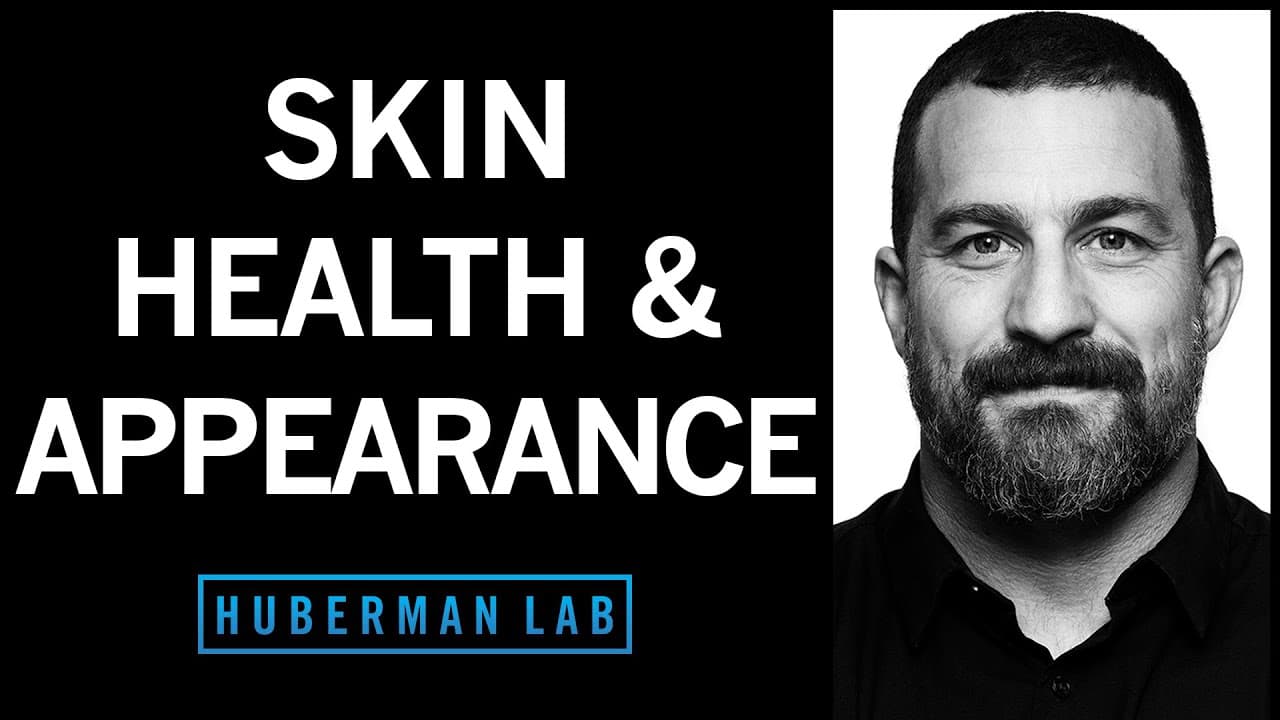
How to Improve Skin Health & Appearance
TL;DR
Explores skin health, its relationship with other organs, and effective skin care practices.
Transcript
welcome to the huberman Lab podcast where we discuss science and science-based tools for everyday life I'm Andrew huberman and I'm a professor of neurobiology and Opthalmology at Stanford school of medicine today we are discussing skin Health our skin is an incredibly important organ not just for our appearance or because it serves as a barrier to ... Read More
Key Insights
- 🧑⚕️ The skin serves as a reflection of overall health, influenced by internal organ function and immune status.
- 😎 Moderate sun exposure is beneficial, while overexposure can lead to skin cancer through DNA mutation.
- 😋 Diet plays a crucial role in skin health; avoiding processed foods and integrating anti-inflammatory choices can enhance vitality.
- 🚮 Supplementing with collagen and vitamin C may promote skin elasticity and reduce aging signs.
- 😨 Effective skin care should include gentle cleansing and awareness of potential irritating factors in skin products.
- 💱 Conditions like acne and rosacea can significantly benefit from lifestyle changes, including diet and stress management.
- 🙂 Light therapy, particularly red and near-infrared, shows promise in improving skin health.
Install to Summarize YouTube Videos and Get Transcripts
Explore YouTube Video Summarizer or Get YouTube Transcript Extractor
Questions & Answers
Q: How does skin health reflect overall bodily health?
Skin is often called the body's "largest organ" and acts as a mirror for internal health. Changes in skin tone or condition can indicate issues with other organ systems or overall well-being, such as stress, fatigue, or immune responses. A vibrant appearance tends to correlate with good health, while dull or discolored skin may signal underlying health concerns.
Q: What is the relationship between sun exposure and skin cancer?
While some sun exposure can be healthy and facilitate vitamin D production, excessive UV exposure is linked to skin cancer through DNA mutations. Understanding the balance is crucial; limiting exposure during peak sunlight hours and opting for protective measures like sunscreen are essential strategies for reducing risk.
Q: What are effective strategies for treating common skin conditions like acne and rosacea?
Managing acne often involves a balanced diet to reduce inflammation, using gentle cleansers, and avoiding harsh treatments. For rosacea, minimizing triggers such as alcohol, spicy foods, and extreme temperatures can be beneficial. In both cases, consulting with a dermatologist is advisable for tailored treatments.
Q: How can dietary choices influence skin health?
Consuming a diet rich in whole, minimally processed foods—such as omega-3 fatty acids, fruits, and vegetables—can reduce inflammation and promote skin health. Additionally, avoiding high-glycemic foods and refined sugars can help regulate insulin levels, thus preventing acne flare-ups.
Q: What are the benefits of supplementing with collagen and other nutrients for skin health?
Research suggests that collagen supplementation, typically in the range of 5 to 15 grams per day, can enhance skin elasticity and reduce wrinkles. Pairing collagen with vitamin C may further improve results, as vitamin C plays a critical role in collagen synthesis in the body.
Q: What is the significance of gut health in relation to skin health?
The gut microbiome profoundly influences inflammatory responses throughout the body, including the skin. A healthy diet with sufficient fiber and fermented foods can support gut health, which may, in turn, lead to clearer and healthier skin.
Q: How can light therapy be beneficial for the skin?
Red light and near-infrared light therapy can penetrate skin layers to enhance cellular function and reduce inflammation. Regular sessions using these wavelengths have shown mild to moderate success in improving skin appearance and treating issues like acne and wound healing.
Q: Why is it recommended to avoid certain sunscreens?
Many chemical-based sunscreens, which absorb UV light instead of reflecting it like mineral-based options, have been scrutinized for potential health risks, including disruption of hormonal balance. Therefore, it is suggested to choose mineral-based sunscreens containing zinc oxide or titanium dioxide.
Summary & Key Takeaways
-
The podcast discusses the skin's role as an organ, highlighting its relationship with the immune system and its ability to reflect overall health.
-
Key topics include sun exposure, types of skin cancer, effective sun protection strategies, and common skin conditions like acne and rosacea.
-
Listeners are provided with scientific insights and practical tips about maintaining skin vitality, including dietary recommendations and skin care products.
Read in Other Languages (beta)
Share This Summary 📚
Summarize YouTube Videos and Get Video Transcripts with 1-Click
Try YouTube Summary with ChatGPT & Claude or YouTube Transcript Generator
Explore More Summaries from Huberman Lab 📚

Summarize YouTube Videos and Get Video Transcripts with 1-Click
Try YouTube Summary with ChatGPT & Claude or YouTube Transcript Generator