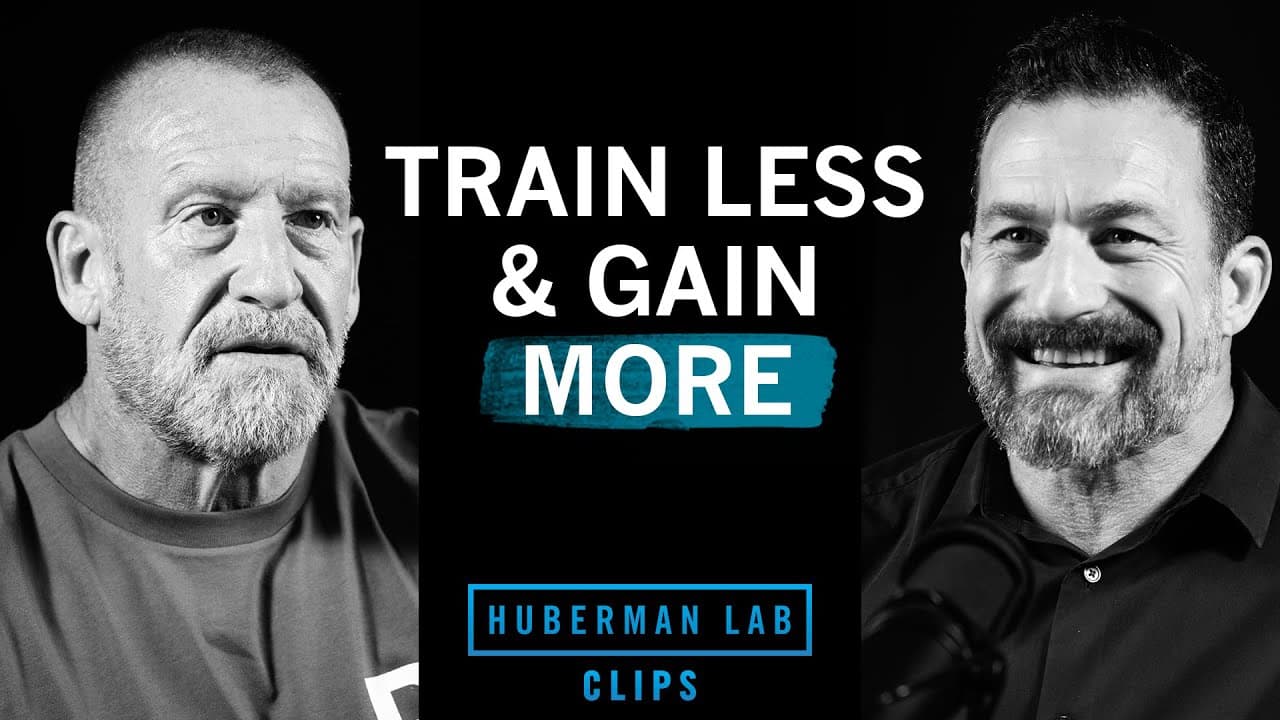
How to train less and gain more with HIIT principles
TL;DR
Training once per week per muscle at high intensity can boost growth while reducing fatigue, and brief sprint cardio can replace longer sessions. For most people, about 45 minutes of weight work twice weekly plus proper diet is enough, with 6 minutes of cardio achieving similar benefits to 45 minutes of steady cardio.
Transcript
If one trains the way that you're describing each muscle once per week, focusing on intensity, not volume, and so forth, six weeks or so, then backing off for two weeks, >> you also find that in your peer in your peer group, you're not the one always complaining about pain, and you have energy for other things, which we'll get back to. I mean, unle... Read More
Key Insights
- Training each muscle group once per week with maximal effort reduces chronic aches and increases energy for daily life.
- Six minutes of sprint cardio, split into short all out efforts, can produce results comparable to 45 minutes of steady cardio.
- A busy person can achieve health benefits by combining 45 minutes of weight training twice weekly with targeted cardio and good nutrition.
- Short, intense workouts minimize time commitment while preserving muscle mass and metabolic health.
- The cardio protocol emphasized is a 20 second all out effort, followed by rest and a second and third interval for diminishing returns.
- Long term adherence is aided by practical routines and a mission focus rather than relying on wealth or time abundance.
- Recovery and longevity considerations are integral to the approach, arguing against chronic pain from overtraining.
- Life context, such as blue collar backgrounds and early career struggles, informs a practical, sustainable training mindset.
Install to Summarize YouTube Videos and Get Transcripts
Explore YouTube Video Summarizer or Get YouTube Transcript Extractor
Questions & Answers
Q: What is the core idea behind training less but gaining more in this video
The core idea is to train each muscle group only once per week but with maximum intensity, paired with very brief cardio sessions, to stimulate muscle growth and cardiovascular benefits while reducing overall wear and tear on the body. This approach emphasizes efficiency and recovery, allowing individuals to maintain energy for other life activities and long term health.
Q: How long should a typical weekly workout session last for the average person
For the average person the recommended plan is around 45 minutes of weight training twice a week, covering whole body exercises. This duration, combined with a sensible diet, provides sufficient stimulus for health and muscle maintenance without excessive time commitment. The key is efficient exercise selection and intensity rather than duration.
Q: What cardio strategy is suggested and why
The suggested cardio strategy is six minutes of interval sprinting, typically 20 seconds all out with rest in between, totaling six minutes. This approach can yield comparable benefits to 45 minutes of steady cardio, allowing substantial time savings while still promoting cardiovascular health and fat metabolism, especially when paired with weight training.
Q: Why is energy and recovery emphasized in this plan
Energy and recovery are emphasized because overtraining and constant soreness can dampen motivation and impair daily life. By limiting frequency and using high intensity, individuals can preserve energy for work, family, and other activities, reduce chronic pain, and improve long term adherence to a fitness routine.
Q: What does the narrative say about building a life around bodybuilding
The speakers describe bodybuilding as a vehicle for life transformation, recounting how dedication and strategic training can change personal circumstances. The emphasis is on practical steps, continuous learning, and a mission-driven mindset rather than chasing immediate prestige, illustrating how discipline in sport can translate to broader life success.
Q: What role does diet play in this approach
Diet plays a crucial supporting role in this approach by ensuring adequate protein, calories, and nutrients to sustain workouts and recovery. While the focus is on efficient training, proper nutrition is highlighted as essential for muscle maintenance, metabolic health, and energy for everyday life.
Q: How does the conversation portray the trainers’ backgrounds and impact on their advice
The conversation highlights a practical, blue-collar and self-taught approach to training, stressing independence, continuous reading, and personal experimentation. This background underlines the value of resourcefulness, disciplined study, and real world results over theoretical or flashy methods.
Q: What is the overall takeaway for someone with limited time
For someone with limited time the takeaway is that you can achieve meaningful health and muscle benefits with a small, consistent commitment: about 45 minutes of weight training twice weekly plus a few minutes of high intensity cardio, paired with a sensible diet and attention to recovery. The emphasis is on efficiency and sustainability.
Summary & Key Takeaways
-
A practical approach to minimize training time while maximizing results is to focus on high intensity, low volume workouts that target each muscle group once per week, reducing chronic fatigue and keeping energy for other life activities.
-
Incorporating very short, high intensity cardio sessions, such as six minutes of all out sprints, can yield similar fitness gains to longer, steady cardio sessions, and fits busy schedules.
-
A well rounded plan for most people includes 8 to 10 whole body exercises performed twice weekly, with attention to diet and recovery to sustain muscle mass and health over time.
Read in Other Languages (beta)
Share This Summary 📚
Summarize YouTube Videos and Get Video Transcripts with 1-Click
Try YouTube Summary with ChatGPT & Claude or YouTube Transcript Generator
Explore More Summaries from Huberman Lab Clips 📚




Summarize YouTube Videos and Get Video Transcripts with 1-Click
Try YouTube Summary with ChatGPT & Claude or YouTube Transcript Generator