How to use feedback to improve performance?
TL;DR
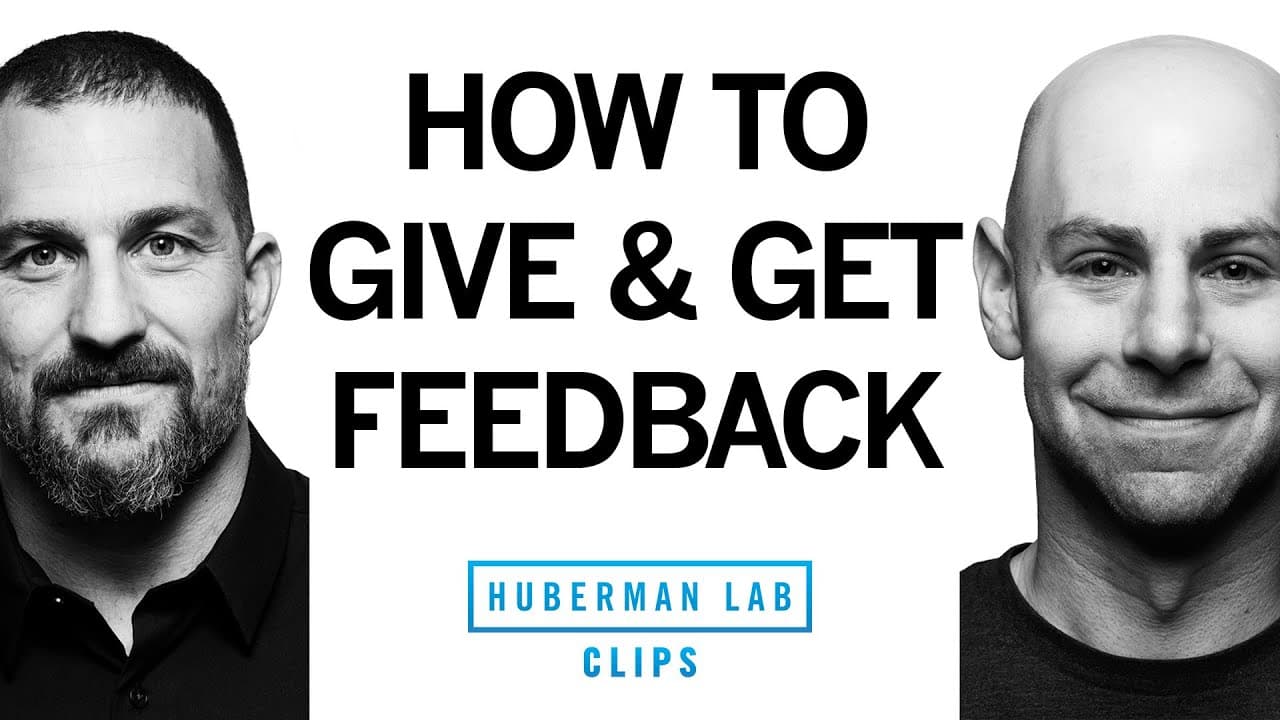
Feedback should target the task, not the person, to avoid defensiveness and promote learning. Frame requests for input as questions about next time, not past praise or criticism. Ask for concrete tips that describe what to do differently going forward, so you can improve more effectively.
Transcript
So how should we filter positive versus negative feedback? Well, there's a meta-analysis here. This is Kluger and DeNisi looking at 100 years of feedback research. And they found that what drives the utility of feedback is not whether it's positive or negative, it's whether it focuses on the task or on the self. So, if I tell you that your work is ... Read More
Key Insights
- Feedback utility is driven by focus on the task or on the self, not whether it is positive or negative.
- A coach mindset yields better results than generic feedback; seek advice for next time rather than a past evaluation.
- Asking for next-time advice prompts more actionable suggestions than generic feedback requests.
- The second score concept helps individuals improve how they receive feedback, not just what they hear.
- Defensiveness decreases when feedback is framed as a path to learning and growth.
- Humility and openness can dramatically shift how feedback is received and applied in future work.
- Verbs and forward-looking actions are more effective than static assessments in driving improvement.
- Constructive criticism arises when the feedback process is controlled by the learner and oriented toward future performance.
Install to Summarize YouTube Videos and Get Transcripts
Explore YouTube Video Summarizer or Get YouTube Transcript Extractor
Questions & Answers
Q: A real search query question about the video (e.g. 'How to...', 'What is...', 'Why does...', 'When should...'). Question 1
What is the difference between feedback that focuses on the task versus feedback that targets the self, and why does the task-focused approach lead to better learning outcomes? The video explains that task-focused feedback helps individuals identify actionable changes and practice specific behaviors, while self-focused feedback can trigger defensiveness and reduce motivation to improve. By emphasizing concrete elements of the work, learners can repeat successful patterns and address weaknesses in a measurable way, ultimately improving performance over time.
Q: Question 2
How does asking for next time advice instead of gimme feedback change the type of input you receive, and why is this shift beneficial for development? The speakers note that asking for next time advice invites coaches to provide forward-looking guidance, such as what to repeat or what to correct, rather than praise or retrospective critique. This leads to more actionable suggestions, clearer improvement directions, and a more constructive learning environment, enabling ongoing growth rather than temporary validation.
Q: Question 3
What is the second score concept and how can it be applied to real-world feedback situations to enhance learning? The second score involves evaluating how well you received the initial feedback, creating a focus on your processing and response to criticism. By aiming for a higher second score, individuals become better at absorbing input, filtering it for usefulness, and implementing changes effectively, which sustains improvement beyond a single incident.
Q: Question 4
Why did one of the speakers rely on a personal anecdote about teaching generals to illustrate feedback dynamics, and what lesson does it convey about defusing defensiveness? The anecdote demonstrates how starting with humility and acknowledging limitations can dramatically improve receptivity and engagement in subsequent sessions. The lesson is that approaching feedback with an open mindset, rather than defensiveness or bravado, fosters a more productive dialogue and accelerates learning.
Q: Question 5
What role does taking control of the feedback process play in reducing defensiveness, according to the discussion? Controlling the feedback process through targeted questions, a coach mindset, and future-oriented prompts reduces the impulse to react defensively. When individuals steer the conversation toward improvement rather than praise or blame, they unlock more relevant insights and are better positioned to apply them.
Q: Question 6
How can growth mindset ideas intersect with feedback practices to support long-term development, based on the conversation? Growth mindset emphasizes the potential to improve through effort and strategy. When feedback is framed as an ongoing learning process and complemented with concrete advice, individuals are more likely to persist, adapt, and expand their capabilities over time, bridging short-term outcomes with enduring growth.
Q: Question 7
What practical steps can someone take after receiving feedback to maximize learning, as suggested in the talk? Practical steps include identifying one concrete change for the next attempt, asking for specific tips, reflecting on how well the feedback was received (second score), and executing the change with intentional practice. This approach turns feedback into actionable learning cycles rather than a one-off evaluation.
Q: Question 8
Why is it important to distinguish between praise and constructive input when seeking feedback, and how does this distinction influence outcomes? Distinguishing praise from constructive input helps avoid complacency and promotes targeted improvement. Constructive input offers actionable directions to repeat or modify behaviors, enabling ongoing skill development, while praise alone may reinforce current performance without addressing gaps.
Summary & Key Takeaways
-
Feedback guidance centers on actionable future improvements and specific tasks rather than personal praise or blame, enabling learners to apply suggestions directly.
-
The conversation shifts from evaluating past work to coaching for next time, which increases the likelihood of sustainable performance gains and reduces defensive reactions.
-
A practical approach includes a technique called the second score, where you measure how well you received feedback to maximize future growth and learning.
Read in Other Languages (beta)
Share This Summary 📚
Summarize YouTube Videos and Get Video Transcripts with 1-Click
Try YouTube Summary with ChatGPT & Claude or YouTube Transcript Generator
Explore More Summaries from Huberman Lab Clips 📚




Summarize YouTube Videos and Get Video Transcripts with 1-Click
Try YouTube Summary with ChatGPT & Claude or YouTube Transcript Generator