How to structure high ticket offers and upsells
TL;DR
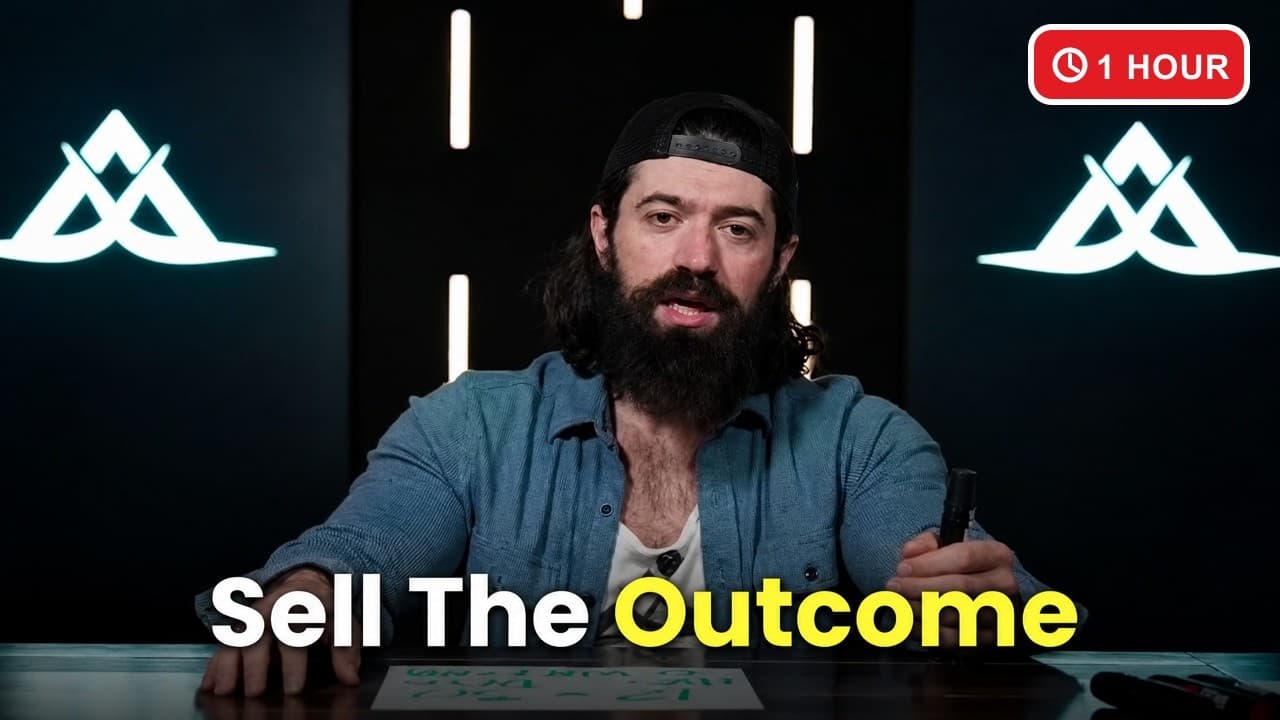
The core idea is to fix operations before chasing more customers and then optimize pricing and upsells across two similar offers. Start by reconfiguring delivery to increase capacity, then test paid acquisition. After scaling capacity, decide whether to consolidate offers or create a clear ascension path from a lower to a higher ticket.
Transcript
We help live poker players win more money who are already winning. >> Cool. >> Uh we do about $2 million. We'll do two million this year and we'd like to be at 10 million. >> Okay. [snorts] >> Um the problem is we have two front-end offers and both are converting like crazy to the back end. Uh but we have one that's 7.5K for 28 days and one that is... Read More
Key Insights
- The two front end offers are highly similar, and you need to decide whether to differentiate them or consolidate into a single ascension path. The first step is to fix operations to scale delivery capacity before expanding demand generation. The bottleneck is primarily on coaching capacity for the higher ticket, which must be solved to unlock paid growth. Increased capacity will allow ramping paid ads without sacrificing quality or margins. Pricing research is essential because higher prices can sometimes improve conversion if value is perceived, but this requires testing and clear justification to customers. A rollover upsell at the halfway point can convert progress into longer commitments by crediting upfront payments toward six or twelve month options. The sales process should include a centralized salesperson or an owner-led touch to ensure a smooth experience and to drive upsells.
- If you cut the lower ticket offer before ensuring demand generation is scalable, you risk losing a scalable customer pipeline, so a staged approach is recommended. The plan is to fix ops first, then turn paid on, then decide on split between offers based on capacity and profitability. A disciplined approach to upsell sequencing can improve cash flow while preserving existing customers and reducing churn. The discussion also highlights the usefulness of a mid-course upgrade, where progress is rewarded with credits to unlock longer commitments, aligning incentives for both buyer and seller.
- The recommended path includes creating an onboarding or enrollment fee to accelerate upfront cash, or requiring multiple months upfront, or bundling additional services like moving costs and related needs to bring cash forward, similar to an upsell strategy seen in other industries. This approach helps balance immediate cash flow with long term value while maintaining customer focus on the core promise.
- More videos from this channel:
- More from this channel: MoreMozi
Install to Summarize YouTube Videos and Get Transcripts
Explore YouTube Video Summarizer or Get YouTube Transcript Extractor
Questions & Answers
Q: How should you decide between maintaining two offers or consolidating into a single ascension path?
The key decision revolves around capacity and demand generation. If you can increase operational capacity for the higher ticket without sacrificing delivery quality, you should consider keeping the higher ticket while using the lower ticket as a feeder that fills funnel and sustains paid demand. If capacity is a real constraint, consolidating may be preferable to avoid spreading resources too thin. The half step is to optimize delivery first, then run paid ads, and only then decide on the optimal mix of offers. This ensures you do not ruin unit economics while chasing faster growth.
Q: What is the recommended first step to unlock paid growth according to the speaker?
The recommended first step is to fix operations and reconfigure the delivery of the offers to increase overall capacity. By making delivery more scalable, you unlock the ability to absorb more customers via paid ads without creating a bottleneck in service. Once capacity is increased, you can effectively scale paid traffic and then re-evaluate whether to preserve both offers or streamline into one ascension path.
Q: How can a rollover upsell work at the halfway point of a program?
A rollover upsell at the halfway point involves crediting the money already paid toward a longer or higher tier option, offering the next step for an additional amount. This approach creates a sense of value and continuity, encouraging the customer to commit to a longer engagement by presenting a clear, time bound upgrade with a compelling payoff.
Q: Why might pricing research be necessary before making a pricing change?
Pricing research is necessary because perceived value can shift with price, and it can affect conversion rates. The speaker notes that higher prices can lead to higher conversions if customers believe in greater value. Thorough pricing analysis helps identify the right balance between price and perceived benefit, reducing the risk of revenue loss when adjusting price points.
Q: What roles could a centralized salesperson play in improving upsells and conversions?
A centralized salesperson can manage the upsell flow, own the conversion process, and ensure consistent messaging at scale. This person can handle mid-course pitches, negotiate upgrade terms, manage rollovers, and align incentives with performance. If internal agency resources are limited, moving toward an owner-led or centralized sales approach can stabilize revenue and accelerate upsell momentum.
Q: What are some up-front cash acceleration ideas discussed?
The ideas include adding enrollment onboarding fees, requiring upfront payments for several months, or bundling additional services needed at the start of the program. These tactics bring cash forward while customers begin their core engagement. Bundling can include ancillary services such as moving or setup costs, which helps improve upfront cash flow without altering the core value proposition.
Q: How should you approach the split between the high and low ticket offers when scaling?
Start by ensuring you can handle the high ticket volume with scalable operations. If capacity is limited, keep the two offers but plan to shift more customers into the higher tier only after capacity expands. As you ramp paid traffic, monitor unit economics and the impact on back end and upsell potential, and then decide whether to trim or expand the mix based on profitability and capacity.
Q: What is the overall strategic priority outlined in the discussion?
The overarching strategy is to fix operational bottlenecks first to enable scalable growth, then activate paid acquisition, and finally optimize the pricing and upsell structure. This sequence helps preserve margins while expanding customer base, aligns sales and delivery, and creates a clear ascension path that increases lifetime value without sacrificing customer experience.
Summary & Key Takeaways
-
The discussion centers on two front end offers, one at 7.5K for 28 days and one at 2.8K for 7 days, with revenue influence from capacity and upsell potential. The speaker emphasizes fixing operational bottlenecks first to enable scalable growth via paid traffic, rather than starving demand.
-
A central recommendation is to implement a rollover upsell at the halfway point, crediting prior payments toward longer or higher tier access, to maintain momentum and increase lifetime value while addressing sales process issues.
-
The guidance includes evaluating price points through behind the scenes pricing research, considering centralized sales versus direct seller contact, and exploring bundling or additional services to bring cash forward and improve upfront profitability.
Read in Other Languages (beta)
Share This Summary 📚
Summarize YouTube Videos and Get Video Transcripts with 1-Click
Try YouTube Summary with ChatGPT & Claude or YouTube Transcript Generator
Explore More Summaries from MoreMozi 📚




Summarize YouTube Videos and Get Video Transcripts with 1-Click
Try YouTube Summary with ChatGPT & Claude or YouTube Transcript Generator