How to Build Offers and Lead Magnets That Convert
TL;DR
Differentiate an offer by making the customer’s outcome faster, less risky, or easier, then charge a premium that reflects the added value. To reach prospects who are not ready to buy, exchange a desirable lead magnet for their contact information and use a conversion process to move them toward the paid offer.
Transcript
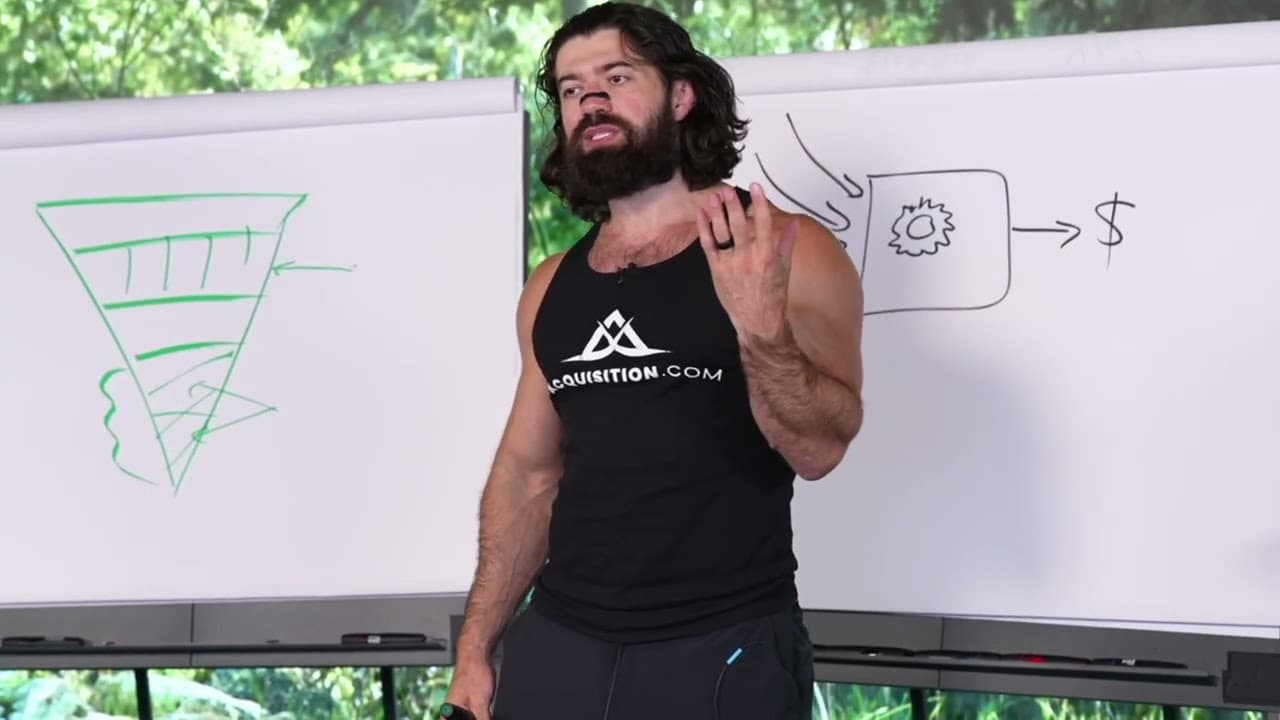
Many people still have terrible offers and/or terrible lead magnets. So, I'm going to cover kind of like the common troubleshooting that I go into with people who have bad offers, bad lead magnets, or both. All right. So, let's just focus on the offer side. I forgot to put the little thing so that it uh comes one at a time. So, I apologize. So, the... Read More
Key Insights
- Commodity offers become differentiated when they outperform alternatives on speed, risk, or ease. Businesses should deliberately improve at least one of these vectors instead of presenting customers with an offer that appears interchangeable with every competing option.
- Faster delivery can justify premium pricing when customers value time. A useful planning question is what resources, staffing changes, or contractor incentives would be required to produce the desired customer outcome in one-third of the usual time.
- Risk reduction works by addressing the customer’s biggest fear through warranties, guarantees, or insurance coverage. The cost of that protection can be incorporated into the offer, allowing the business to make a stronger promise without carrying every potential loss directly.
- Ease improves when a business completes preparation before the customer must ask for it. Better intake, onboarding, pre-work, and attention to personal details can make the experience feel seamless while demonstrating a level of care that many competitors overlook.
- Attraction offers can make an existing service more compelling without changing its core delivery. The presented options include giveaways, win-your-money-back promotions, decoys, delayed-payment structures, and buy-and-get-free arrangements, with the specific mechanism chosen to suit the business model.
- Giveaways can generate opportunities beyond the grand-prize winner. A kitchen remodeling company, for example, could contact other entrants with a second-place or participation offer, such as the transcript’s example of a $2,000 discount on a kitchen project.
- Lead magnets can produce stronger overall returns across a longer time horizon because they reach people who are not yet ready for a direct purchase request. They require a conversion process, but they can access a larger audience and scale beyond the warmest prospects.
- Effective lead magnets use one of three structures: reveal a problem, offer a trial of the solution, or provide one step from a multistep service. Each structure exchanges immediate value for contact information while creating a natural connection to the paid solution.
Install to Summarize YouTube Videos and Get Transcripts
Explore YouTube Video Summarizer or Get YouTube Transcript Extractor
Questions & Answers
Q: How can a business make its offer less commoditized?
A business can make its offer less commoditized by becoming faster, less risky, or easier for the customer. It should select at least one of these value vectors and redesign delivery around it. Because the improved offer provides more value than a standard alternative, the business can raise its price to reflect the premium instead of competing mainly on cost.
Q: How can faster service improve an offer?
Faster service improves an offer by shortening the time customers must wait for their desired outcome. The transcript recommends asking what it would take to complete the result in one-third of the time. That might require paying contractors 50% more for same-day or next-day responses, then determining whether customers will pay enough to support the faster delivery.
Q: How can guarantees or insurance reduce customer risk?
Guarantees, warranties, and insurance can reduce risk by protecting customers against the outcome they fear most. A business can obtain coverage for relevant damages, promise protection up to a stated amount, and include the insurance cost in its pricing. This makes the offer feel safer while giving the business a structured way to support its promise.
Q: How can a company make its service easier for customers?
A company can make service easier by preparing the customer’s path before delivery begins. It can improve intake, simplify onboarding, complete useful pre-work, and anticipate details that would otherwise require customer effort. Personalized preparation, such as knowing the customer’s name and business before arrival, can create a more seamless and noticeably thoughtful experience.
Q: What promotional mechanisms can strengthen an existing offer?
An existing offer can be wrapped in a giveaway, a win-your-money-back promotion, a decoy, a pay-less-now-and-more-later arrangement, or a buy-and-get-free structure. The transcript suggests matching the mechanism to the business model. Service businesses may benefit from win-your-money-back offers, while more transactional businesses may find decoys useful. Local advertising compliance should be checked with an attorney.
Q: Why can lead magnets outperform direct sales ads over time?
Direct sales ads target people who are already warm and prepared to buy, so they may produce higher returns upfront. Lead magnets soften the request and can attract a much larger group of prospects at earlier stages of awareness. When supported by an effective conversion process, that broader reach can generate higher overall returns across a longer time horizon and scale more effectively.
Q: What are the three types of lead magnets?
The three lead magnet types presented are revealing a problem, providing a trial of the solution, and delivering one step of a multistep process. A problem-revealing asset might identify seven HVAC mistakes homeowners make. A trial lets prospects experience the result temporarily, while a one-step offer separates a useful component from a larger paid service.
Q: How should a business design a compelling lead magnet?
A compelling lead magnet should offer something the intended customer genuinely wants in exchange for contact information. Its promised outcome should match the customer’s desired result and use the customer’s own language. Instead of relying on a generic request-a-quote page, the business should provide immediate value that naturally connects the prospect to the broader solution it sells.
Summary & Key Takeaways
-
Strong offers escape commodity competition by improving at least one of three value vectors: speed, risk, or ease. A business can deliver results faster, protect customers from their biggest fear through warranties, guarantees, or insurance, and prepare more work in advance to create a simpler, more seamless buying experience.
-
Businesses can also strengthen existing offers with attraction mechanisms such as giveaways, win-your-money-back promotions, decoys, pay-less-now-and-more-later structures, or buy-and-get-free arrangements. Pricing should account for the added value and costs. Because advertising requirements vary by location, businesses should confirm that promotional structures comply with applicable rules.
-
Lead magnets soften the initial request and reach prospects beyond the warmest, most purchase-ready audience. Effective lead magnets promise an outcome customers genuinely want, describe that outcome in their language, and use one of three formats: reveal a problem, provide a trial of the solution, or deliver one step from a multistep service.
Read in Other Languages (beta)
Share This Summary 📚
Summarize YouTube Videos and Get Video Transcripts with 1-Click
Try YouTube Summary with ChatGPT & Claude or YouTube Transcript Generator
Explore More Summaries from MoreMozi 📚



Summarize YouTube Videos and Get Video Transcripts with 1-Click
Try YouTube Summary with ChatGPT & Claude or YouTube Transcript Generator