How to Reach Buyers With Interest-Based Content
TL;DR
Make content specifically for the customers you want to reach, because modern recommendation algorithms use the content itself to find people with matching interests. Judge performance by viewer quality, real-world responses, and business relevance, not raw views alone. A small, targeted following can support a profitable business when the material directly helps that audience.
Transcript
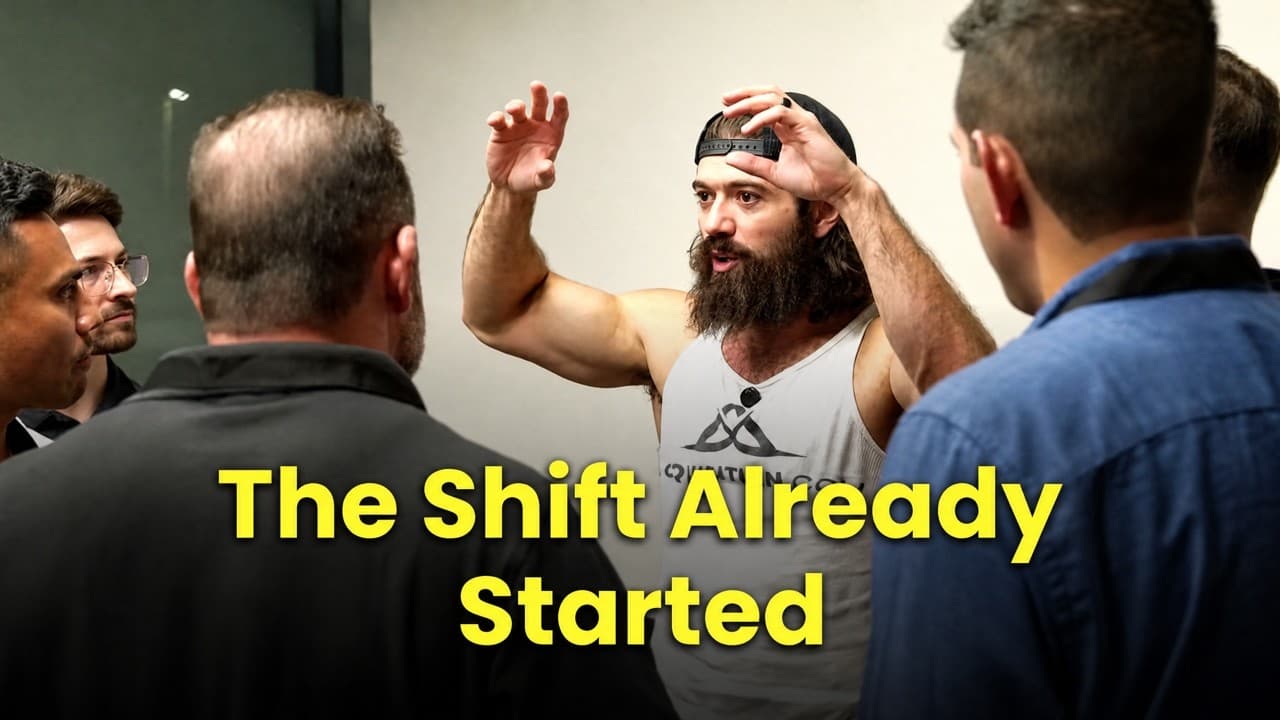
Some of you guys may have heard this. And it's a concept of social media is now turning into interest media. Okay? So, what does this mean? Let's unpack this for a second. So, if you make content and you judge it by views, I think that's dumb and I'll explain why. If you If I make a If I If I have a grandma in public come and just do a running slap... Read More
Key Insights
- Content is the targeting because recommendation algorithms can identify what a post discusses, examine visual details such as the background and clothing, and distribute it to people with a history of watching similar material. Creating for a clearly defined customer gives the system signals about the appropriate audience.
- Raw view count is an incomplete measure of business content because a broadly humorous clip can attract attention from people who will never become customers. Views are useful to track, but their commercial value depends on whether the viewers belong to the market the business actually serves.
- Business content is usually educational rather than purely entertaining because its purpose is to provide value and influence useful behavior. The desired progression is for viewers to understand a problem, move closer to the business, and potentially purchase its product or service.
- A specialized audience can be valuable even when it is small. A piano repair creator who reaches 1,000 people interested in fixing or buying pianos may have a stronger business opportunity than a creator whose larger audience only wants distraction or general entertainment.
- Market size should determine realistic performance expectations. The speaker says business owners represent 9% of the United States population, while 95% of those owners operate below $1 million in revenue, leaving a much smaller potential audience for content aimed at larger companies.
- Real-world responses can reveal audience quality more clearly than total views. The speaker values messages from respected business owners and feedback from owners visiting the company headquarters because those reactions show whether the content is resonating with the people it was designed to reach.
- A room-sized comparison makes digital reach easier to appreciate. The speaker once conducted lunch-and-learn sessions for 15 people, so even 1,000 online views represented substantial distribution. Online content also lets viewers consume the material conveniently from home instead of attending in person.
- A small following can still produce substantial revenue when its members are highly relevant. The speaker cites two businesses generating more than $1 million annually with fewer than 5,000 followers, illustrating why direct value for a defined audience can matter more than follower volume.
- More videos from this channel:
- More from this channel: MoreMozi
Install to Summarize YouTube Videos and Get Transcripts
Explore YouTube Video Summarizer or Get YouTube Transcript Extractor
Questions & Answers
Q: What is interest media, and how is it different from social media?
Interest media is a model in which algorithms distribute content according to what individual viewers have shown an interest in watching. The system can evaluate the subject of a post as well as visual details such as its background, the creator's clothing, and who appears in it. Distribution therefore depends less on broad popularity alone and more on matching the material with people who consume similar content.
Q: How does content act as targeting on social platforms?
Content acts as targeting by signaling exactly which viewers are likely to find a post relevant. If a piano repair specialist publishes material about fixing pianos, the algorithm can show it to people researching repairs or making piano-related purchasing decisions. The creator does not need broad entertainment appeal when the topic itself helps identify and attract the intended customer group.
Q: Why should businesses avoid judging content only by views?
Views do not indicate whether the audience contains likely customers. A comedic clip, such as a staged slap involving a grandmother, might earn broad attention because many people enjoy humor, but it would not necessarily increase belief in the creator's business ideas. Businesses should track views while placing greater weight on audience relevance, qualified responses, and signs that the right people value the material.
Q: Should business creators focus on education or entertainment?
Business creators are generally positioned as educators because they aim to provide value that changes viewer behavior. Their content should help potential customers understand problems, evaluate options, or take actions that bring them closer to purchasing. Entertainment can generate attention, but broad amusement may reach people with no connection to the company's product, service, or intended customer profile.
Q: How should a niche creator evaluate 1,000 views?
A niche creator should evaluate 1,000 views in relation to who watched and how large the relevant market is. If all 1,000 viewers are interested in fixing pianos, that audience represents a meaningful opportunity for a piano repair business. The speaker compares online reach with in-person lunch-and-learn sessions attended by 15 people, showing that seemingly modest digital numbers can still represent considerable access.
Q: How does market size affect expected content performance?
Expected performance should be based on the number of people who could realistically need the content. The speaker says only 9% of people in the United States own businesses, and 95% of those owners generate less than $1 million in revenue. Content aimed at owners above that level addresses a much smaller group, so comparing its view count with mass entertainment content creates an inaccurate standard.
Q: What feedback matters besides views and follower counts?
Useful feedback includes messages and in-person reactions from people who match the intended audience. The speaker pays close attention when respected business owners say a post was valuable and asks visiting owners which content formats they prefer. Such responses indicate whether the material reaches and helps the right people, while a high view count alone cannot establish that connection.
Q: Can a business succeed with fewer than 5,000 followers?
A business can generate significant revenue with fewer than 5,000 followers when its content is directly useful to a relevant audience. The speaker says he reviewed two businesses that each produced more than $1 million annually despite having audiences below that follower threshold. The examples support measuring commercial relevance and customer quality instead of assuming that a large following is required for strong business results.
Summary & Key Takeaways
-
Social media is becoming interest media, where recommendation algorithms connect content with viewers who have previously watched similar material. For a business, the practical implication is that the subject, setting, and presentation help determine who sees each post. Content designed for a specific customer therefore functions as its own targeting mechanism.
-
Business creators should generally prioritize education over broad entertainment. A humorous video may attract many viewers without increasing trust among likely customers. Educational material about a specialized problem can receive fewer views while reaching people who need the solution, are comparing purchases, or are otherwise relevant to the business offering it.
-
Performance expectations should reflect the size of the intended market. The speaker notes that only 9% of people in the United States own businesses, and 95% of that group has less than $1 million in revenue. For specialized audiences, qualified engagement and real-world feedback can matter more than mass reach.
Read in Other Languages (beta)
Share This Summary 📚
Summarize YouTube Videos and Get Video Transcripts with 1-Click
Try YouTube Summary with ChatGPT & Claude or YouTube Transcript Generator
Explore More Summaries from MoreMozi 📚





Summarize YouTube Videos and Get Video Transcripts with 1-Click
Try YouTube Summary with ChatGPT & Claude or YouTube Transcript Generator