How to Reframe Pain and Persist Toward Goals
TL;DR
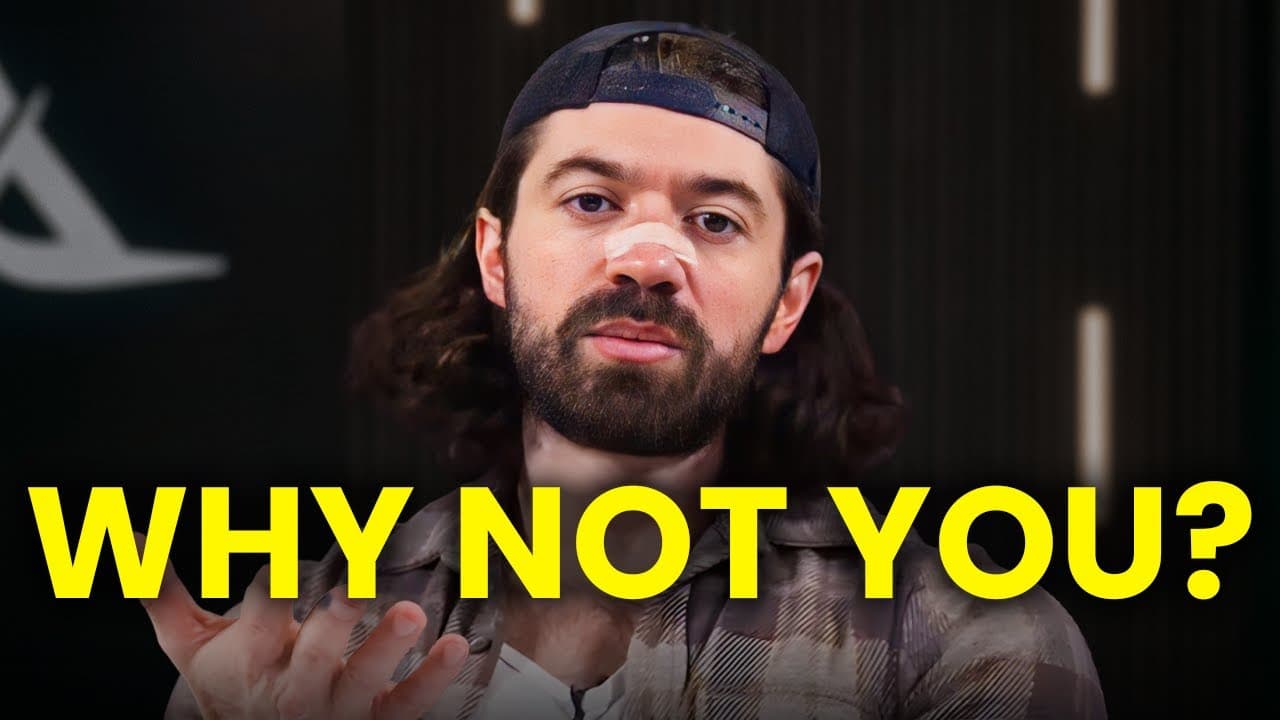
Meaningful goals require accepting boredom, pain, and trade-offs while focusing on what you can control: continuing the work. Hardship becomes easier to endure when it represents progress toward a valued purpose, and even failed efforts produce lasting skills, experience, stronger character, and evidence of personal resilience.
Transcript
If you want to achieve a goal, you're either going to have to accept boredom or pain. And the bigger the goal, the more of both you'll get. When I started my gym, I actually lived with six other people in one house. This is like off of beach town. Think like sand everywhere, people everywhere, dirty dishes everywhere, not enough room in refrigerato... Read More
Key Insights
- Major goals require accepting both boredom and pain because larger ambitions demand more repetition, sacrifice, uncertainty, and difficult trade-offs. Progress depends on recognizing discomfort as part of the price rather than treating its presence as proof that the goal is wrong.
- Pain becomes more tolerable when it serves a meaningful purpose. The shock example suggests that a person can endure far more discomfort when each shock protects family members, because the same physical experience represents sacrifice, responsibility, and progress toward something valued.
- Purpose changes the meaning of suffering by linking discomfort to a desired result. When pain represents protecting family, building a business, or becoming a stronger person, it can function as reinforcement because enduring it confirms movement toward an important objective.
- Work changes the worker even when the project fails. Bankruptcy, failed relationships, destroyed outcomes, and collapsed partnerships cannot erase the skills, judgment, behaviors, and beliefs developed through sustained effort, so labor can remain profitable beyond its immediate external result.
- Experience prevents later attempts from being true restarts. A person can start from scratch only once because every subsequent effort includes lessons and scars from prior action, creating practical knowledge that carries more weight than opinions from people who have not done the work.
- Strong character is revealed and developed through difficult tests. Courage requires frightening obstacles, patience requires delayed results, wisdom can grow through crushing failures, and emotional resilience becomes evidence-based only after someone has endured circumstances that demanded it.
- Other people's criticism does not require participation. Hateful comments can be reframed as objections to personal choices and trade-offs, but living differently from critics is expected when each person prefers a different life and accepts a different set of sacrifices.
- Persistence is controllable even when success is uncertain. The speaker could not know when or whether his sacrifices would produce success, but he could commit to continuing, making refusal to stop a dependable behavior independent of unpredictable outcomes.
Install to Summarize YouTube Videos and Get Transcripts
Explore YouTube Video Summarizer or Get YouTube Transcript Extractor
Questions & Answers
Q: How can pain be reframed when pursuing a difficult goal?
Pain can be reframed as the price being paid for something you genuinely want. Instead of asking only whether an experience hurts, ask what the discomfort is purchasing and whether that result matters to you. When hardship represents progress, protection, growth, or purposeful sacrifice, it feels more worthwhile and becomes easier to endure without interpreting it as a reason to quit.
Q: Why do bigger goals require more boredom and pain?
Bigger goals involve greater amounts of repetitive work, sacrifice, uncertainty, delayed rewards, and difficult trade-offs. The transcript presents boredom and pain as unavoidable costs rather than unusual setbacks. A person pursuing a large ambition therefore needs to accept both experiences in advance, connect them to a meaningful purpose, and avoid assuming that discomfort means the effort is failing.
Q: How does purpose increase a person's pain tolerance?
Purpose gives pain a positive meaning beyond the immediate unpleasant sensation. In the example described, a man who believes each shock protects his family can tolerate about four times more pain. The discomfort represents service and protection, creating emotional padding that makes it feel worthwhile. The pain remains real, but its connection to something valued changes how it is experienced.
Q: Is work still valuable when the final outcome is lost?
Work remains valuable because it develops the person performing it. A failed business, bankruptcy, broken relationship, or collapsed partnership may eliminate the visible outcome, but it does not remove the skills, judgment, behaviors, beliefs, and experience gained through effort. The work produces an enduring internal result, so its value cannot be measured only by whether the original project survives.
Q: Why can a person only start from scratch once?
A person can start from scratch only before gaining meaningful experience. After the first attempt, every new beginning includes knowledge, judgment, skills, and lessons earned through action and failure. Even after losing everything, the person does not return to the original condition because experience remains. That practical understanding also reduces dependence on opinions from people who have not done comparable work.
Q: How does hardship reveal a person's character?
Hardship creates the conditions needed to test qualities that otherwise remain unverified opinions. Loyalty becomes real when remaining loyal is costly, patience becomes real when results are delayed, and emotional resilience becomes real when circumstances demand recovery. Difficult periods provide evidence of how a person responds, creating memories that can strengthen confidence and emotional endurance during later challenges.
Q: How should someone respond to hateful online comments?
A hateful comment can be reframed as another person saying that they would not prefer to live the same way or make the same trade-offs. That disagreement does not require a response or acceptance. Like refusing to catch something unpleasant that has been thrown, a person can decline participation, let the criticism pass, and continue living according to personal preferences and goals.
Q: What should someone control when success is uncertain?
When timing and success cannot be guaranteed, a person can control whether they continue doing the work. The speaker did not know when he would succeed or whether success would arrive, but he knew he could commit to not stopping. This shifts attention from unpredictable outcomes to persistent behavior, providing a clear commitment that remains available during uncertainty, loss, and difficult trade-offs.
Summary & Key Takeaways
-
Large goals bring boredom, pain, uncertainty, and sacrifices. The useful question is not how to eliminate discomfort, but whether the current discomfort is purchasing an outcome or identity you genuinely want. Connecting hardship to purpose reframes it as meaningful progress and can increase your willingness to continue through difficult conditions.
-
Work creates value even when its visible outcome disappears. Business losses, failed relationships, and broken partnerships do not erase the judgment, skills, scars, and experience gained through action. A person can start from scratch only once because every later attempt begins with knowledge earned from previous work and failure.
-
Persistence becomes practical when it is attached to controllable behavior. Success and timing may remain uncertain, but refusing to stop is a commitment within personal control. Hardship also tests qualities such as patience, loyalty, courage, and emotional resilience, turning untested beliefs about character into lived evidence that can support future challenges.
Read in Other Languages (beta)
Share This Summary 📚
Summarize YouTube Videos and Get Video Transcripts with 1-Click
Try YouTube Summary with ChatGPT & Claude or YouTube Transcript Generator
Explore More Summaries from MoreMozi 📚




Summarize YouTube Videos and Get Video Transcripts with 1-Click
Try YouTube Summary with ChatGPT & Claude or YouTube Transcript Generator