How to Build Life-Changing Habits After 30
TL;DR
Consistency matters more than intensity when responsibilities make time scarce, so complete a small daily action instead of waiting for an ideal plan. Protect that limited time by declining opportunities unless they clearly deserve a yes, while preserving adult friendships by immediately contacting people who come to mind rather than waiting for a special reason.
Transcript
My name is Mark Manson and I'm old. I'm also a three-time number one New York Times best-selling author and over the last 20 years I have taught millions of people practical psychological tips to improve their lives and here are seven habits that I accidentally adopted after 30 that ended up completely changing my life. And number five, you're goin... Read More
Key Insights
- Consistency is usually more effective than intensity because exceptional ability develops through repeatedly doing something over a long period. A small action completed every day can preserve momentum when an elaborate routine is incompatible with work, family, financial obligations, relationships, and other demands.
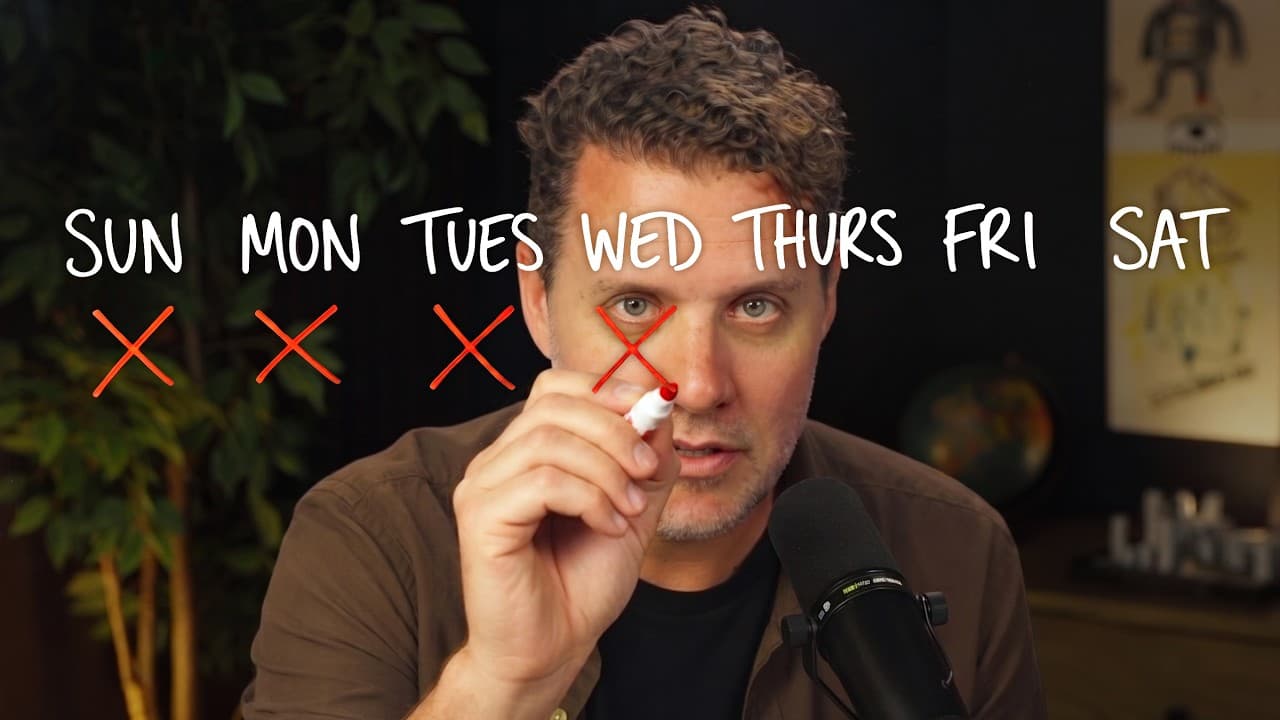
- The X-chain method is a simple consistency system in which any completed effort earns an X on the calendar. The daily objective is to avoid breaking the chain, so even writing one word or exercising for a short period counts as meaningful progress.
- Rebuilding a lost habit is harder than maintaining an established one. After a foot microfracture prevented Manson from exercising for three or four months, complex workout and diet plans did not restore his routine, but committing to 20 minutes of daily movement helped him return to shape.
- Defaulting to no protects scarce time because every accepted invitation carries an opportunity cost. Saying yes to one event, introduction, or project also means saying no to other ways that time and attention could support existing relationships, responsibilities, and meaningful priorities.
- Saying yes is more useful when new experiences provide information about personal interests, relationships, and preferred directions. Manson argues that people in their 20s generally benefit from greater openness, while those in their 30s and 40s need stronger selection because they have more at stake.
- Declining opportunities remains difficult as life improves because the quality of incoming proposals tends to rise with the quality of a person's circumstances. Obvious distractions become easier to reject, but attractive opportunities at a similar level still require continuous practice in choosing carefully.
- Frequent exposure is the biggest factor identified in the transcript for friendship quality. Adult obligations and increasingly common refusals make that exposure difficult, so skipped coffees, missed birthdays, canceled plans, and unanswered messages can gradually weaken intimacy without any dramatic conflict.
- Immediate outreach is a practical safeguard against adult friendships fading. When someone comes to mind, sending a message is more effective than waiting for a reason to meet, since two people can otherwise remain silent while each expects a future occasion to restore contact.
Install to Summarize YouTube Videos and Get Transcripts
Explore YouTube Video Summarizer or Get YouTube Transcript Extractor
Questions & Answers
Q: How can I build a consistent daily habit after 30?
Choose an action small enough to complete even on a crowded day, then mark an X on the calendar whenever you do it. The primary goal is to keep the chain intact rather than perform an ideal routine. Manson's exercise example was 20 minutes of movement each day, which could include walking, lifting light weights, or swimming with a friend.
Q: What does never break the X's mean?
Never break the X's means marking every day on a calendar when you perform the chosen behavior and trying to maintain an uninterrupted chain. The action can be minimal. In the writing example, even one word qualifies. The method directs attention toward showing up consistently instead of depending on unusually intense sessions or searching for a secret technique.
Q: Why does consistency beat intensity for busy adults?
Consistency works better for busy adults because responsibilities can make long, complicated routines impractical. Careers, partners, children, homes, payments, insurance, aging parents, and other obligations all compete for limited time. A modest action that happens daily preserves the habit, while an ambitious plan may be abandoned when a person cannot find a large uninterrupted block of time.
Q: How did Mark Manson rebuild his exercise habit?
After a foot microfracture kept him from exercising for three or four months, Manson initially searched for a new routine, consulted a coach, and used ChatGPT to create workout and diet plans. He eventually rejected that complexity and committed to doing something active for 20 minutes every day. Keeping that daily chain was what helped him return to shape.
Q: Why should adults in their 30s default to saying no?
Adults in their 30s often have established priorities and many competing obligations, which makes their time especially scarce. Defaulting to no forces an invitation, introduction, event, or opportunity to prove that it deserves attention. The principle recognizes that every yes consumes time that could otherwise go toward existing relationships, responsibilities, work, or activities that already feel meaningful.
Q: When should someone default to saying yes instead of no?
Manson recommends greater openness in your 20s, when new experiences can help you discover who you are, what you enjoy, and which people you value. At that stage, the information gained from trying unfamiliar things may outweigh the opportunity cost. As responsibilities and meaningful commitments accumulate later, he argues that the calculation changes and selectivity becomes more important.
Q: Why do adult friendships fade without a fight?
Adult friendships often erode through small omissions rather than dramatic conflicts. Unsent texts, missed birthdays, canceled plans, and repeatedly postponing coffee or other gatherings reduce the frequency of contact. Each skipped moment can seem insignificant by itself, but regularly avoiding these occasions weakens connection and intimacy over time, making the relationship difficult to restore later.
Q: How can I maintain friendships as life gets busier?
Contact people when they come to mind instead of waiting for a special activity or compelling reason to meet. Adult friendships require intentional contact because work, relationships, family duties, and other obligations reduce frequent exposure. A simple message interrupts the pattern in which both people silently wait for a future occasion while the relationship gradually loses closeness.
Summary & Key Takeaways
-
Small daily actions are more sustainable than ambitious plans when work, relationships, payments, family responsibilities, and other obligations compete for attention. Mark Manson recommends putting an X on the calendar whenever the chosen action is completed, even minimally, then focusing on preserving the uninterrupted chain rather than achieving an intense result each day.
-
New experiences can be valuable in your 20s because they help reveal your interests, preferred relationships, and direction. By your 30s and 40s, time is scarcer and meaningful commitments are already competing for it. Manson therefore recommends making no the default response to invitations and opportunities until their value has been demonstrated.
-
Adult friendships often fade through unsent messages, missed birthdays, canceled plans, and repeated decisions to postpone small gatherings. Because frequent exposure supports friendship quality, maintaining close relationships requires deliberate effort. Manson recommends contacting someone whenever they come to mind instead of waiting until a particular activity or compelling reason for meeting appears.
Read in Other Languages (beta)
Share This Summary 📚
Summarize YouTube Videos and Get Video Transcripts with 1-Click
Try YouTube Summary with ChatGPT & Claude or YouTube Transcript Generator
Explore More Summaries from Mark Manson 📚




Summarize YouTube Videos and Get Video Transcripts with 1-Click
Try YouTube Summary with ChatGPT & Claude or YouTube Transcript Generator