How Will AI and Bioengineering Reshape Society?
TL;DR
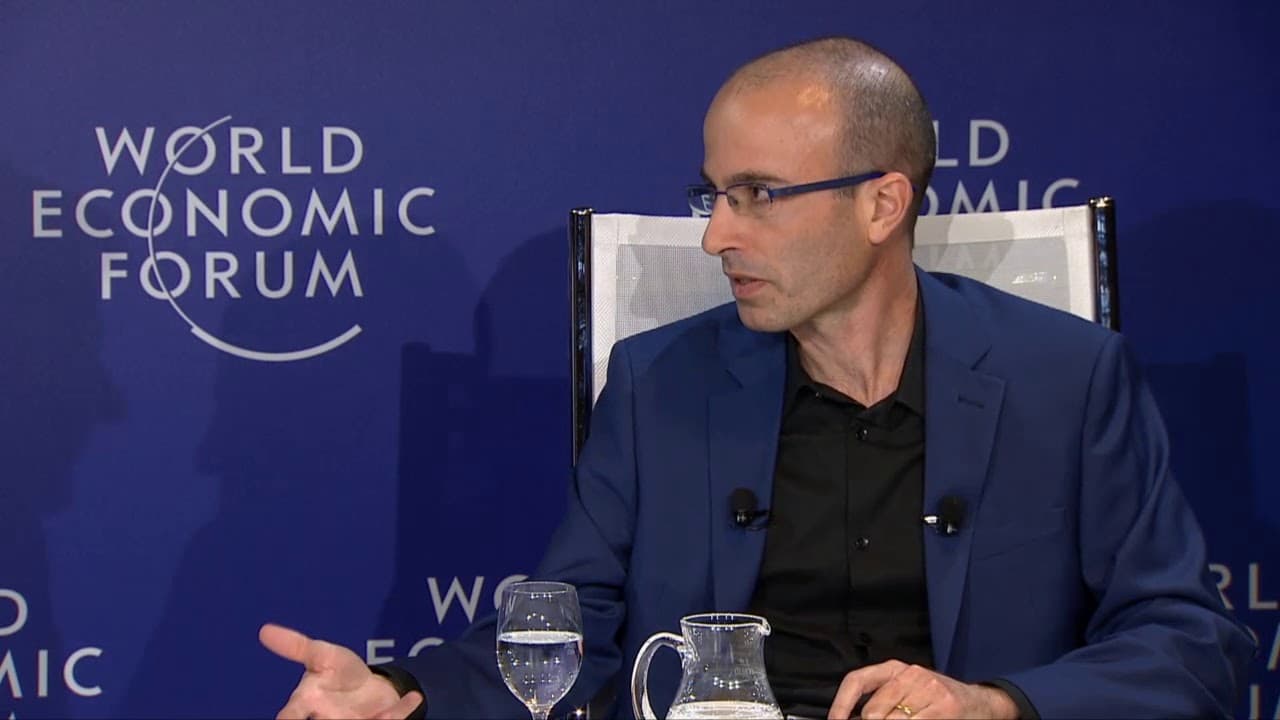
AI and bioengineering do not determine a single future. They create many possibilities whose outcomes depend on human choices, governance, and participation. The immediate danger is that technological change is advancing faster than public understanding, leaving decisions concentrated among a small minority while people who fall behind may face economic irrelevance rather than exploitation.
Transcript
well welcome everybody welcome good afternoon and thank you for joining us for this issue briefing is extraordinary issue briefing which we arranged is because there was so much interest when the program was released to the public last week the professor Hariri here was good it was going to be speaking that Congress there was such an intense amount... Read More
Key Insights
- Technology is not deterministic because AI and bioengineering create a menu of possibilities rather than one fixed future. Their social consequences depend on choices that people, governments, corporations, states, and markets make as these capabilities develop.
- The future is highly uncertain because nobody can reliably describe how the world will look several decades from now. Harari argues only that it will be completely different and that any plausible account of that future should appear strikingly unfamiliar from today’s perspective.
- Technological governance is progressing slowly because many people remain unaware of what is happening, while governments often prioritize matters they consider more urgent. Disruptive technologies are consequently advancing faster than the institutions and public mindsets needed to understand and steer them.
- Decision-making power is concentrated among a small minority within certain corporations and governments. Most of humanity lacks sufficient time, motivation, education, or analytical ability to understand the developments and participate in debates about choices that will affect everyone.
- The major danger for people left behind is irrelevance rather than exploitation. Earlier losers in historical struggles could become serfs, slaves, or manual laborers, but future systems may no longer require their labor, making their social and economic position potentially worse.
- A historian’s role is to create clarity and broaden participation in debates about humanity’s future. Harari does not expect every person to participate, but he believes substantially increasing the number of informed participants would help level the field and give more people a voice.
- States and markets remain the main historical agents driving technological revolutions. States seek greater power, while markets pursue faster growth, creating pressure to continue development because any state that independently withdraws risks being left behind by those that continue.
- The central media problem is information overload rather than fake news alone. False stories and propaganda existed throughout earlier periods, while modern audiences also face overwhelming quantities of truthful but irrelevant information that obstruct their ability to understand the larger picture.
Install to Summarize YouTube Videos and Get Transcripts
Explore YouTube Video Summarizer or Get YouTube Transcript Extractor
Questions & Answers
Q: How will AI and bioengineering shape the future?
AI and bioengineering will open a broad menu of possible futures, but they will not determine one unavoidable outcome. Harari says nobody knows exactly how the world will look several decades from now, although it will be completely different. The eventual direction will depend on human choices about development, governance, participation, and the uses to which these technologies are put.
Q: Why is technological change difficult for society to govern?
Technological change is difficult to govern because its pace exceeds the speed at which governments and public mindsets adapt. Many people are barely aware of the developments, while governments often say they have more urgent matters to address. As a result, humanity has made little progress in building the understanding and systems needed to guide disruptive technologies responsibly.
Q: Who currently understands the stakes of disruptive technology?
A very small minority concentrated within certain corporations and governments has a clearer understanding of technological developments and their stakes. Most people lack some combination of time, motivation, education, and analytical ability needed to make sense of events. This imbalance is dangerous because those outside the debate will still experience the consequences of decisions made by the better-informed minority.
Q: Why could technological irrelevance be worse than exploitation?
Technological irrelevance could be worse because an exploited person still performs work that powerful groups consider useful. Historically, people who lost political or economic struggles might become serfs, slaves, or manual laborers. Harari warns that people left behind in the coming transformation may not even be needed for labor, leaving them without the bargaining position that usefulness once provided.
Q: How can historians contribute to debates about technology?
Historians can create clarity about what is happening, explain what is at stake, and help more people enter the debate about humanity’s future. Harari sees his role as leveling the field rather than directly working with governments. Complete participation by everyone may be unrealistic, but substantially expanding informed participation can give more affected people a meaningful voice.
Q: Why do states and markets keep advancing technology?
States and markets keep advancing technology because they remain the main historical agents behind current revolutions. States attempt to accumulate more power, while markets try to accelerate economic growth. If one state independently stops participating while others continue, it risks being left behind. Harari says withdrawal would therefore require a shared agreement involving the whole human race.
Q: Is fake news a uniquely modern media problem?
Fake news is not uniquely modern because governments, propaganda, and false stories have influenced people throughout history. Harari questions whether any earlier era was truly an age of truth and notes that the Middle Ages contained even worse falsehoods than those discussed today. The present concern should therefore extend beyond simply separating accurate reports from inaccurate ones.
Q: What is the biggest problem with today’s information environment?
The biggest problem is the flood of information and the difficulty of turning it into a meaningful picture. Even truthful information becomes problematic when it is irrelevant or arrives in quantities too large to interpret coherently. People need more than an ability to distinguish truth from falsehood. They also need an ability to identify significance and understand the larger pattern.
Summary & Key Takeaways
-
Harari argues that nobody knows what society will look like several decades from now, except that it will be radically different. AI and bioengineering open a broad range of possibilities rather than dictating one unavoidable outcome. Human decisions will determine which technological paths are pursued and how their consequences are distributed.
-
Public understanding and government action are progressing more slowly than disruptive technology. A small minority within certain corporations and governments has a clearer view of the developments and stakes, while most people lack the time, education, ability, or motivation to participate meaningfully in decisions that will nevertheless affect their lives.
-
States and markets remain the principal forces advancing technological change, driven respectively by accumulating power and accelerating growth. Harari also argues that fake news is not historically new. The deeper media problem is an overwhelming flood of information, including truthful but irrelevant material, which makes forming a coherent picture increasingly difficult.
Read in Other Languages (beta)
Share This Summary 📚
Summarize YouTube Videos and Get Video Transcripts with 1-Click
Try YouTube Summary with ChatGPT & Claude or YouTube Transcript Generator
Explore More Summaries from Yuval Noah Harari 📚



Summarize YouTube Videos and Get Video Transcripts with 1-Click
Try YouTube Summary with ChatGPT & Claude or YouTube Transcript Generator