How to Lose Fat and Keep It Off Long Term
TL;DR
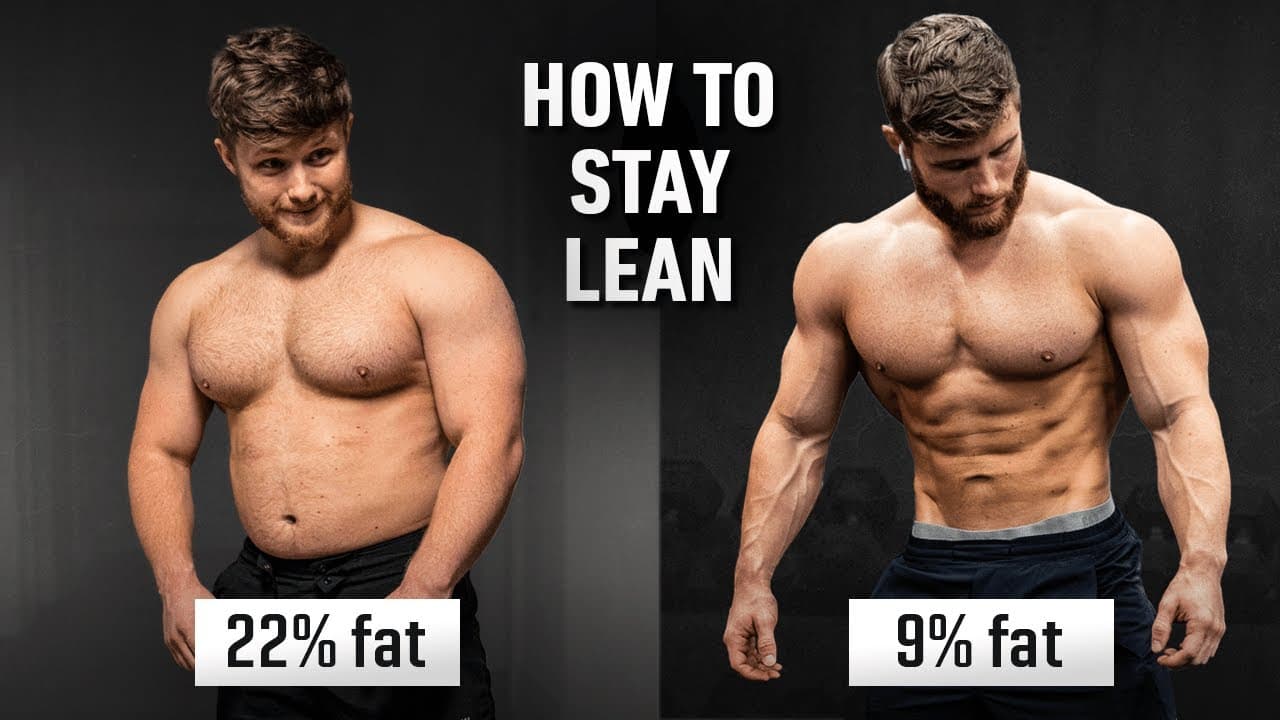
Losing fat permanently requires dieting slowly enough that it barely feels like dieting, typically a 20 percent caloric deficit producing 0.5 to 1 percent body weight loss per week. Every diet needs three things: a sustained caloric deficit, weight training, and 1.6 to 2.2 grams of protein per kilogram of body weight. Habits matter more than motivation.
Transcript
if you click this video you've most likely set the goal of trying to lose some fat this year this is my goal for the new year as well I'm trying to get under 10 body fat for the first time in a few years however if you follow Fitness content at all you've probably also heard that most diets fail over the long term this is true just take a look at t... Read More
Key Insights
- Getting lean temporarily for an event like a wedding or photo shoot is a fundamentally different goal from getting lean and staying lean, and it requires a different set of strategies. Confusing the two is a large part of why weight regain is so common.
- The Biggest Loser follow-up study on 2009 contestants showed that six years later, only one of 14 participants had kept the weight off, five had regained all of it, and two weighed more than before the show began.
- A caloric deficit is the mechanism behind all fat loss. Calories out come from resting energy expenditure, exercise activity thermogenesis, non-exercise activity thermogenesis, and the thermic effect of food, and a 500 calorie daily deficit yields about one pound lost per week.
- Metabolic adaptation means calorie burn falls as you lose weight, because the body is smaller, becomes more energetically efficient per unit of exercise, fidgets less, and digests less food. These adaptations can occur within days.
- Every effective fat loss diet needs exactly three things: a sustained caloric deficit, weight training to support muscle mass, and 1.6 to 2.2 grams of protein per kilogram of body weight, or 0.7 to 1 gram per pound.
- Meal frequency, meal timing, and specific food choices can be dictated almost entirely by individual preference, since they are not among the three requirements that actually drive fat loss and muscle retention.
- The standard science-based cutting rate is 0.5 to 1 percent of body weight per week, meaning a 200 pound person aims for one to two pounds weekly and a 20 pound cut should take 10 to 20 weeks.
- Jeff Nippard lost 24 pounds, or 11 kilos, over 40 weeks going from 187 pounds to 163 pounds, an average of just over half a pound per week, and the slow pace made the diet feel effortless despite restaurants and holidays.
Install to Summarize YouTube Videos and Get Transcripts
Explore YouTube Video Summarizer or Get YouTube Transcript Extractor
Questions & Answers
Q: Why do most diets fail in the long term?
The evidence shows regain is the norm rather than the exception. The Biggest Loser follow-up study on 2009 contestants found that six years later, only one of 14 participants had kept the weight off, five had regained everything, and two weighed more than before the show. A 2020 systematic review of eight weight loss studies found that although every study induced weight loss during the dieting period, all of them also saw average weight regain afterward, with a few showing overshoot beyond the original starting weight. A major reason is that people treat short-term leanness for an event as the same goal as staying lean permanently, when the two require different strategies.
Q: How does fat loss actually work?
Fat loss occurs because of a caloric deficit, meaning you consume fewer calories than you burn. Calories come in through food, and you burn them in four ways: resting energy expenditure, which is what your body burns just keeping your heart beating and sitting there; exercise activity thermogenesis, the calories burned from exercise; non-exercise activity thermogenesis, or NEAT, covering activity like getting up, sitting down, typing, and tapping your fingers; and the thermic effect of food, the small number of calories burned digesting what you eat. If you burn 2,500 calories a day and eat 2,000, you run a 500 calorie deficit, which sustained over time produces about one pound of weight loss per week.
Q: What is metabolic adaptation and how do you deal with it?
Metabolic adaptation is the decrease in calories burned as you lose weight. Resting energy expenditure falls because your body is smaller, calories burned per unit of exercise fall because the body becomes more energetically efficient, NEAT falls because you become less hyperactive and fidgety, and the thermic effect of food falls because you are eating less food. This means the 500 calorie deficit you started with probably will not be a 500 calorie deficit after a few weeks or months, and sometimes these adaptations happen within days. To handle it, either lower calories a bit further to maintain your desired rate of loss, or simply accept that weight loss will take longer than expected.
Q: How much protein do you need while cutting?
The recommended target is 1.6 to 2.2 grams of protein per kilogram of body weight, which works out to 0.7 to 1 gram per pound. Protein is one of only three crucial components any fat loss diet needs, alongside a sustained caloric deficit to cause fat loss and weight training to support muscle mass. Its role is specifically to help preserve muscle mass during the deficit. Everything else, including the number of meals you eat, the timing of those meals, and which specific foods you focus on, can largely be dictated by your own individual preferences rather than by rules.
Q: How fast should you lose weight when cutting?
The general science-based cutting rule is to lose around 0.5 to 1 percent of your body weight per week during a fat loss phase. For a 200 pound person, that means one to two pounds per week, so cutting 20 pounds should take 10 to 20 weeks. To land in that range, aim for a caloric deficit around 20 percent below your current maintenance calories. However, there can be benefits to going even slower. Jeff Nippard lost 24 pounds over 40 weeks, roughly half a pound per week, and reported that the slow pace made the diet feel ridiculously easy while still eating out at restaurants and enjoying pizza and sushi.
Q: Why are crash diets and food restriction a mistake?
Popular fad diets do cause fat loss in the short term, which is exactly why they became popular, but each carries a long-term cost. Low calorie crash diets tend to result in more muscle loss and eventual weight regain. Isolating yourself from social events and avoiding restaurants may help you resist tempting foods for a while, but it can deteriorate your relationships and eventually make the diet feel unsustainable. Cutting out entire food groups may help you avoid overeating temporarily, but it can lead to nutrient deficiencies and uncontrollable cravings that make weight regain inevitable. Slower, less restrictive approaches avoid these failure modes.
Q: What body fat percentage is realistic to maintain year round?
Most men can expect to maintain something between 10 and 20 percent body fat, and for women the realistic range tends to be between 18 and 28 percent. Trying to hold six percent body fat all year is not viable: at a certain point sleep, libido, energy, and mood all plummet and food becomes all you can think about, so even if achievable it is not a state of existence worth maintaining. Your starting point matters too. Someone who has sat at 40 percent body fat for 10 years may find 20 percent harder to maintain than a genetically leaner person finds eight percent. If you target a physique leaner than your genetic body fat set range, it will be very hard to sustain.
Q: How should you track calories without it becoming stressful?
Tracking can be as loose as you want. If you do not want to track calories at all, you can instead focus on tracking your body weight while making intuitive, common sense lower calorie food choices most of the time, which is enough to get things moving for some people. Others find a tool like intermittent fasting helpful. A middle option is loosely tracking calories and protein without worrying about the exact carb and fat numbers. For a food with hard-to-find macros like a specialty sushi roll, you can just eyeball it as five or six hundred calories and move on, which keeps total tracking time to roughly five minutes a day.
Summary & Key Takeaways
-
Most diets fail long term. A study following 2009 Biggest Loser contestants six years later found that of the 14 participants, only one kept the weight off, five regained all of it, and two ended up heavier than before the show started. A 2020 systematic review of eight weight loss studies found average weight regain after every dieting period ended.
-
Fat loss occurs through a caloric deficit. Calories are burned four ways: resting energy expenditure, exercise activity thermogenesis, non-exercise activity thermogenesis (NEAT), and the thermic effect of food. A sustained 500 calorie daily deficit produces roughly one pound of weight loss per week, which is a reasonable target for most people.
-
Metabolic adaptation reduces calorie burn as weight drops, so an initial 500 calorie deficit shrinks over weeks or months. Long-term strategies include dieting slowly at a 20 percent deficit, setting a realistic body fat target (10 to 20 percent for most men, 18 to 28 percent for women), and building habits so progress survives motivation dips.
Read in Other Languages (beta)
Share This Summary 📚
Summarize YouTube Videos and Get Video Transcripts with 1-Click
Try YouTube Summary with ChatGPT & Claude or YouTube Transcript Generator
Explore More Summaries from Jeff Nippard 📚




Summarize YouTube Videos and Get Video Transcripts with 1-Click
Try YouTube Summary with ChatGPT & Claude or YouTube Transcript Generator