What Are the Celtic Languages?
TL;DR
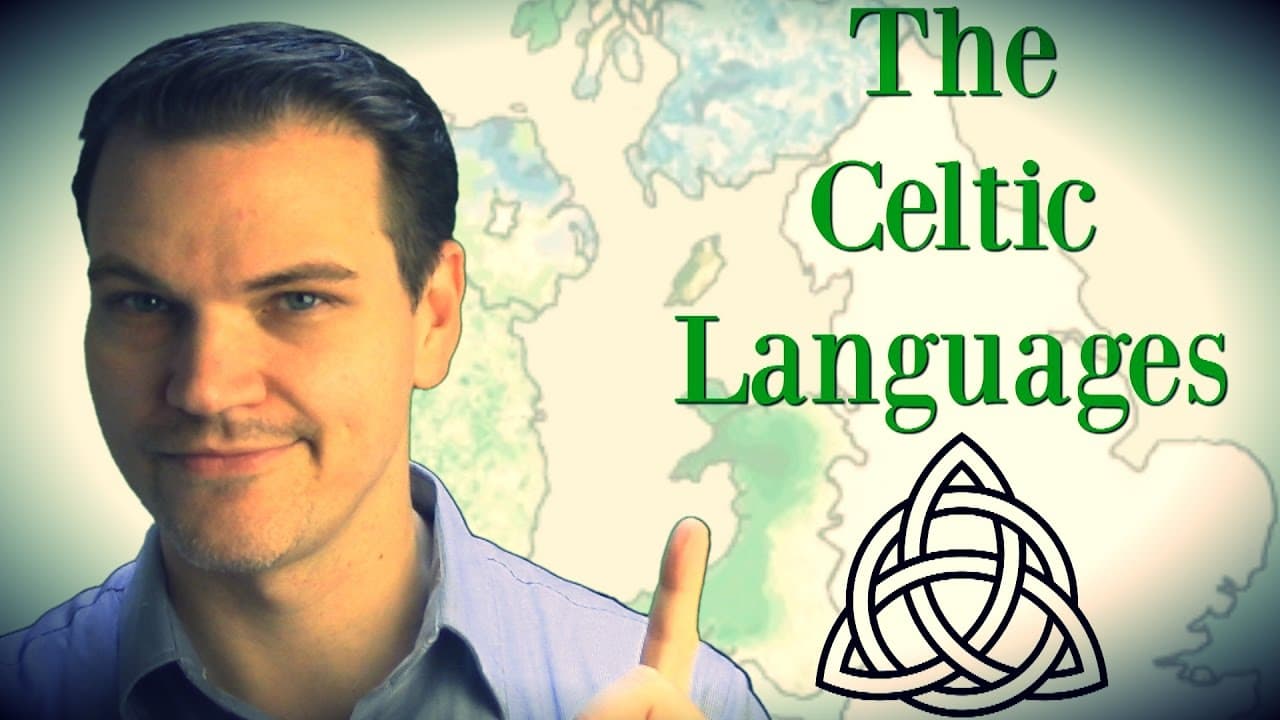
Celtic languages, primarily spoken in the British Isles, include Welsh, Irish, Scottish Gaelic, Breton, Cornish, and Manx. Historically widespread across Europe, these languages are now endangered. Efforts to revive them have been made, with varying success. They feature unique linguistic traits like VSO word order and consonant mutations.
Transcript
Follow Langfocus on Facebook, Twitter, and Instagram. Hello everyone, welcome to the Langfocus channel and my name is Paul. Today's topic is the Celtic languages. Celtic languages are today spoken mainly in the British Isles where they've existed alongside English since the Middle Ages. The numbers are not exactly clear because the Celtic languages... Read More
Key Insights
- Celtic languages are mainly spoken in the British Isles and Brittany, France.
- There are around a million speakers of Celtic languages today.
- Historically, Celtic languages were spoken across much of Europe.
- The Insular Celtic languages are divided into Q-Celtic and P-Celtic groups.
- Celtic languages feature VSO word order and initial consonant mutations.
- Efforts to revive Celtic languages have been made, with varying success.
- Most Celtic languages are considered endangered by UNESCO.
- Celtic languages have a rich history and cultural significance in their native regions.
Install to Summarize YouTube Videos and Get Transcripts
Explore YouTube Video Summarizer or Get YouTube Transcript Extractor
Questions & Answers
Q: How many people speak Celtic languages today?
Around a million people speak Celtic languages today, with Welsh having the largest number of speakers at approximately 508,000. Irish Gaelic has about 80,000 proficient speakers, while Scottish Gaelic has around 57,000 native speakers. Other Celtic languages like Breton, Cornish, and Manx have smaller speaker populations.
Q: What are the main groups of Insular Celtic languages?
The Insular Celtic languages are divided into two main groups: Q-Celtic and P-Celtic. Q-Celtic, or Goedelic, includes Irish, Scottish Gaelic, and Manx Gaelic. P-Celtic, or Brythonic, consists of Welsh, Breton, and Cornish. These groups evolved from a common ancestor but are not mutually intelligible.
Q: What are some unique features of Celtic languages?
Celtic languages feature VSO (verb-subject-object) word order, initial consonant mutations, and inflected prepositions. These languages also use vowel mutations as a morphological device and have impersonal verb forms that serve as passive or intransitive. Such features distinguish them from languages like English.
Q: Why are most Celtic languages considered endangered?
Most Celtic languages are considered endangered due to historical assimilation into dominant cultures and languages like English and French. Factors such as colonialism, educational policies favoring dominant languages, and socio-economic pressures have contributed to their decline. Revival efforts aim to preserve these languages.
Q: How did the Celtic languages historically spread across Europe?
During the first millennium BCE, Celtic languages were spoken across much of Europe, from the Iberian Peninsula to the Black Sea and parts of Asia Minor. Proto-Celtic likely originated with the Urnfield culture in Central Europe. Over time, Celtic speakers spread and established communities, influencing various regions.
Q: What efforts have been made to revive Celtic languages?
Revival efforts for Celtic languages include educational initiatives, such as teaching Welsh, Irish, and Scottish Gaelic in schools. Community-driven movements have also helped languages like Cornish and Manx gain new speakers. These efforts aim to preserve linguistic heritage and cultural identity in regions where these languages are native.
Q: How do the P-Celtic and Q-Celtic languages differ?
P-Celtic and Q-Celtic languages differ in their phonetic developments from Proto-Celtic. P-Celtic languages, like Welsh, often have words beginning with 'p' or 'b', while Q-Celtic languages, like Irish, begin with 'c', 'k', or 'q'. These differences contribute to the lack of mutual intelligibility between the two groups.
Q: What role do Celtic languages play in cultural identity?
Celtic languages play a significant role in cultural identity, representing the historical and linguistic heritage of regions like Ireland, Scotland, Wales, and Brittany. They are symbols of cultural pride and resistance against linguistic assimilation. Efforts to preserve and revive these languages are often driven by a desire to maintain cultural uniqueness.
Summary & Key Takeaways
-
Celtic languages are currently spoken by around a million people, mainly in the British Isles and Brittany, France. Historically, they were widespread across Europe. Today, they are endangered, but revival efforts are underway in various regions, with Welsh, Irish, and Scottish Gaelic being taught in schools.
-
The Celtic languages are divided into two main groups: Q-Celtic (Irish, Scottish Gaelic, Manx) and P-Celtic (Welsh, Breton, Cornish). They share unique linguistic features like VSO word order and consonant mutations. Despite coexistence with English and French, they remain distinct and culturally significant.
-
Revival movements have helped languages like Cornish and Manx gain new speakers, though they remain endangered. The survival of Celtic languages relies on community efforts and educational initiatives. They continue to hold cultural and historical importance in their regions, despite the dominance of English and French.
Read in Other Languages (beta)
Share This Summary 📚
Summarize YouTube Videos and Get Video Transcripts with 1-Click
Try YouTube Summary with ChatGPT & Claude or YouTube Transcript Generator
Explore More Summaries from Langfocus 📚




Summarize YouTube Videos and Get Video Transcripts with 1-Click
Try YouTube Summary with ChatGPT & Claude or YouTube Transcript Generator