How to Build an Intentional Brand That Wins Trust
TL;DR
Branding is an intentional pairing of relevant things done consistently, and brand is the association your audience forms as a result. Decide your desired outcome first, then judge every pairing by one question: does this move me closer to that outcome or further away? If further, skip it, even for short-term follower growth.
Transcript
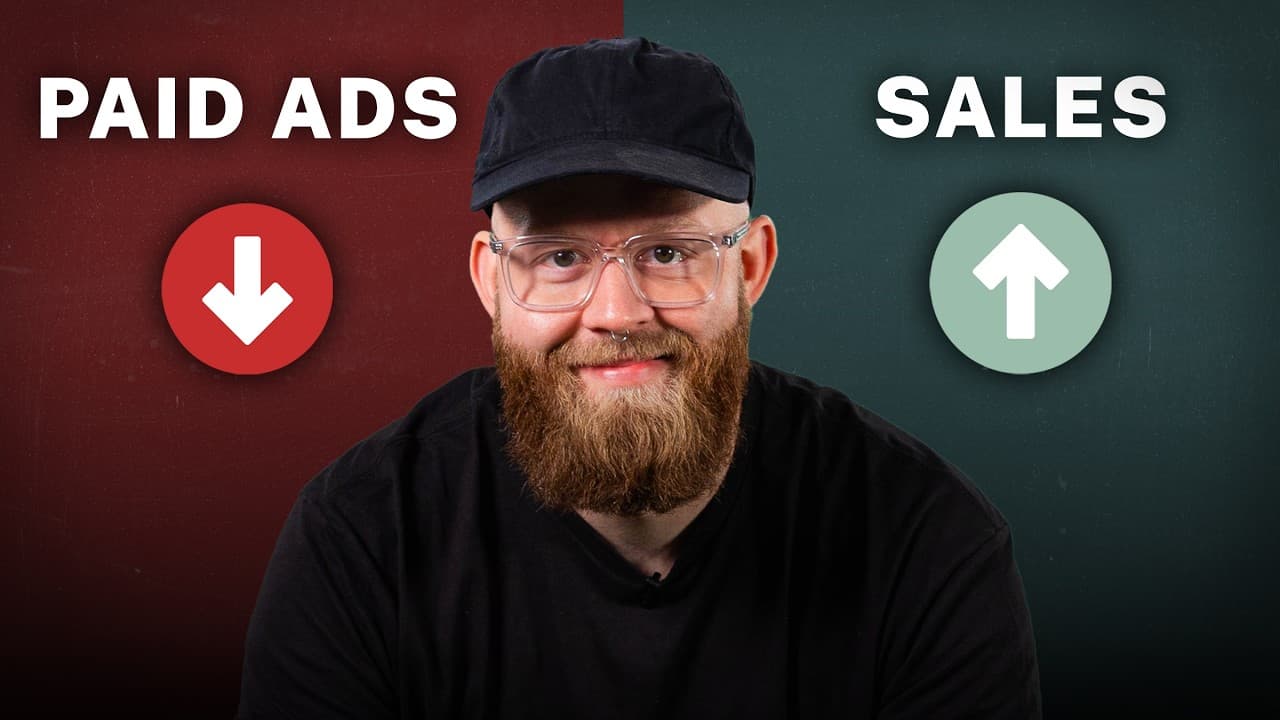
Let's start with this. I believe a lot of you are obsessing over your marketing because you failed at brand. You're pouring hundreds of thousands or millions of dollars into paid ads. You're tweaking funnels and email campaigns and chasing virality. But something I've observed over 17 years of building brands is that your marketing efforts get easi... Read More
Key Insights
- Branding is defined here as an intentional pairing of relevant things done consistently, and brand is the byproduct: when your audience inherently associates you with something else. The pairings you make form the associations others create for you.
- A strong brand makes marketing easier and more cost-effective. Founders who obsess over paid ads, funnels, email campaigns, and virality are often compensating for a brand they never built, based on 17 years of observation.
- Every creator is on one of two paths. The forgettable brand posts content just to check a box and lets the audience form uncontrolled associations. The intentional brand makes every piece of content move toward a desired outcome.
- Associations act as the lens or filter through which your audience interprets everything you say and do. Brand is not amorphous; it is the exact interpretive filter applied to all your future actions and words.
- Nike paired itself with Michael Jordan to enter basketball while known only as a running company, creating the association Nike equals greatness. This shows a deliberate, relevant pairing manufacturing a desired brand association.
- Bad pairings damage brand. Appearing repeatedly with an untrustworthy or scammy person makes an audience interpret a trust-focused brand through those characters, producing an association antithetical to the reputation you want.
- The brand journey framework reverse-engineers from goal to present with four questions: What is my desired outcome? What must I be known for? What must I do? What must I learn? This creates a measurable road map.
- Knowing your desired outcome gives a simple decision rule for every choice and pairing: does this move me closer or further? Simple is not easy, because it demands discipline to refuse short-term wins that cause long-term brand damage.
Install to Summarize YouTube Videos and Get Transcripts
Explore YouTube Video Summarizer or Get YouTube Transcript Extractor
Questions & Answers
Q: What is the definition of branding according to Caleb Ralston?
Branding is an intentional pairing of relevant things done consistently. Brand is the byproduct of that: it is when your audience inherently associates you and something else together. Good branding requires being deliberate about the pairings you make, because those pairings form the associations your audience creates for your brand, which then shape how everything you do is interpreted.
Q: Why does a strong brand make marketing easier?
The speaker observed over 17 years of building brands that marketing efforts get easier and more cost-effective when you have a strong brand. People who obsess over marketing, pouring hundreds of thousands or millions of dollars into paid ads, tweaking funnels and email campaigns, and chasing virality, are often compensating for a brand they never intentionally built. Fixing the brand reduces that marketing burden.
Q: What are the two paths a brand can be on?
Path one is the forgettable brand, where you post content just to check a box, are not intentional with your pairings, and let your audience create associations you have no control over. Path two is the intentional brand, where every piece of content moves you closer to your desired outcome and you deliberately control the associations your audience makes. The goal is to move from path one to path two.
Q: How does the Nike and Michael Jordan example illustrate branding?
Nike was known as a running shoe company when it wanted to enter the basketball market. It paired itself with Michael Jordan, greatness personified within basketball, to create the brand association that Nike equals greatness. The speaker notes many people today have no idea Nike started as a running company, showing how a deliberate, relevant pairing can successfully build a lasting brand association in a new market.
Q: What is the brand journey framework?
It is a four-question exercise that reverse-engineers from your goal back to the present. First, what is my desired outcome or goal? Second, what would I have to be known for so that outcome occurs? Third, what would I have to do to be known for that thing? Fourth, what would I have to learn to do those things? This produces a road map from now to your desired outcome.
Q: How do you decide whether an association is good or bad?
Once you know your desired outcome, you ask one simple question for every concept, value, or pairing: does associating myself with this move me closer to my desired outcome or further away? If it moves you further, you do not do it. If it moves you closer, you do it. Knowing the outcome turns association decisions into a clear, repeatable decision-making framework.
Q: Why is a simple branding framework still hard to follow?
The speaker says the framework is simple but not easy. It takes real effort to figure out what you are actually trying to accomplish, and then massive discipline to keep making decisions that move you closer to that outcome rather than further away. He notes he has been offered podcast appearances that would add thousands of followers but declines them because the pairing would conflict with his goals.
Q: Why would someone turn down a big podcast opportunity for their brand?
The speaker, in his first year of business and content, has been offered spots on podcasts with millions of eyeballs that could bring thousands of new followers. He declines because pairing himself with certain individuals would create an association antithetical to his goals. If he paired with someone untrustworthy, it would be the exact opposite of the trustworthy brand he wants, a short-term boost causing a long-term hit.
Summary & Key Takeaways
-
The speaker argues many people over-invest in marketing tactics like paid ads and funnels because they failed at brand. A strong brand makes those efforts easier and cheaper. Over 17 years he has watched creators pour money into content without a clear reason or outcome.
-
His definition: branding is an intentional pairing of relevant things done consistently, and brand is the association the audience forms. Those associations become the filter through which people interpret everything you do, so pairings must be deliberate, as Nike did by pairing itself with Michael Jordan.
-
The brand journey framework reverse-engineers four questions from goal to present: desired outcome, what to be known for, what to do, and what to learn. Once the outcome is clear, every choice is judged by whether it moves you closer or further, requiring discipline to refuse short-term boosts.
Read in Other Languages (beta)
Share This Summary 📚
Summarize YouTube Videos and Get Video Transcripts with 1-Click
Try YouTube Summary with ChatGPT & Claude or YouTube Transcript Generator
Explore More Summaries from Caleb Ralston 📚

Summarize YouTube Videos and Get Video Transcripts with 1-Click
Try YouTube Summary with ChatGPT & Claude or YouTube Transcript Generator