How to Build an Entrepreneur’s Personal Brand

TL;DR
Entrepreneurs should invest substantial personal effort in content before delegating their personal brand to a team. They must first document their own stories, principles, frameworks, and tactics, then train collaborators with that source material. Outside feedback from customers, audiences, or team members also helps reveal valuable ideas that deep expertise can make an entrepreneur mistakenly dismiss as basic.
Transcript
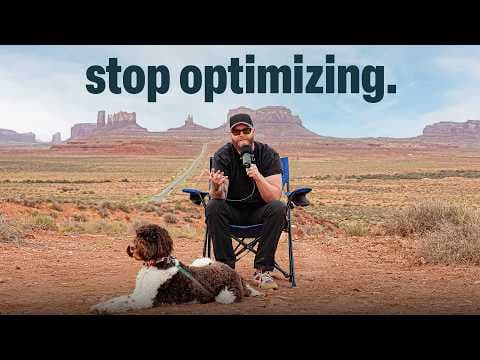
The thing that has made you a successful entrepreneur might be the very thing that is holding you back from building a successful personal brand. I've been building personal brands for entrepreneurs, executives, and CEOs for over 17 years now. And across those 17 years, I have noticed three common mistakes that I see you making that is holding you ... Read More
Key Insights
- High-leverage thinking can obstruct early personal brand development because entrepreneurs may try to delegate before creating the knowledge base their team needs. Long-term leverage becomes possible only after substantial upfront work has documented the founder’s experiences, ideas, stories, principles, frameworks, and tactics.
- A personal brand requires the entrepreneur’s direct involvement during its early development. A content director can organize ideas and provide structure, but cannot independently reproduce the founder’s credibility, backstory, failures, successes, or lessons without extensive training and original source material from that founder.
- Premature delegation makes the entrepreneur a hidden bottleneck. When a founder gives superficial approval to content, then rejects it during filming, the problem is not simply weak team output. The team lacks the context that only the founder can initially provide through careful writing, feedback, and collaboration.
- A content bank is the foundation for future delegation. Entrepreneurs should systematically record their thoughts, named concepts, frameworks, stories, tactics, principles, failures, successes, and resulting lessons so a personal brand team can later transform authentic expertise into content without substituting its own experience.
- The first 12, 18, or 24 months should emphasize effort rather than minimal weekly involvement. The speaker rejects the idea that a meaningful personal brand can be established in only 30 to 60 minutes per week when the founder’s original knowledge is the brand’s primary source.
- Expertise creates blind spots because repeated practice makes advanced methods feel ordinary to the practitioner. Entrepreneurs may dismiss distinctive questions, operating methods, or problem-solving frameworks as basic even when those ideas provide precisely the insights that customers and audiences find unusually valuable.
- Outside validation helps experts recognize their strongest intellectual property. Positive customer reactions during training, consulting, or strategy discussions can signal that an idea deserves broader distribution, while audience responses and observations from content directors, videographers, editors, or assistants can reveal overlooked concepts.
- Named concepts make expertise easier to remember, repeat, and reference. During a client exercise, the phrase “visitor value” stood out to outside observers as distinctive even though its creator considered it basic, demonstrating why entrepreneurs need collaborators who can recognize valuable thinking that familiarity has made invisible.
Install to Summarize YouTube Videos and Get Transcripts
Explore YouTube Video Summarizer or Get YouTube Transcript Extractor
Questions & Answers
Q: How should entrepreneurs begin building a personal brand?
Entrepreneurs should begin by investing substantial personal time in ideation, writing, and documenting their experience. They should capture their stories, failures, successes, lessons, principles, frameworks, concepts, and tactics before expecting a team to communicate them. A team can supply structure and production support, but the core thinking should initially come directly from the entrepreneur.
Q: Why should entrepreneurs avoid delegating content too early?
Early delegation fails because a newly hired content director does not yet understand the entrepreneur’s backstory, credibility, experiences, or distinctive methods. If the team must generate ideas without that context, its work will reflect its own expertise rather than the founder’s. The entrepreneur must first provide source material, detailed feedback, and sustained training before effective delegation becomes possible.
Q: How can an entrepreneur train a personal brand team?
An entrepreneur can train a personal brand team by working closely with it on content ideas, outlines, writing, and revisions. The founder should provide extensive context about personal stories, business lessons, concepts, tactics, and principles. This resembles preparing a replacement CEO: meaningful delegation requires significant upfront investment so the person taking responsibility understands how the founder thinks and operates.
Q: What is a content bank for a personal brand?
A content bank is a collection of the entrepreneur’s original thoughts, stories, concepts, frameworks, tactics, principles, successes, failures, and lessons. It gives a content team authentic source material to use in future work. The bank creates leverage later because collaborators can draw from documented expertise instead of inventing ideas based on their own knowledge and experience.
Q: How much time should entrepreneurs invest in personal branding?
Entrepreneurs should reject the expectation that they can establish a strong personal brand with only 30 to 60 minutes of work each week. The speaker recommends putting as much time and effort as possible into the first 12, 18, or 24 months. The precise workload can vary, but the early phase requires active writing, ideation, and knowledge transfer.
Q: Why can expertise make personal branding more difficult?
Expertise makes personal branding difficult because experienced entrepreneurs develop blind spots around their own abilities. Methods that are advanced or distinctive can feel basic after years of repeated use. As a result, the expert may omit the exact questions, frameworks, actions, or problem-solving approaches that an audience needs and would consider unusually valuable or memorable.
Q: How can entrepreneurs identify ideas worth sharing?
Entrepreneurs can identify valuable ideas by seeking validation from customers, audiences, or trusted team members. During training, consulting, or strategy calls, they should observe which explanations produce strong positive reactions. They can also rely on a content director, videographer, editor, or assistant to flag distinctive thinking that the entrepreneur has mistakenly discounted as ordinary.
Q: Why should personal brand concepts be clearly named?
Clearly named concepts are easier for an audience to remember, repeat, and reference later. Naming also turns an informal explanation into a recognizable element of the entrepreneur’s intellectual framework. The transcript’s “visitor value” example shows how an outside observer can recognize a distinct concept even when the experienced person who developed it assumes that everyone already understands it.
Summary & Key Takeaways
-
A successful entrepreneur’s instinct to prioritize high-leverage work can undermine personal brand development. Delegating ideation and writing too early prevents a content team from accessing the founder’s experience. The entrepreneur should initially supply the stories, concepts, principles, frameworks, and tactics that make the brand credible, distinctive, and personally grounded.
-
Personal branding should be treated like a new business department that requires substantial early investment. A team can propose structures and support production, but the entrepreneur must contribute original thinking. Building a bank of source material during the first 12, 18, or 24 months gives collaborators enough context to create stronger content later.
-
Deep expertise creates blind spots because experienced entrepreneurs often consider their distinctive methods obvious or trivial. Customer reactions, audience responses, and observations from trusted team members can identify ideas worth developing. Clearly naming valuable concepts also makes them easier for people to remember, repeat, reference, and associate with the entrepreneur’s personal brand.
Read in Other Languages (beta)
Share This Summary 📚
Summarize YouTube Videos and Get Video Transcripts with 1-Click
Try YouTube Summary with ChatGPT & Claude or YouTube Transcript Generator
Explore More Summaries from Caleb Ralston 📚





Summarize YouTube Videos and Get Video Transcripts with 1-Click
Try YouTube Summary with ChatGPT & Claude or YouTube Transcript Generator