How to Rebrand Your Personal Brand Online
TL;DR
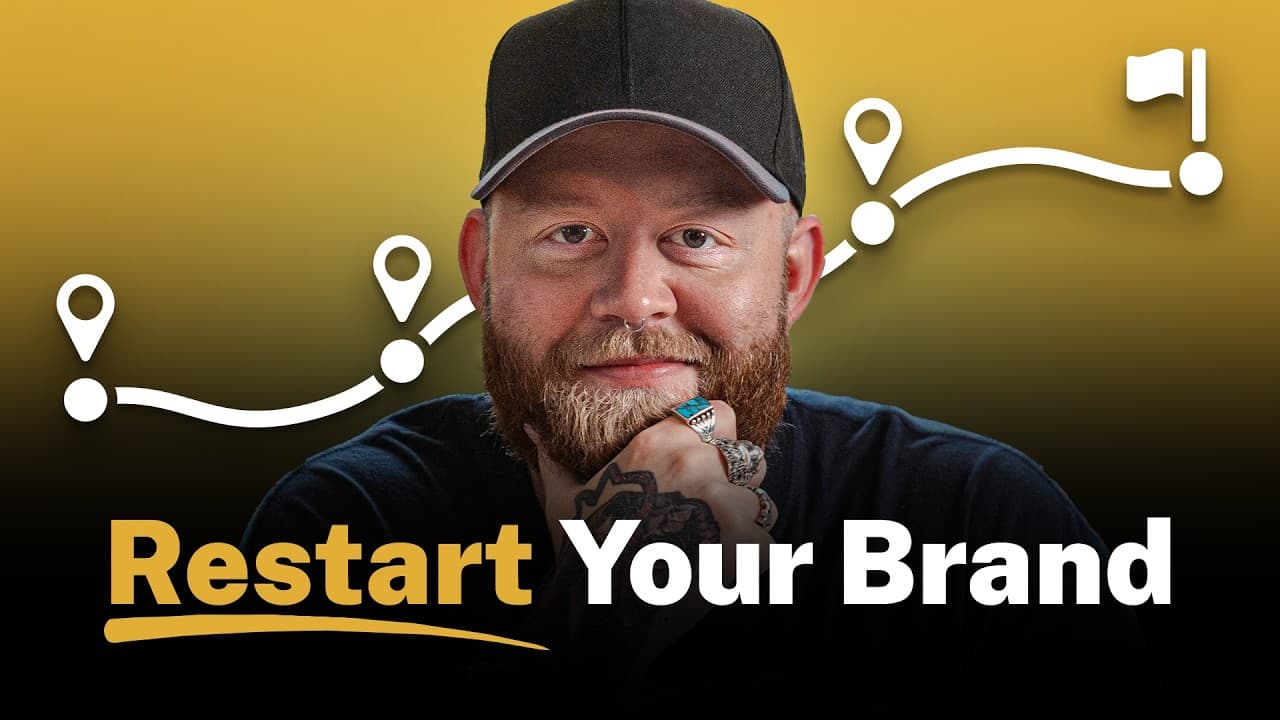
Rebranding means consistently pairing yourself with new, relevant ideas until your audience associates you with them instead of your old identity. Before rebranding, determine whether you are tired of your niche or format, have developed a harmful reputation, or experienced a significant change in your desired outcome. Poor content performance or unclear positioning usually calls for stronger brand clarity, not a rebrand.
Transcript
No one seems to know what rebrand actually means. Rebranding your personal brand is just establishing new associations in your audience's mind and leaving those old ones behind. And over this course, I'm going to compress my 17 years of experience to define what rebranding actually is. I'm going to help you determine if you need a rebrand. We're go... Read More
Key Insights
- Rebranding is the intentional establishment of new associations in an audience's mind while leaving old associations behind. It is an ongoing set of actions, not merely the finished identity that eventually results from those actions.
- Good branding is the intentional pairing of relevant things performed consistently. A brand exists when the audience inherently connects a person with those paired subjects, qualities, people, formats, or ideas without needing the relationship to be explained.
- A brand refresh preserves existing audience associations while adjusting presentation. Changes to a logo, profile photograph, visual identity, voice, or Instagram biography can update how a brand looks or sounds without changing what it fundamentally represents.
- A new brand is the outcome produced by rebranding actions. The process can be reverse engineered by selecting the associations a person wants, repeatedly pairing the personal brand with them, and continuing until the audience recognizes the intended connection.
- Instagram's transition from Bourbon illustrates a complete rebrand within the account presented. Bourbon began as a check-in application, but its users favored photo sharing, so the creators removed the check-in associations and focused the product entirely on that successful feature.
- Poor content performance is not sufficient evidence that a rebrand is needed. A creator who lacks traction, clear expertise, understandable offers, or a defined position may need to strengthen brand positioning instead of abandoning the current identity.
- Fatigue with a niche, subject, or content format is one trigger for considering a rebrand. People evolve and develop new interests, while creators who become known for a repeated trend or format may eventually dislike the identity that repetition created.
- A bad reputation can develop through one major scandal or a sequence of smaller associations. Repeated appearances with people regarded as scammy or sketchy can cause audiences to view a creator through the same negative lens, even without a single defining incident.
Install to Summarize YouTube Videos and Get Transcripts
Explore YouTube Video Summarizer or Get YouTube Transcript Extractor
Questions & Answers
Q: What does rebranding a personal brand mean?
Rebranding a personal brand means choosing new associations, pairing yourself with them consistently, and helping the audience connect your identity with those new ideas instead of the old ones. Rebranding is the action taken to change perception. The new brand is the resulting state in which the audience inherently associates you with the intended subjects, qualities, people, or formats.
Q: What is the difference between a rebrand and a brand refresh?
A rebrand changes the associations attached to a person or business, while a brand refresh preserves those associations and updates their expression. Changing a logo, profile photograph, visual style, voice, or Instagram biography is presented as a refresh. A genuine rebrand requires consistently creating new connections in the audience's mind and leaving the previous connections behind.
Q: How does branding create a personal brand?
Branding works through repeated pairing. Good branding intentionally pairs a person with relevant things and does so consistently. Over time, the audience begins to make those connections inherently, and that accumulated perception becomes the brand. The process therefore depends less on a single announcement or visual change and more on repeated actions that reinforce the same intended associations.
Q: How can someone intentionally build a new brand?
Someone can build a new brand by first selecting what they want the audience to associate with them. They then find relevant ways to pair themselves with those subjects, qualities, people, or formats consistently. When the audience begins making the intended connection automatically and stops relying on the old associations, the rebranding actions have produced the outcome of a new brand.
Q: When should a creator consider rebranding their niche or format?
A creator should consider rebranding when they are tired of the niche, subject matter, or content format for which they have become known. A successful trend can create a strong association if it is repeated, but the creator may eventually dislike being identified with it. Because people develop new interests over time, sustained fatigue can make a rebrand reasonable.
Q: Does poor content performance mean a personal brand needs rebranding?
Poor content performance alone does not mean a personal brand requires rebranding. Limited traction, unclear expertise, confusing offers, or uncertainty about what the creator represents may indicate weak brand positioning. The better response is often to clarify the brand foundation that content should amplify, rather than repeatedly abandoning the current direction whenever progress reaches a difficult point.
Q: How can a bad online reputation develop over time?
A bad online reputation can result from one major event or from many smaller incidents and associations accumulated over time. Repeated collaborations or appearances with people perceived as scammy or sketchy can cause an audience to group a creator with them. Those repeated pairings shape the lens through which viewers interpret the creator, even without one large scandal.
Q: What are the main triggers for considering a personal rebrand?
The 313 rebrand rule identifies three initial triggers: being tired of the current niche, subject, or format, having a bad reputation, and experiencing a significant change connected to the desired outcome. These triggers help separate a genuine need for new audience associations from ordinary content or positioning problems. The supplied discussion introduces the third trigger without fully developing its application.
Summary & Key Takeaways
-
A personal rebrand is the deliberate process of replacing established audience associations with new ones. Branding consists of consistently pairing yourself with relevant subjects, qualities, people, or formats. Once those connections become automatic in the audience's mind, they form your brand. Rebranding describes the actions used to create that new perception.
-
A rebrand differs from a brand refresh. Updating a logo, profile photo, visual style, voice, or social media biography can modernize presentation while preserving existing associations. A genuine rebrand changes what the audience connects with your identity, leaving previous associations behind rather than merely giving the existing identity a new appearance.
-
The 313 rebrand rule begins with three possible triggers: fatigue with a niche or format, a damaging reputation, or a significant change affecting the desired outcome. Weak content results, unclear expertise, and uncertain offers are not sufficient reasons by themselves. Those problems usually indicate missing brand positioning and foundational clarity.
Read in Other Languages (beta)
Share This Summary 📚
Summarize YouTube Videos and Get Video Transcripts with 1-Click
Try YouTube Summary with ChatGPT & Claude or YouTube Transcript Generator
Explore More Summaries from Caleb Ralston 📚


Summarize YouTube Videos and Get Video Transcripts with 1-Click
Try YouTube Summary with ChatGPT & Claude or YouTube Transcript Generator