How to Build a Credible Founder Personal Brand
TL;DR
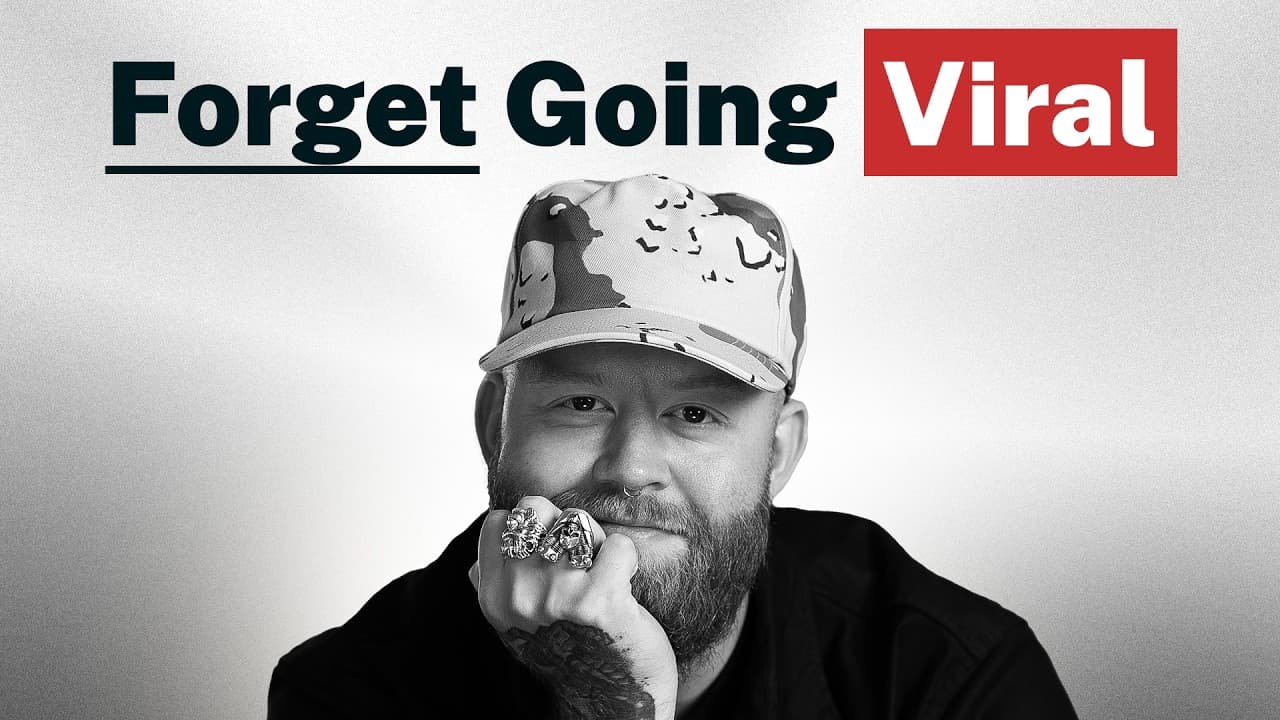
Build a founder brand around genuine business results, firsthand experience, and honest documentation of work in progress. Established entrepreneurs can rely less on attention hacks because demonstrated success already creates interest and trust, but clear packaging and strong hooks still matter. Starting before an exit also preserves timely lessons that memory may later distort.
Transcript
I know that you're tired of seeing all of these less qualified individuals blowing up online and sharing terrible advice left and right. Now, I've worked with some of the biggest personal brands in business. And what I can promise you is the majority of personal branding advice online is not made for a highle founder like you. It's made for full-ti... Read More
Key Insights
- Genuine achievement is the strongest foundation for a founder's personal brand because the audience is naturally interested in someone who has already accomplished what they hope to accomplish. Proven experience can create attention and trust without requiring the founder to manufacture authority through gimmicks.
- Personal-brand packaging is still important, but it is not the primary persuasion tool for an accomplished founder. Strong hooks, useful formats, and clear presentation help communicate the message, while the founder's actual record supplies the credibility that makes people want to listen.
- Copying less-qualified creators often reflects uncertainty about the value of one's own knowledge. A founder who has reached the audience's desired destination has a stronger source of ideas in personal decisions, lessons, failures, and results than in another creator's pre-validated videos.
- Current credibility can be more informative than past credibility because audiences can observe decisions and lessons while a company is actively growing. Real-time documentation captures what is working and failing now, instead of relying entirely on stories reconstructed after the outcome is known.
- Post-exit credibility remains effective because a founder can point to a completed business result and explain what was built and sold. That visible achievement can increase trust, although retrospective accounts may lack details or contain interpretations shaped by the passage of time.
- Memory can distort entrepreneurial experiences, making later recollections different from how events actually occurred. Documenting the building process as it happens can preserve practical details, uncertainty, and failed approaches that might otherwise disappear from a polished account created after an exit.
- Fabricated credibility damages valuable opportunities because experienced people can recognize when achievements are being exaggerated. Founders who have not reached the stated level should avoid presenting themselves as if they have, especially when they hope to collaborate with respected operators later.
- Educational content can build trust with ideal customers without making virality the central objective. The stated approach prioritizes content that attracts customers, delivers high value per minute, and teaches from genuine experience rather than relying primarily on attention-seeking tactics.
Install to Summarize YouTube Videos and Get Transcripts
Explore YouTube Video Summarizer or Get YouTube Transcript Extractor
Questions & Answers
Q: How should successful founders build a personal brand?
Successful founders should make their genuine results and firsthand operating experience the center of their personal brand. They can share decisions, lessons, failures, and current challenges that are difficult for full-time creators to reproduce. Clear hooks and packaging still help people understand the content, but those elements should present the founder's credibility rather than substitute for it.
Q: Why can experienced founders rely less on content gimmicks?
Experienced founders have already achieved outcomes that their intended audience wants, so their success naturally creates interest and persuasive power. They do not need to manufacture every proof point or copy every attention tactic used by creators without equivalent experience. Their main task is to package their knowledge clearly enough for the value of that experience to become visible.
Q: Should founders copy videos that already performed well?
Founders should not treat copying another creator's successful video as their default source of ideas, particularly when that creator has less relevant experience. Existing performance data can feel reassuring, but imitation may cause a founder to repeat secondhand advice. Personal operating experience, audience needs, and other forms of idea validation provide a stronger basis for distinctive content.
Q: When should an entrepreneur start building a personal brand?
An entrepreneur can start while the current business is still growing instead of waiting until after an exit. Building during the journey allows the founder to document active decisions, experiments, successes, and failures. It also creates an audience that may eventually follow the founder toward another business or venture, while preserving lessons that could later be forgotten or revised.
Q: Why is documenting a company journey valuable?
Documenting a company journey captures events while they are happening, including what is working, what is failing, and how the founder is responding. That immediacy can provide a level of insight that retrospective storytelling cannot always match. Because memory changes how people interpret past events, current documentation may give an audience a more accurate account of the building process.
Q: Is it effective to build a personal brand after an exit?
Building after an exit can still be highly effective because the founder has a completed result that demonstrates credibility. Being able to point to a business that was built and sold can increase trust and make people more willing to apply the founder's advice. The limitation is that later recollections may omit details or interpret events differently from how they originally happened.
Q: Why should founders avoid faking business credibility?
Founders should avoid faking credibility because experienced people can detect exaggerated or invented achievement, which can damage trust and eliminate future opportunities for collaboration, work, or learning. Authority should come from what the founder has actually accomplished. Someone who has not reached a particular level can still create content, but should represent current experience honestly rather than pretending otherwise.
Q: Do hooks and packaging still matter for founder content?
Hooks and packaging still matter because they help an audience notice, understand, and engage with a founder's knowledge. However, they are less decisive than genuine achievement when the founder has already produced results the audience wants. The strongest strategy combines credible experience with effective presentation, instead of expecting formats, hacks, or copied concepts to overcome a lack of substance.
Summary & Key Takeaways
-
Successful founders already possess a powerful source of audience interest: credible results that prospective followers want to reproduce. Their personal-brand strategy should therefore emphasize firsthand knowledge and distinctive experience instead of imitating creators with less relevant achievement. Hooks and packaging remain useful, but they should support the substance rather than replace it.
-
Building a personal brand while scaling a company creates access to current decisions, experiments, successes, and failures. This ongoing documentation can be more useful than recollections produced after an exit because memory can alter how events are remembered. The founder can show what is working now without filtering the journey through hindsight.
-
Founders must balance visibility with limited time and the demands of operating a growing business. A credible brand does not require pretending to possess achievements that have not occurred. Honest evidence, educational content, and a clear connection between experience and audience goals can build trust while protecting the founder's reputation and future relationships.
Read in Other Languages (beta)
Share This Summary 📚
Summarize YouTube Videos and Get Video Transcripts with 1-Click
Try YouTube Summary with ChatGPT & Claude or YouTube Transcript Generator
Explore More Summaries from Caleb Ralston 📚
Summarize YouTube Videos and Get Video Transcripts with 1-Click
Try YouTube Summary with ChatGPT & Claude or YouTube Transcript Generator