How Do Minecraft Trap Builds Catch Real Players?
TL;DR
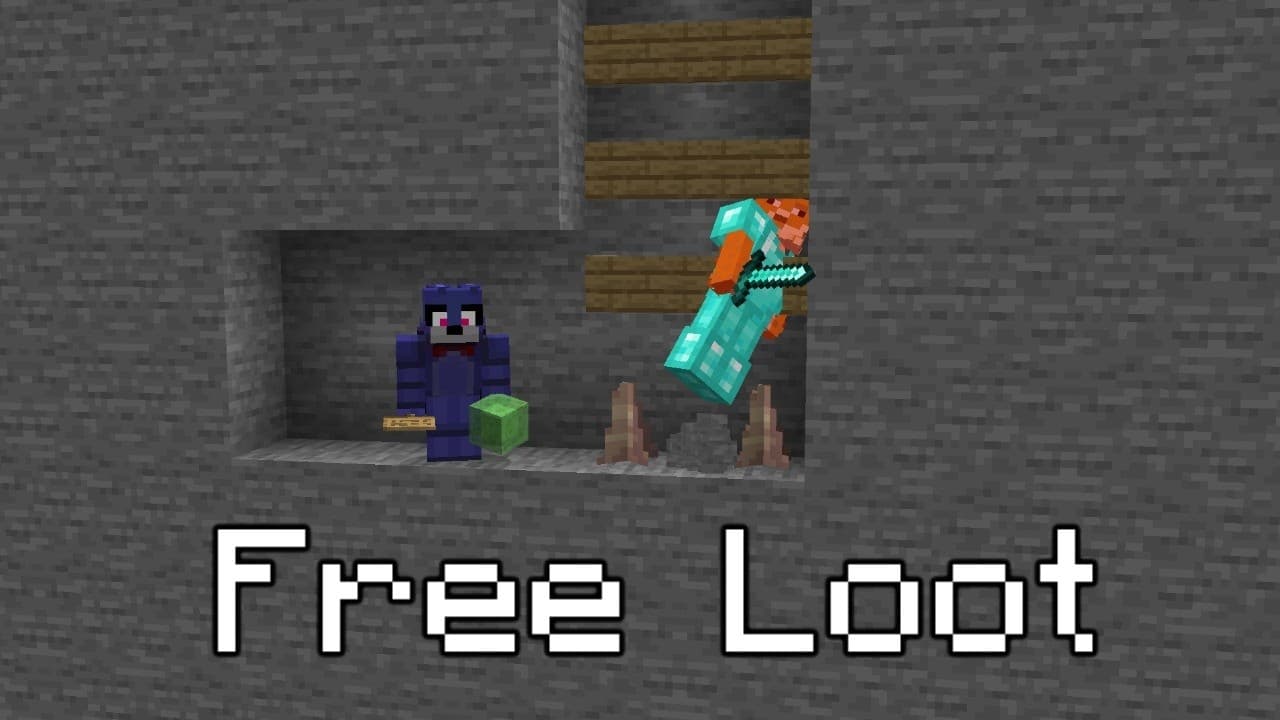
Hidden redstone contraptions work on live players because the trigger sits out of sight while the bait looks like normal terrain, a boulder concealing a sand launcher, flowers covering a pit, a fake pumpkin patch over dripstone. A one-year compilation of trap attempts on Hoplite covers the sand launcher, mushroom, skybase piston, flower pit, camo skin, and explosive furnace traps.
Transcript
What's up, guys? This video is a collection of all my best moments from the last year. I didn't have time to make a full video because I'm going to VidCon. Also, I'm happy to announce that season 2 of my lif steel server is finally up. Goober SMP is a public community ran server that I operate. All changes are voted on by the community, even stuff ... Read More
Key Insights
- Hidden trigger placement is what makes a trap work on real players. The sand launcher trap was powered by a redstone contraption designed by Shadow and concealed inside a boulder behind the trap, so victims saw only what looked like an ordinary easy jump.
- Trap timing is the main failure mode, not trap design. Multiple attempts failed with calls of "too early" or "too low" as the puller triggered the mechanism before the target reached the kill zone, while the same trap succeeded when the timing landed.
- The mushroom trap failed because the mushroom grew too tall and killed the creator. Drewblock's fix was placing a block at a certain height so the mushroom cannot grow past it, and the improved version caught three players in one pull.
- Players in Minecraft run faster when there are blocks above their head, as long as they keep spamming spacebar. The creator weaponized this by scattering flowers everywhere and digging a pit under the running line, so anyone chasing a speed boost falls in.
- Recognizable old traps stop working on informed players. The skybase piston trap from five years ago was immediately called out by a player who knew it, so the creator's workaround was to target players who were not five years old yet.
- Camouflage works at two levels: skin and identity. Stone, leaf, and snow camo skins hide the player in terrain, while disguising a username to look like a noob baits opponents into approaching a rigged position.
- The fake pumpkin disguise is built by mining two blocks down, placing a bed, pushing a grass block into yourself to reach head level, then dragging a pumpkin onto your face. It sets up a fake conveniently placed pumpkin patch over a dripstone hole.
- Traps get validated on friends before solo runs. Shadow and other players were recruited into Hoplite games to confirm a trap catches real people, and only after it worked did the creator enter a solo game to try to win with it.
Install to Summarize YouTube Videos and Get Transcripts
Explore YouTube Video Summarizer or Get YouTube Transcript Extractor
Questions & Answers
Q: How does the sand launcher trap in Minecraft work?
The sand launcher trap is built around a redstone contraption designed by Shadow that is hidden inside a boulder placed behind the trap. From the victim's side it looks like an extremely easy jump, but when the contraption fires it launches the player, described in the video as behaving like a slime block cannon. Because the mechanism sits behind the visible jump rather than under it, players inspecting the jump itself find nothing suspicious, and a teammate calls out "pull" at the moment a target commits to the jump.
Q: Why do Minecraft traps fail even when they are built correctly?
In this compilation the most common cause of failure is timing rather than construction. Repeated attempts are called out as "too early" or "too low" by the person watching, meaning the contraption was triggered before the target had reached the point where the launch or drop would kill them. In one case the creator died to his own trap and only got another chance because a completely random player wandered over it. The mushroom trap also failed for a build reason, growing taller than intended and killing the creator, which was fixed by capping its growth.
Q: How do you fix a mushroom trap that grows too tall?
Place a block at a certain height above the mushroom so it cannot keep growing past that point. In the video the first mushroom trap attempt killed the creator because the mushroom grew too tall on triggering. After that death Drewblock pointed out that the growth can be limited by placing a block at a set height, which turns the mushroom into a controlled mechanism instead of an unpredictable one. With that adjustment the trap was run again and caught three players in a single activation.
Q: Why do players run faster under a low tree in Minecraft?
In Minecraft you run noticeably faster when there are blocks above your head, provided you are spamming the spacebar. This means a low tree acts as a speed boost, which players use while chasing an opponent to close the distance. The creator turned this movement tech into a trap by placing a large number of flowers across an area to hide the ground, then digging a pit exactly where a player seeking that speed boost would run. Anyone cutting toward the low cover for extra speed drops into the concealed hole instead.
Q: How do you build the flower pit trap?
Scatter a large amount of flowers across the area so the ground surface is visually noisy, then dig a hole underneath the line where a player would naturally run for the overhead speed boost. The flowers hide the edge of the hole, so an opponent chasing you sees only flowers and cover. The creator tested it with Shadow in a Hoplite game, marking the hole with a waypoint so his own team would not fall in, and it caught pursuing players. He then took it into a solo game and got a kill with it before another player found and exposed the trap.
Q: What is the fake pumpkin trap setup in Minecraft?
The disguise is made by mining two blocks down, placing a bed, and pushing a grass block into yourself so that you end up at head level with the surface, then dragging a pumpkin onto your face. From above, you look like a pumpkin sitting in the ground rather than a player. The creator pairs this with a hole dug with dripstone at the bottom and a fake conveniently placed pumpkin patch built above it, so a player who approaches the pumpkins to harvest or investigate them falls onto the dripstone.
Q: Why did the skybase piston trap stop working?
The skybase piston trap comes from a video five years old, which makes it recognizable to experienced players. When the creator built it and waited for someone to climb up, the visitors immediately identified who he was and what the structure was, and he ended up dying instead of getting a kill. His workaround was based on the age of the trap itself: since the video was five years old, he looked for players who were not yet five years old when it came out. He rebuilt the base, fought off players trying to interrupt construction, and then lured a younger, unaware target up.
Q: What is Goober SMP and how is it run?
Goober SMP is a public community-run lifesteal server operated by the creator, and the video announces that season 2 is finally up. Its defining feature is that all changes are decided by community vote, including decisions about the server's monetization. For season 2 specifically, Protection 3 is set as the maximum protection level. The server is announced alongside the compilation, which the creator made because he did not have time to produce a full new video before going to VidCon.
Summary & Key Takeaways
-
The video is a compilation of the creator's best trapping moments from the last year, made because there was no time for a full new video before VidCon. It also announces season 2 of Goober SMP, a public community-run lifesteal server the creator operates, where all changes including monetization are voted on by the community and Protection 3 is the max protection level this season.
-
Most traps follow the same pattern: an inviting piece of terrain, a jump, a low tree, a furnace, a pumpkin patch, hides a kill mechanism underneath or behind it. The sand launcher is triggered by a redstone contraption hidden in a boulder behind the trap, the flower pit hides a hole under scattered flowers, and the chain trap relies on a camouflaged chain that is hard to spot at normal speed.
-
Traps are tested first on friends and other YouTubers before being taken into solo games to actually win. Failures drive iteration: the mushroom trap killed the creator by growing too tall until Drewblock realized placing a block at a certain height caps the growth, after which the retooled trap caught three players at once.
Read in Other Languages (beta)
Share This Summary 📚
Summarize YouTube Videos and Get Video Transcripts with 1-Click
Try YouTube Summary with ChatGPT & Claude or YouTube Transcript Generator
Explore More Summaries from JudeLow 📚




Summarize YouTube Videos and Get Video Transcripts with 1-Click
Try YouTube Summary with ChatGPT & Claude or YouTube Transcript Generator