How to Sell AI-Created PDFs as Digital Products
TL;DR
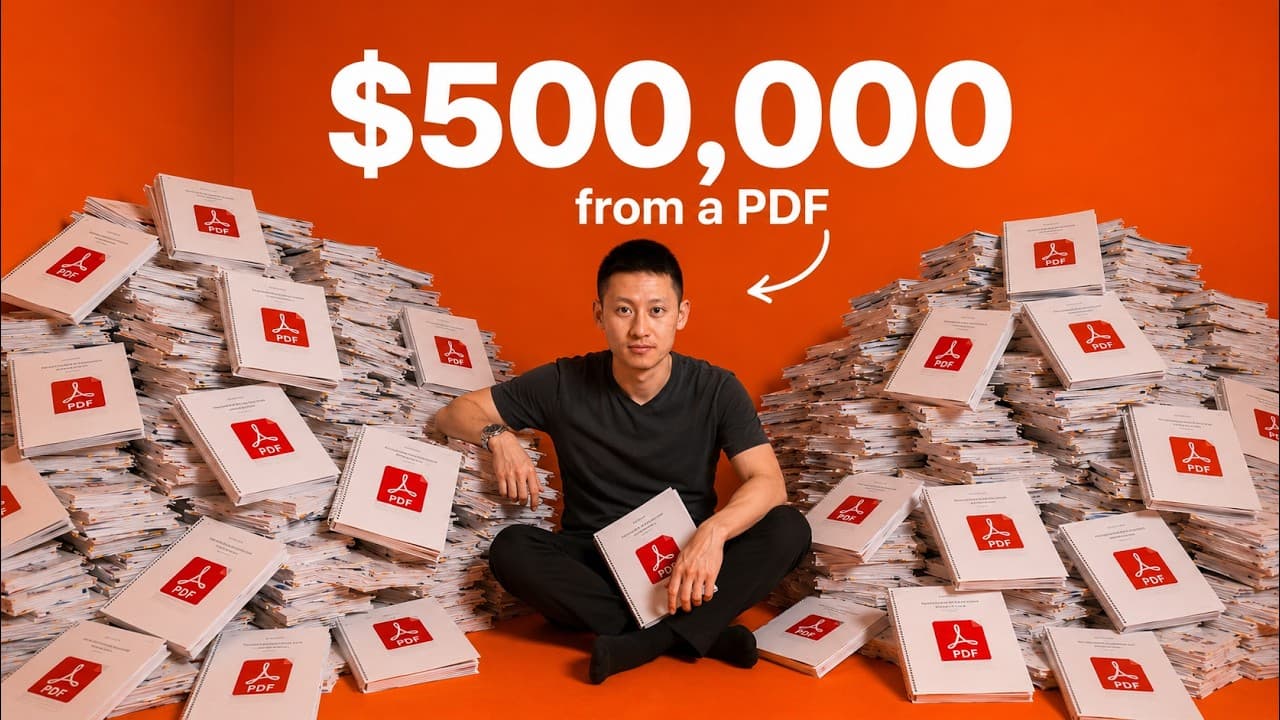
Start by identifying a specific problem that people already pay to solve, validate demand through audience comments and high-performing posts, then create a focused PDF with AI. Price the edited product between $27 and $47, and promote it with short content that directly addresses the same pain point instead of covering a broad niche.
Transcript
Eight years ago, I was folding burritos for minimum wage at a fast food chain, sharing a one-bedroom apartment with four other guys because that's all I could afford, drowning in student debts. [music] Today, I run a digital product business that's made well over $32 million in sales, selling simple PDFs in digital products online. And I did it wit... Read More
Key Insights
- Market-first product development is the central strategy: sellers should investigate what people already search for, discuss, and purchase before deciding what to create. The transcript calls this approach AI product arbitrage because market demand determines the offer while AI accelerates production.
- Evergreen niches are categories where demand continues over time, including productivity, fitness, relationships, money, mental health, careers, side hustles, AI tools, faith, and self-development. The recommended approach is to select one such market and serve customers who are slightly behind the creator.
- Specific pain is more commercially useful than a broad topic. A general guide about getting fit lacks a precise outcome, while solving the need to lose 15 pounds before a wedding in eight weeks gives the buyer a clear problem, deadline, and desired result.
- Audience research is a direct source of product ideas. Comments on leading videos, Reddit discussions, and three-star reviews of existing books can expose recurring frustrations, unanswered questions, and missing information that customers already describe in their own words.
- AI-assisted product creation starts with a detailed prompt containing the intended customer, painful problem, and specific outcome. Claude or ChatGPT can produce a 5-to-10-page first draft, but the creator should revise it, remove generic passages, and add personal examples and original ideas.
- Pricing is presented as a positioning signal as well as a revenue decision. The recommended starting range is $27 to $47 because a $9 price may imply low quality, while $297 is difficult to justify when the seller lacks proof and testimonials.
- Pain-matched content is the proposed traffic strategy. Short, simple videos should discuss the exact issue solved by the PDF, allowing viewers with that problem to recognize themselves and arrive at the product link already aware of their need.
- Validation is required before writing the product. One method analyzes 50 to 100 comments with AI to find repeated pain points and audience wording. Another looks for niche posts receiving at least twice as many views as the publishing account has followers.
Install to Summarize YouTube Videos and Get Transcripts
Explore YouTube Video Summarizer or Get YouTube Transcript Extractor
Questions & Answers
Q: How do you choose a profitable niche for an AI PDF?
Choose a niche by examining markets where people already search for answers and buy products. The transcript identifies productivity, fitness, relationships, money, making money online, mental health, careers, side hustles, AI tools, faith, and self-development as evergreen examples. Search platforms such as Instagram, YouTube, Etsy, or Gumroad, then study visible demand instead of beginning with a personal passion alone.
Q: How do you find a specific problem for a digital product?
Look where the intended audience openly describes its difficulties. Read comments beneath major videos in the niche, examine Reddit threads where people discuss frustrations, and study reviews of books they already purchase. The transcript particularly recommends three-star reviews because customers often explain what was missing. A problem that appears repeatedly can become the focus of the product.
Q: How can AI help create a PDF digital product?
Give Claude or ChatGPT three essential details: the target customer, the painful problem, and the specific result that customer wants. Ask for a step-by-step guide or ebook of 5 to 10 pages. Treat the output as a draft, then add your voice, original ideas, and personal examples while removing generic language before exporting the finished material as a PDF.
Q: How much should a new AI-generated PDF cost?
The transcript recommends pricing an initial PDF between $27 and $47. It argues that a $9 offer may signal low quality, while a $297 price is difficult to support without testimonials or other proof. The suggested middle range is intended to make the purchase approachable for buyers while preserving a meaningful margin on each digital sale.
Q: How do you validate demand before creating a PDF?
Use an AI listening pass by collecting 50 to 100 comments from leading videos in the chosen niche, then ask Claude to identify the most painful recurring problems. The repeated language can inform the title, sales page, and promotional content. The transcript also recommends checking niche accounts for posts whose views reach at least twice the account's follower count.
Q: What content should promote a digital PDF product?
Create short content that addresses precisely the same pain solved by the PDF. For a guide about waking at 5:00 a.m. without feeling exhausted, the promotional posts should focus on that issue rather than productivity or morning routines generally. The transcript suggests simple 7-second videos on Instagram Reels, TikTok, and YouTube Shorts without requiring advanced editing.
Q: Do you need to show your face to sell digital products?
The transcript says sellers can market digital products without appearing on camera. Suggested alternatives include AI avatars, screen recordings, and voice-overs. It gives an example of an AI monk avatar associated with more than $80,000 per month in sales of roughly $50 ebooks, while the human founder reportedly never shows his face online.
Q: Why use a market-first strategy instead of creating from passion?
A market-first strategy begins with evidence that people already search for answers, discuss a recurring problem, and purchase related solutions. The transcript argues that creating a passion-based product first and searching for customers afterward is slower, more expensive, and more likely to fail. Letting observed demand determine the offer reduces the risk of building something nobody wants.
Summary & Key Takeaways
-
The proposed business model reverses the usual creation-first process. Instead of building around a personal interest and later searching for customers, the seller examines evergreen niches, existing purchases, searches, comments, and reviews. The goal is to identify proven demand before investing time in creating a digital product.
-
A viable PDF should solve one specific and urgent problem rather than address a broad topic. The creator recommends analyzing audience language in video comments, Reddit threads, and three-star Amazon reviews. Repeated complaints and unanswered questions reveal both the product opportunity and the wording to use in marketing.
-
After validation, AI can draft a focused 5-to-10-page guide in minutes or hours. The seller should edit generic material, add personal examples and original ideas, create a simple cover in Canva, export the file as a PDF, and attract buyers through short content aligned with the exact problem.
Read in Other Languages (beta)
Share This Summary 📚
Summarize YouTube Videos and Get Video Transcripts with 1-Click
Try YouTube Summary with ChatGPT & Claude or YouTube Transcript Generator
Explore More Summaries from Richard Yu 📚



Summarize YouTube Videos and Get Video Transcripts with 1-Click
Try YouTube Summary with ChatGPT & Claude or YouTube Transcript Generator