How to Build a One-Person AI Product Business
TL;DR
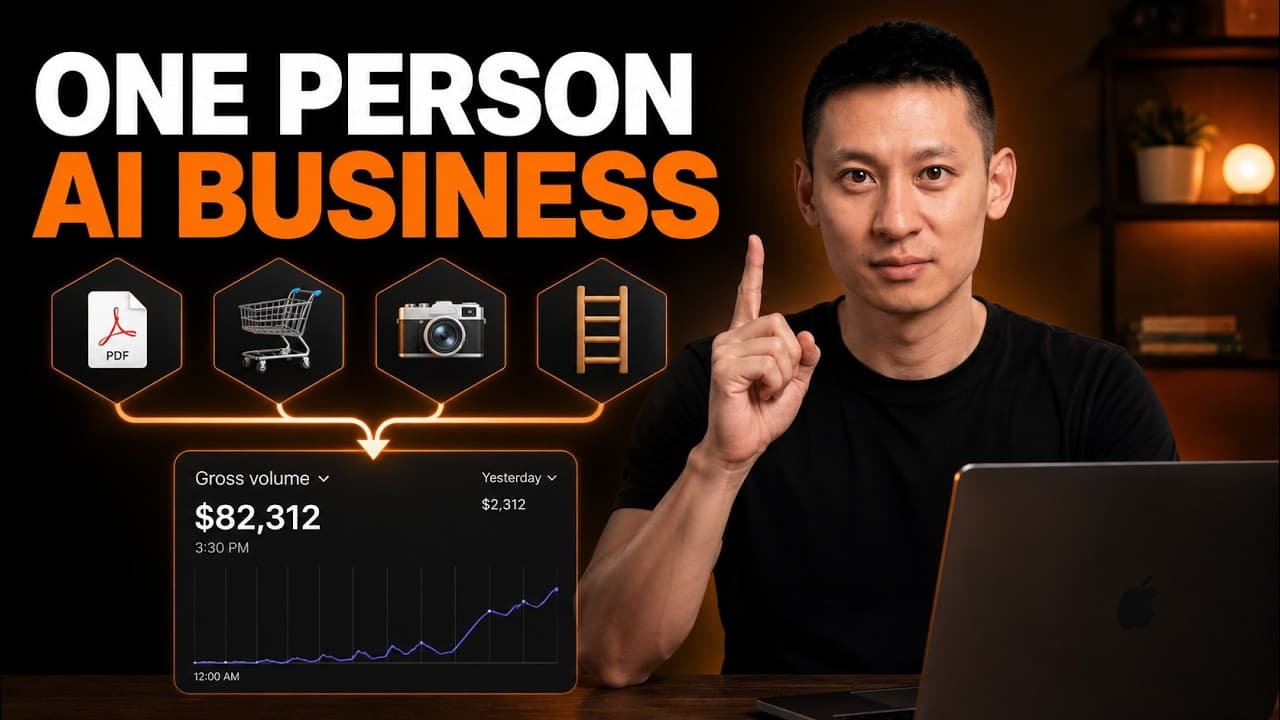
Create one digital product that solves a specific problem, then automate its sale and delivery so the same asset can generate revenue repeatedly. The presenter argues that this model is more accessible to beginners than client services or a full software company because it requires no inventory, avoids client deadlines, and can start with guides, templates, courses, systems, or spreadsheets.
Transcript
This guy made over $80,000 last month running a one-person AI business, [music] and he's literally never shown his face one time. He's never filmed a single video in his life, and he's in his 20s, and he's traveled all around Southeast Asia, and right now he spends couple hours a day of his spare time running this business. $80,000 within a single ... Read More
Key Insights
- A digital product is an electronically delivered asset such as a guide, template, short course, system, or spreadsheet. It requires no physical manufacturing, warehouse, or shipping process, allowing customers to receive the purchase through their email inbox immediately.
- An agency is a service business in which clients pay for skills such as AI automation, chatbots, or websites. It can produce an early sale without an audience or proprietary product, but it also requires prospecting, client communication, delivery work, and continued renewal.
- Agency revenue depends heavily on ongoing labor and client retention. Each signed client introduces another schedule, communication channel, deadline, and opportunity for cancellation, so income can stop when the operator stops delivering work or loses an account.
- A full software company requires more than generating a simple application with a few prompts. The presenter says his own company needed a full year, engineers, extensive capital, and prior business experience, making that path poorly suited to beginners without a team or funding.
- A digital product business works by creating an asset once and selling it repeatedly. Because delivery can be automated and no inventory is required, the presenter reports profit margins around 90% or higher and describes receiving sales while asleep.
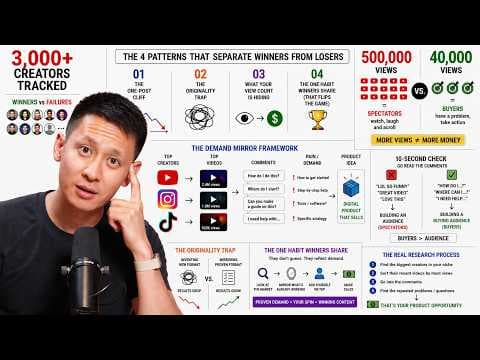
- Market demand can be investigated by examining small Instagram accounts for posts receiving far more views than the account has followers. The presenter interprets this mismatch as a signal that the topic attracts interest beyond the creator’s existing audience.
- A viable beginner product solves one specific problem for one specific person. Narrow positioning gives the creator a clearer subject, customer, and promised outcome than attempting to build a broad product for everyone interested in a large category.
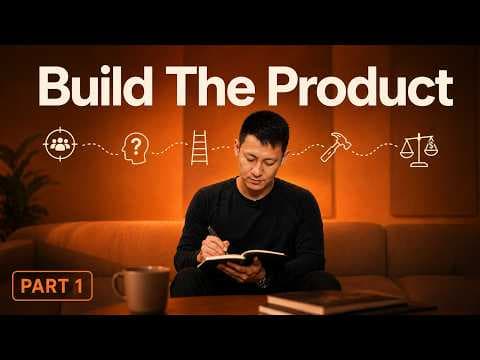
- The presenter identifies product, store, content, and ladder as the four moving parts of the digital product model. The description also warns against continually pursuing new strangers instead of building further offers around people who have already purchased.
Install to Summarize YouTube Videos and Get Transcripts
Explore YouTube Video Summarizer or Get YouTube Transcript Extractor
Questions & Answers
Q: How do you start a one-person AI product business?
Start by identifying a specific problem experienced by a clearly defined person. The presenter recommends searching Instagram within a topic you understand or care about, then finding a post from a small account that has far more views than the account has followers. Use that demonstrated interest to shape a focused guide, template, short course, system, or spreadsheet that can be sold and delivered automatically.
Q: What is a digital product in an AI business?
A digital product is an asset that reaches the buyer electronically instead of being physically shipped. Examples in the transcript include guides, templates, short video courses, systems, and spreadsheets. The creator builds the asset once, places it in an online sales process, and can sell the same product repeatedly without manufacturing goods, maintaining warehouse inventory, or arranging physical delivery.
Q: Why can an AI agency feel like another job?
An AI agency remains dependent on continuing client work. Each client can introduce recurring calls, messages, deadlines, revisions, and expectations, while retaining the ability to end the relationship. The presenter argues that clients effectively become additional bosses because they influence the operator’s schedule and workload. When service delivery stops or a client cancels, the associated income also stops.
Q: Is recurring agency revenue reliably recurring?
The presenter argues that agency retainers are not reliably recurring because each payment depends on the client choosing to renew. He says businesses often hire agencies for limited periods and may terminate them within 3 to 6 months, regardless of longer expectations. Losing an account sends the operator back to prospecting, while the remaining revenue continues to depend on active service delivery.
Q: Should a beginner build a full AI software company?
The presenter does not recommend a full software company as a beginner’s first online business when the person lacks capital and a team. He distinguishes a small AI-generated tool from a sustainable software operation. His own company required a full year, a team of engineers, over a million US dollars in investment, recruitment expenses, and existing business experience before it successfully scaled.
Q: Why are digital products easier to scale than services?
Digital products separate each sale from an equivalent unit of new client labor. Once a guide, template, course, system, or spreadsheet exists, the same asset can be sold repeatedly and delivered automatically. There are no physical goods to manufacture or ship, and buyers do not create the same ongoing schedule of calls and deadlines that service clients typically require.
Q: How can Instagram reveal demand for a digital product?
Search Instagram for a topic that interests you, such as fitness, investing, dating, or productivity. Focus on a relatively small account and look for a post with substantially more views than the account has followers. The presenter treats that unusually strong reach as market feedback, suggesting that the subject attracts broader interest and may contain a problem that existing products have not properly served.
Q: What are the main parts of a digital product business?
The description identifies product, store, content, and ladder as the model’s four moving parts. The product solves the customer’s specific problem, the store supports purchasing and delivery, and content attracts interested people. The ladder builds on existing buyer relationships through further offers, addressing the structural mistake of repeatedly searching for entirely new strangers instead of serving customers who have already purchased.
Summary & Key Takeaways
-
The presenter compares agencies, software companies, and digital product businesses as possible one-person AI models. Agencies can generate sales quickly, but each client adds deadlines, calls, service obligations, and renewal risk. Revenue remains closely tied to the operator’s available working hours and continuing effort.
-
Building a small tool with AI can be useful, but the presenter distinguishes that from operating a full software company. His own software company required a full year, a team of engineers, substantial investment, recruitment costs, and existing business experience before it scaled to significant recurring revenue.
-
The recommended beginner model is a digital product that addresses one narrowly defined problem for a specific audience. The presenter suggests researching small Instagram accounts for unusually popular posts, using that engagement as evidence of demand, and creating a guide, template, course, system, or spreadsheet around the identified need.
Read in Other Languages (beta)
Share This Summary 📚
Summarize YouTube Videos and Get Video Transcripts with 1-Click
Try YouTube Summary with ChatGPT & Claude or YouTube Transcript Generator
Explore More Summaries from Richard Yu 📚


Summarize YouTube Videos and Get Video Transcripts with 1-Click
Try YouTube Summary with ChatGPT & Claude or YouTube Transcript Generator