How to build a digital product ladder that sells
TL;DR
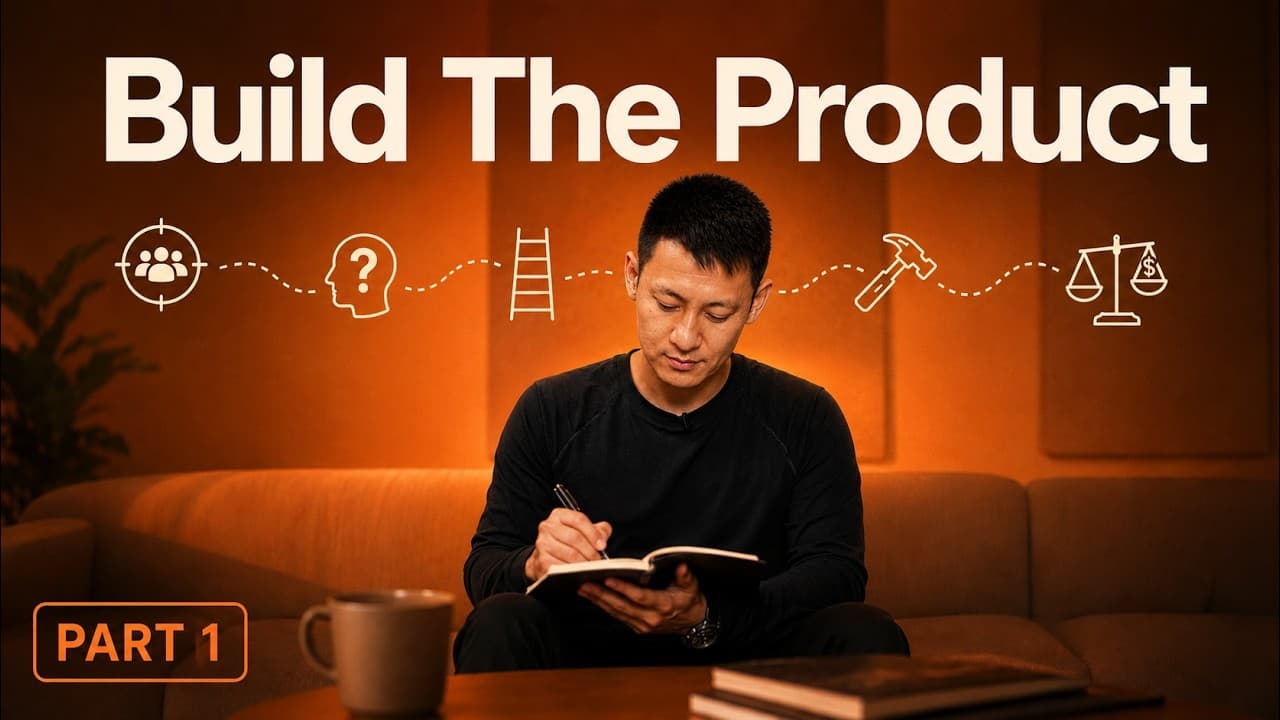
The key is to choose a specific person with a real problem and validate demand before building. Create a three-level product ladder: a $27 info product, a $197 done-with-you option, and a high-ticket offer at $2,000 or more. Use AI to accelerate creation, then refine with your own voice and Canva styling.
Transcript
Over the last few years, I've made over $32 million selling digital products, PDFs, guides, tools, courses, and mentorships. And the single biggest thing that separated the products that sold from the ones that flopped, it's one key decision made before anything else gets built. And it's the decision that almost everyone gets wrong. You see, they r... Read More
Key Insights
- The single decision before building determines whether a product sells or sits.
- Being specific about the customer and their problem is crucial for market fit.
- Confirm the problem is real using AI tools and real discussions before you build.
- A three-level product ladder funds the next level and maximizes revenue.
- Level 1 is a low-ticket information product to convert strangers to buyers.
- Level 2 provides implementation and adds value beyond the first offer.
- Level 3 is a high-ticket offer reserved for proven, trustful customers.
- Apps can create monthly recurring revenue, extending lifetime value of customers.
Install to Summarize YouTube Videos and Get Transcripts
Explore YouTube Video Summarizer or Get YouTube Transcript Extractor
Questions & Answers
Q: What is the one decision that determines if a digital product will sell?
The single decision is identifying a specific person with a real problem and validating that there is demand for a solution before building anything. This focus ensures the product is aimed at a real need, making it much more likely to attract customers and generate sales from the start.
Q: Why should you not worry about being an expert or having an audience?
You do not need expertise or an established audience because the product is based on a problem people already pay to solve, not on your resume. The market is looking for solutions daily, and demand exists even if you are new, as long as you target a concrete problem and person.
Q: How can you confirm there is real demand for a problem before building?
You can confirm demand by researching real discussions online using tools like Claude, Reddit, and Instagram comments to gather authentic pain points from your target audience. If the same issues show up repeatedly, that is your green light that a product addressing them will sell.
Q: What is the purpose of the three-level product ladder?
The ladder funds itself: Level 1 is a low-cost entry product, Level 2 adds implementation and a more hands-on experience, and Level 3 is a high-ticket offer for customers who have already achieved results and trust you. Together, they create a scalable revenue path.
Q: How should information and implementation offers be priced relative to each other?
Information products at the low ticket level are priced around 27 dollars, while the implementation-focused Level 2 is about 197 dollars. The high-ticket Level 3 is priced higher, reflecting the greater value and hands-on support provided, and helping maintain a smooth progression up the ladder.
Q: Why is an app or AI-powered product valuable for recurring revenue?
An app can generate monthly recurring revenue because customers pay ongoing fees for continued access or services. This creates ongoing income from the same customer, unlike a one-time sale from a PDF, which stops after purchase, making the app model more scalable over time.
Q: Can you start with AI to create products and still maintain quality?
Yes, AI can generate initial content and prototypes quickly, such as a complete ebook or app outline, which you then customize with your own voice, examples, and touches in tools like Canva. This approach reduces setup time while preserving authenticity and quality.
Q: What is the recommended starting point for most beginners?
Start with a classic information product like a PDF or guide, which is quick to create and tests the market demand with minimal risk. Use AI to draft the content, then add your voice and polish, before scaling up with a more capable app and a done-for-you offer.
Summary & Key Takeaways
-
A practical framework is presented for starting from zero and turning an idea into a sellable digital product by first identifying a specific customer with a real problem and confirming demand. The approach emphasizes a ladder of products that funds the next step, starting with low-risk information products and moving to higher value offerings.
-
The video demonstrates building three products live: a PDF/info product, an AI-assisted app that generates recurring revenue, and a done-for-you option. It emphasizes that you do not need to be an expert or have an audience, and that demand validation comes before creation.
-
AI is used to generate initial content and app prototypes quickly, while the creator adds personal voice and polish in Canva, showing that high-quality results can be achieved with minimal prior writing or coding experience.
Read in Other Languages (beta)
Share This Summary 📚
Summarize YouTube Videos and Get Video Transcripts with 1-Click
Try YouTube Summary with ChatGPT & Claude or YouTube Transcript Generator
Explore More Summaries from Richard Yu 📚



Summarize YouTube Videos and Get Video Transcripts with 1-Click
Try YouTube Summary with ChatGPT & Claude or YouTube Transcript Generator