Why Digital Products Beat AI Agencies and SaaS

TL;DR
Selling digital products in the online education market is presented as the highest-leverage online business because you build the product once and sell it endlessly with no inventory, shipping, or cost of goods. Unlike AI agencies or SaaS, it needs no sales calls or client management, and AI now handles most of the content, marketing, and product creation.
Transcript
In 2026, the AI automation industry is at 11 billion. The AI SAS market is about 115 billion. But there's a $300 billion industry that is currently being disrupted by AI right now that no one's talking about yet, the online education industry. But here's the craziest part. While thousands of businesses are fighting [music] over the small scraps in ... Read More
Key Insights
- Online education is described as a massive, largely overlooked market that AI is now disrupting, far bigger than the AI automation or AI SaaS spaces that most entrepreneurs are competing in.
- A digital product is built one time and can be sold an unlimited number of times, with no shipping, no cost of goods, and instant delivery to a buyer's email inbox, making it infinitely scalable.
- Physical products require upfront money for manufacturing and inventory with no guarantee of sales, while a digital product avoids that risk because it is created once using AI and simply redistributed.
- AI agencies are rejected because they require constant sales calls to close clients and ongoing weekly deliverables, effectively turning every client into a new boss and leading founders to burn out.
- AI SaaS is discouraged because the odds of ever selling the company are extremely low and it typically demands raising large amounts of money and years of work, sacrificing lifestyle and freedom.
- Digital education products win because the product teaches itself, so there are no clients to manage and no sales calls, with AI-built websites, marketing, and content doing the selling.
- Successful products come from ordinary people who found a problem they personally had, packaged a solution, and sold it, covering topics like gaming, social media, and spreadsheets rather than genius ideas.
- The quality of AI-generated output depends heavily on prompt specificity, so vague prompts give weak results while highly targeted prompts that define a precise audience avatar produce far better material.
Install to Summarize YouTube Videos and Get Transcripts
Explore YouTube Video Summarizer or Get YouTube Transcript Extractor
Questions & Answers
Q: What is a digital product and why is it so profitable?
A digital product is something you build one time and can sell an unlimited number of times, such as a PDF, a video module, or a recorded lesson. Unlike physical goods, there is no shipping, no cost of goods, and no manufacturing or inventory to buy upfront. Once packaged, the same product is instantly delivered to a buyer's email inbox, whether ten people or a million people purchase it, which makes the margins extremely high and the model infinitely scalable.
Q: Why is online education described as a bigger opportunity than AI agencies or SaaS?
The video argues that while most entrepreneurs fight over the smaller AI automation and AI SaaS spaces, the online education industry is a far larger market that AI is only now disrupting. Demand for learning skills online has exploded across countless categories, and the infrastructure to build the business finally exists cheaply. This means creators can enter the biggest market with the hungriest buyers instead of competing for small scraps in crowded, smaller niches.
Q: Why does the speaker recommend against starting an AI agency?
AI agencies are discouraged because they require constant sales calls, meaning long Zoom calls to convince business owners to pay high monthly fees. Once clients sign, they expect weekly deliverables, Loom videos, and ongoing updates, so every client effectively becomes a new boss. Clients may text on weekends and drop you for a single missed deadline, so you get fired slowly. The speaker says all of his agency friends eventually burn out and grow tired of running that kind of business.
Q: Why does the speaker advise against building an AI SaaS company?
Software as a service is discouraged because the chance of ever selling the company is described as extremely small. Even though software can command a high multiple on a sale, most SaaS founders must raise large amounts of money and work for many years to build a company worth acquiring, and only a tiny fraction ever sell. The speaker values lifestyle, freedom, and the ability to travel, and argues that building a software company is unlikely to deliver that.
Q: How can someone sell in this market without creating their own product?
The video teases a technique, revealed later in the presentation, that lets people participate in the digital product business without building their own product from scratch. The description refers to this as AI product arbitrage, a way for creators to tap into the education market without making anything themselves. The transcript stops before fully explaining the mechanics, but it is positioned as a method to sell existing products rather than developing an original one.
Q: What kinds of digital products actually sell?
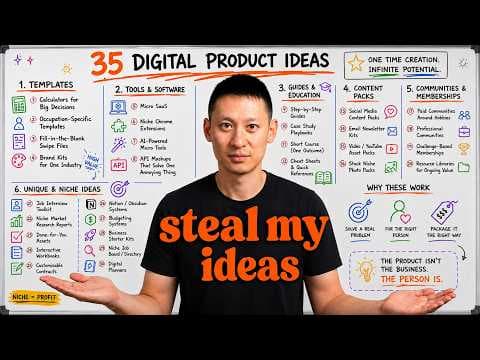
The examples given show that simple, problem-solving products succeed across many niches. One client sold a guide on how to play a video game better, another sold a beginner how-to guide on getting started with an Instagram account without showing her face, and one person taught people how to use spreadsheets. None of the creators were geniuses; they simply found a problem they personally had, packaged a solution, and sold it, which is why the products found buyers.
Q: What tools do you need to start a digital product business?
The speaker says everything required is either very cheap or basically free, so you do not need large capital or a production team. The essentials are a laptop, a phone, and a Wi-Fi connection. Supporting infrastructure now exists in the form of payment processing to take payments, course platforms to host products, and AI tools that build the website for you, along with AI assistants like ChatGPT or Claude to create the content and product.
Q: How do you get better results when using AI to build a product?
The quality of AI output depends heavily on how specific your prompt is. A vague prompt, such as asking for a script on a digital product to lose weight, lacks a defined audience avatar and produces weak results. Instead, you should be hyper-targeted with detail, specifying exactly who the product is for, such as a guide written for a particular age group and life situation. The more precise the details you provide, the higher the quality of the response.
Summary & Key Takeaways
-
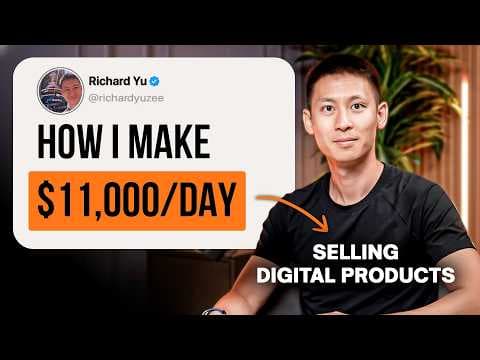
Richard argues that the online education industry is being disrupted by AI and represents a bigger, less crowded opportunity than AI automation or SaaS, where most people are fighting over smaller markets while the hungriest buyers sit in education.
-
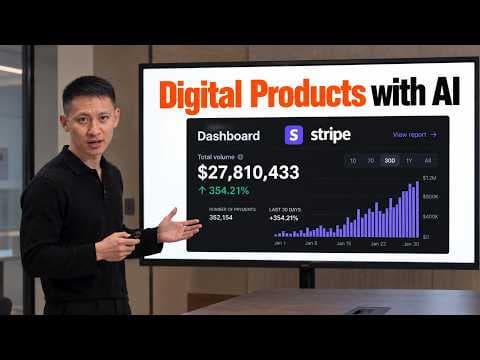
Digital products are framed as the ideal business: built once, sold infinitely, with no inventory, shipping, or cost of goods. AI tools now handle content creation, editing, copywriting, and product building, so a single person with a laptop and Wi-Fi can run it.
-
Comparing options, he dismisses AI agencies for their endless sales calls and demanding clients, and SaaS for its low odds of success. Digital education products need no client management or calls, and prompt specificity is key to getting quality AI output.
Read in Other Languages (beta)
Share This Summary 📚
Summarize YouTube Videos and Get Video Transcripts with 1-Click
Try YouTube Summary with ChatGPT & Claude or YouTube Transcript Generator
Explore More Summaries from Richard Yu 📚



Summarize YouTube Videos and Get Video Transcripts with 1-Click
Try YouTube Summary with ChatGPT & Claude or YouTube Transcript Generator