AI Fund GP Andrew Ng: How Are LLMs Becoming Geopolitical Weapons, and Do AI Margins Still Matter?
TL;DR
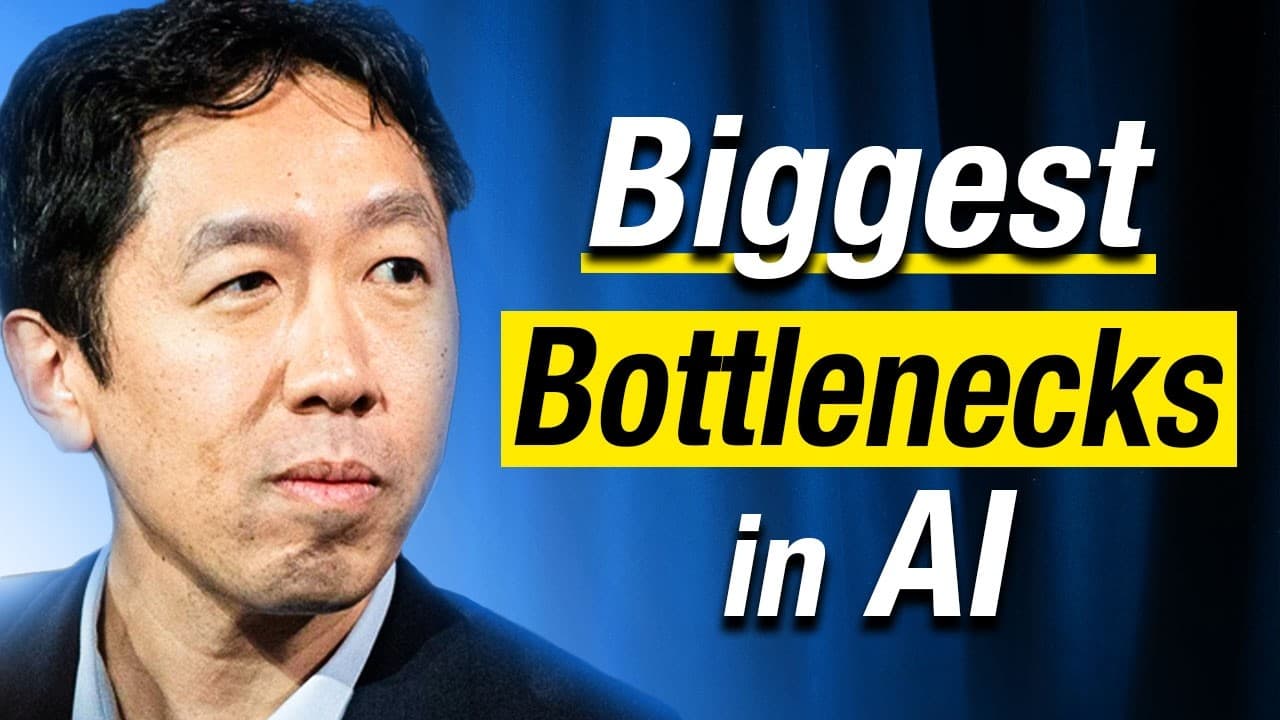
Andrew Ng argues that open-weight LLMs can become geopolitical tools by circulating knowledge, shaping narratives, and extending the originating country’s influence, while margins still matter but may improve as token costs fall. He identifies electricity and semiconductors as the two biggest short-term AI bottlenecks and sees AI-assisted coding as a valuable vertical application. Read on for his views on infrastructure, defensibility, investment, labor, and education.
Transcript
In my career working in AI, I have yet to meet a single person that ever felt like they had enough compute. I could not ask for a better guest, Andrew Angie, globally recognized leader in AI. Data centers are the critical infrastructure for building the digital economy. I think that open way models is a tremendous source of geopolitical influence. ... Read More
Key Insights
- Data centers are crucial infrastructure for the digital economy, similar to roads and railways for past generations.
- Electricity and semiconductors are significant bottlenecks in AI development, particularly in the US compared to China's rapid infrastructure expansion.
- AI's demand for compute resources remains insatiable, despite improvements in token generation efficiency.
- Horizontal information discovery is dominated by players like ChatGPT, but there's significant potential in vertical AI applications such as coding assistance.
- AI coding assistants have matured significantly and are now critical tools for developers, enhancing productivity and efficiency.
- The US government's regulatory approach has both helped and hindered AI progress, with a need to balance regulation with investment in talent and scientific research.
- Open-source AI models contribute to faster knowledge circulation and innovation, with China taking a lead in releasing open-weight models.
- AI's potential to democratize intelligence could lead to significant GDP growth, empowering individuals with access to affordable, high-quality knowledge and services.
Install to Summarize YouTube Videos and Get Transcripts
Explore YouTube Video Summarizer or Get YouTube Transcript Extractor
Questions & Answers
Q: How can LLMs become geopolitical tools?
Andrew Ng calls open-weight models a tremendous source of geopolitical influence because they accelerate knowledge circulation and innovation. China’s release of open-weight models can extend its influence while shaping narratives on politically sensitive subjects and reinforcing national values.
Q: What are the biggest bottlenecks in AI development?
Ng identifies electricity and semiconductors as the two biggest short-term bottlenecks. US data centers face permitting and community-support constraints, while China is building power plants, including nuclear facilities; AI also needs more data and better algorithms.
Q: Why does AI still need more compute as token generation becomes cheaper?
Ng says he has not met an AI practitioner who felt they had enough compute during roughly 20 years of this constraint. Although token generation is becoming more efficient and cheaper, demand remains insatiable because valuable workloads such as AI-assisted coding encourage users to generate more tokens.
Q: Why is AI-assisted coding an important vertical application?
AI-assisted coding already makes developers more productive and efficient, creating demand that Ng describes as through the roof. He uses coding assistants daily and sees their progress as a possible preview of what AI marketing, recruiting, and finance tools may do for other job functions.
Q: Do margins still matter in AI?
Margins matter, but companies may initially prioritize creating products users love over immediate profitability. Falling token prices and future technical improvements can reduce costs, so evaluating AI margins requires balancing present expenses against potential future efficiency.
Q: Is defensibility dead in AI?
Defensibility is changing because software alone is becoming a weaker moat amid rapid advances and easier replication. Brand reputation, two-sided marketplaces, and industry-specific advantages can still provide protection, so defensibility should be assessed at the industry level rather than solely through the technology.
Q: Is AI currently in a bubble?
The existing demand for data centers, electricity, semiconductors, and AI applications shows that substantial investment has a practical basis. The uncertainty is whether infrastructure investment is calibrated correctly, while the application layer already demonstrates clearer returns.
Q: What does Andrew Ng advise educational institutions to teach about AI?
Ng advises educational institutions to embrace AI, update their curricula, and teach students as much AI as possible. He particularly emphasizes coding because knowing how to instruct computers will help prepare students for jobs in which AI assists and expands their capabilities.
Summary & Key Takeaways
-
Andrew Ng highlights data centers as critical infrastructure akin to roads for the digital economy, with electricity and semiconductors as current bottlenecks. He contrasts the US's regulatory challenges with China's rapid infrastructure expansion and emphasizes the need for more data and efficient algorithms.
-
The insatiable demand for compute in AI persists, even as token generation becomes more efficient. Ng discusses the dominance of ChatGPT in horizontal information discovery and the growing importance of vertical AI applications like coding assistance, which have significantly matured and enhanced developer productivity.
-
Ng critiques the US regulatory landscape, advocating for investment in talent and scientific research. He praises open-source AI models for fostering innovation and notes China's leadership in this area. Ng envisions AI democratizing intelligence, potentially boosting GDP growth by empowering individuals with affordable access to high-quality knowledge.
Read in Other Languages (beta)
Share This Summary 📚
Summarize YouTube Videos and Get Video Transcripts with 1-Click
Try YouTube Summary with ChatGPT & Claude or YouTube Transcript Generator
Explore More Summaries from 20VC with Harry Stebbings 📚




Summarize YouTube Videos and Get Video Transcripts with 1-Click
Try YouTube Summary with ChatGPT & Claude or YouTube Transcript Generator