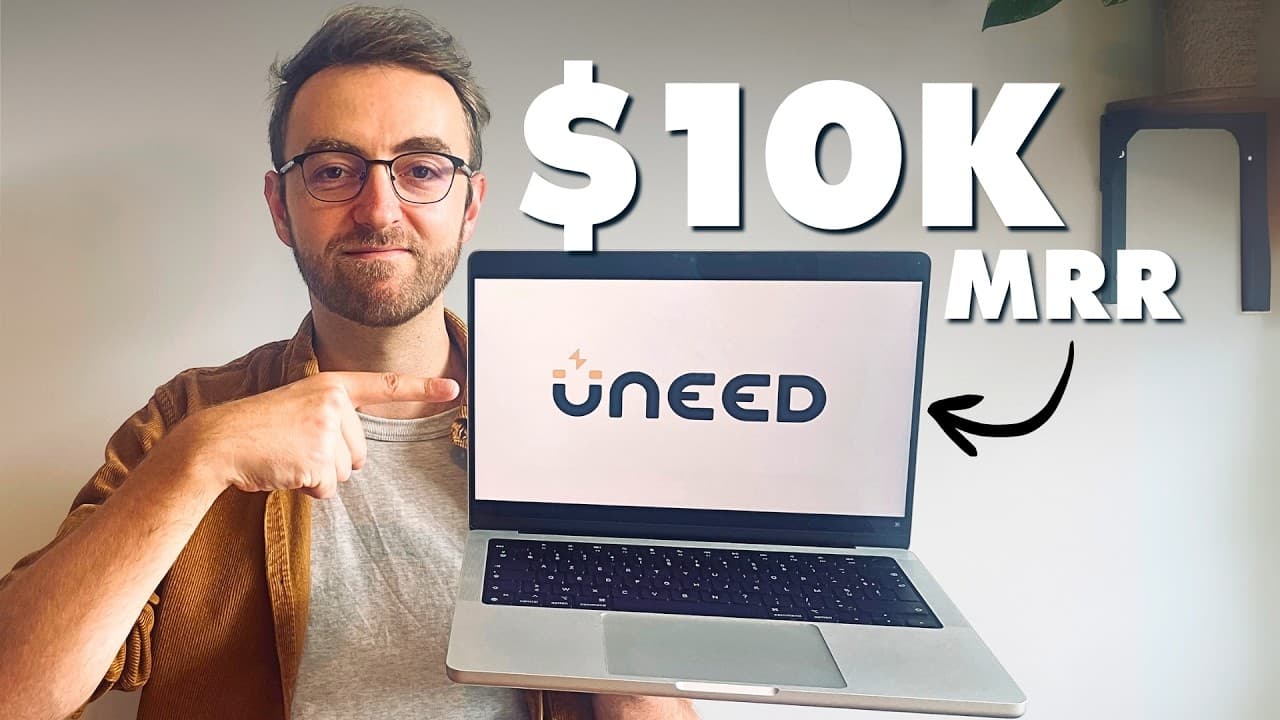
How to turn 30 failures into a $10K/mo SaaS
TL;DR
The key is to stay patient and iterate with a clear market and momentum. The idea must be sellable, with competitors showing market exists, and timing can unlock growth. Unid grew after pivoting from a directory to a launch platform and leveraging consistent public updates and marketing. Revenue fluctuates but sits around $8K-$10K monthly with strong user and traffic growth.
Transcript
We get the same complaints on every YouTube video. You just talk about successful ideas, but what about the failures? I hear you and I get it. So, today we're doing something a little different. Today, we're talking to Thomas, a guy who's failed with over 30 ideas. I failed way more often than I ever succeeded. After failing with over 30 ideas over... Read More
Key Insights
- The first reason projects fail is giving up too early, as initial registrations or sales may be absent and patience is required to iterate and learn from mistakes.
- A second insight is that unclear purpose kills conversions; headlines must convey exact value so visitors understand the product immediately.
- Momentum loss is a common failure mode; maintaining activity and building in public creates ongoing awareness and recognition over time.
- The phrase build it and they will come is incorrect; without marketing and visibility, even great features won’t attract users.
- Timing matters; a project may succeed later even if it fails at a different time, so consistency and persistence are crucial.
- A good idea is defined by how well you can sell it, which may depend on market knowledge, distribution channels, or marketing ideas.
- Competitors are a signal of market viability; having competitors implies there is demand to serve and validates market existence.
- Unid’s success came after pivoting from a directory to a launch platform, showing how a strategic change can unlock growth and revenue.
- The numbers behind Unid show oscillating monthly revenue around eight to ten thousand dollars with growing user base and traffic, indicating measurable traction despite fluctuations and emphasize the impact of marketing-driven results.
- More videos from this channel:
- More from this channel: Starter Story
Install to Summarize YouTube Videos and Get Transcripts
Explore YouTube Video Summarizer or Get YouTube Transcript Extractor
Questions & Answers
Q: How to evaluate if a new idea is worth pursuing for a SaaS business
To evaluate a SaaS idea, assess whether you know how to sell it and can reach your target audience. A good idea typically has a market where competitors exist, confirming demand. You should have a distribution or marketing plan to drive visibility and conversions. If you lack a clear sales path, the idea risks underperforming.
Q: What role does momentum play in launching a product
Momentum matters because consistent updates and public visibility help people remember your product. A loss of momentum makes it harder to regain attention and can stall growth. Building in public and regularly talking about your product creates familiarity, trust, and ongoing interest that sustains user acquisition over time.
Q: Why is timing important in product launches
Timing matters because market dynamics and conversations can create a favorable environment for adoption. Even strong ideas can fail if launched at the wrong moment, whereas the right timing amplifies interest and momentum. The key is to monitor industry chatter and align a release with that momentum.
Q: What is the impact of pivoting a product strategy
Pivoting can recover and unlock revenue when the initial concept does not perform. A pivot to a more viable model, like Unid shifting from a directory to a launch platform, can align the product with audience needs and distribution channels, resulting in sustainable growth and a clearer value proposition.
Q: How did Thomas measure Unid’s performance
Thomas tracked several metrics, including monthly revenue, user count, and traffic. He noted revenue fluctuating between eight and ten thousand dollars per month, with tens of thousands of visitors and thousands of paying customers or premium placements. These indicators helped validate market traction and areas to optimize.
Q: What makes an idea bad despite being technically interesting
An idea is bad if you cannot articulate how to sell it, or if you do not know your market. Even novel concepts fail when there is no clear demand or distribution plan. Without customers or a strategy to reach them, features do not translate into revenue.
Q: What practical advice supports long term sustainability
Find a sustainable work rhythm that fits your personality and life, such as balancing time for exercise and social interaction with focused work. You do not need to code in isolation for months; a sane schedule with regular breaks supports creativity and reduces burnout, sustaining long term project development.
Q: What is the lesson about competition in markets
Having competitors indicates there is a market with potential demand. It is not a signal of failure but a confirmation that others are serving customers. Competitive presence helps define value, refine positioning, and validate that your product solves actual problems for a defined audience.
Summary & Key Takeaways
-
This case study follows Thomas who failed over 30 times before finding a successful SaaS model called Unid. It emphasizes the importance of market existence, know how to sell, and the power of momentum through building in public. Timing and pivoting can convert early losses into later gains, illustrating a practical path for indie hackers.
-
Key lessons include the need for a sustainable work rhythm, understanding the market you serve, and using marketing and distribution to drive growth. The conversation highlights how failures inform a better product strategy, and why timing matters when launching a new feature or platform in tech.
-
The video provides concrete examples of numbers and strategies, showing how a pivot, consistent updates, and a clear value proposition can convert multiple failed attempts into a revenue generating business with real traction.
Read in Other Languages (beta)
Share This Summary 📚
Summarize YouTube Videos and Get Video Transcripts with 1-Click
Try YouTube Summary with ChatGPT & Claude or YouTube Transcript Generator
Explore More Summaries from Starter Story 📚




Summarize YouTube Videos and Get Video Transcripts with 1-Click
Try YouTube Summary with ChatGPT & Claude or YouTube Transcript Generator