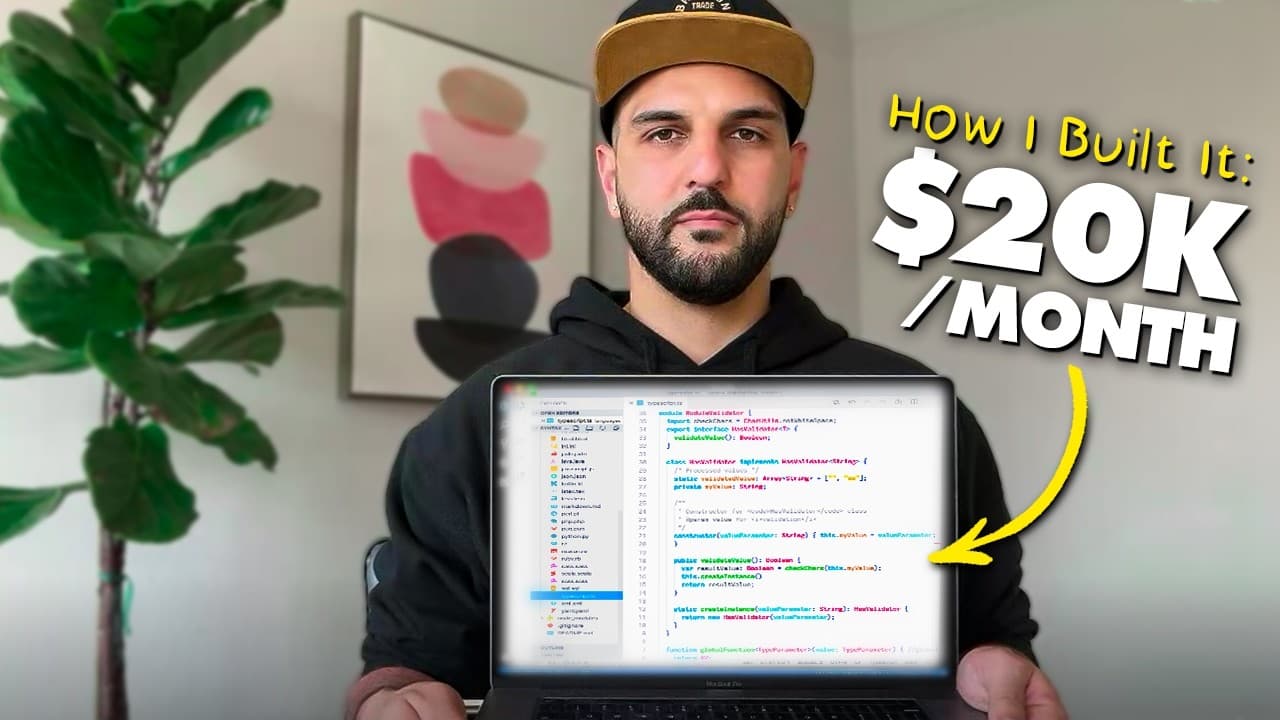
How to build a Chrome extension earning $20K per month
TL;DR
The key is to launch a simple extension quickly and grow organically through user feedback. Start with free features to build a user base, then monetize via a newsletter sponsorship and later add paid features. Focus on solving real needs in a marketplace or platform with room to grow.
Transcript
learned how to build an extension and launched my first extension within like two or three days and today it's at about like 20 to $330,000 Mr how does one guy make over $20,000 a month with a simple browser extension well it's because he's building in the hottest niche in business right now ai s aadi started his journey as an employee working for ... Read More
Key Insights
- The extension reached about 150,000 weekly active users, showing that a lightweight, well targeted product can gain significant traction.
- Building for an existing marketplace helps validate the idea quickly and reduces competition while leveraging a built in user base.
- Starting with a free feature set allows rapid growth and testing of product-market fit before monetization.
- Monetization can begin with a newsletter sponsorship which requires less initial effort than implementing paid features directly in the extension.
- Word of mouth and organic mentions on Reddit and social platforms played a major role in growth without paid ads.
- Listening to users in communities and direct feedback is a powerful method to discover valuable feature requests and validate ideas.
- A simple tech stack (JavaScript, HTML, CSS, AWS) and starting with a minimally viable product accelerates time to launch.
- If the main product stalls due to platform policy or competition, diversification to other marketplaces or platforms can preserve revenue streams.
- More videos from this channel:
- More from this channel: Starter Story
Install to Summarize YouTube Videos and Get Transcripts
Explore YouTube Video Summarizer or Get YouTube Transcript Extractor
Questions & Answers
Q: How can a solo developer validate a marketplace idea quickly
Validation can be done by building a simple extension that runs in the user’s browser and testing it with a small set of features. Focus on a specific platform with a manageable audience and observe user engagement, feedback, and retention. This approach helps determine whether to invest further without building a full backend first.
Q: What was the initial monetization path for the project
The creator offered the extension for free for the first nine months to grow the user base. After establishing a large audience, they started a newsletter and sought sponsors. This sponsorship model provided early revenue while continuing to develop features and refine the product, demonstrating a staged monetization strategy.
Q: How did word of mouth drive growth without advertising
Growth occurred organically as users shared and discussed the extension in communities and on social platforms. Positive reviews and rankings in relevant lists, such as top chat GPT extensions, amplified exposure. The strategy relied on delivering value first, which motivated users to promote the tool to others.
Q: Why is building for a marketplace advantageous over a standalone SAS
Marketplaces reduce competition because there are fewer players and provide built in distribution channels. They also help with validation since users are already browsing those platforms for tools. This setup lowers customer acquisition costs and speeds up the feedback loop for product iteration.
Q: What features helped with initial user engagement
Early features should solve real problems and be easy to understand and implement. The founder built the extension quickly with basic features and refined them based on user needs gathered from communities and conversations. This approach keeps development lean while maximizing user satisfaction.
Q: What role did communities play in idea generation
Communities such as subreddits, Discord channels, and groups were used to observe what users want and to identify missing features. Asking questions, noting pain points, and building features to address those requests created a direct feedback loop that informed the product roadmap and increased relevance.
Q: What tech stack was used to build the extension
The core was built with pure JavaScript, HTML, and CSS, without frameworks. The developer used AWS for back end services and maintained the project through a lightweight, fast iteration cycle. This simple stack allowed rapid development, deployment, and maintenance.
Q: What should a new creator consider if platform dynamics change
If the platform policy or market conditions change, be prepared to pivot quickly by targeting other platforms or marketplaces with similar needs. Diversification reduces risk and maintains revenue streams. The key is to keep building and experimenting with new ideas while preserving core competencies.
Summary & Key Takeaways
-
A simple Chrome extension can reach a large audience and generate steady revenue through phased monetization and organic growth.
-
Early community feedback and posting in relevant forums can accelerate user adoption without paid advertising.
-
Monetization can start with a newsletter sponsorship before charging for premium features within the extension.
Read in Other Languages (beta)
Share This Summary 📚
Summarize YouTube Videos and Get Video Transcripts with 1-Click
Try YouTube Summary with ChatGPT & Claude or YouTube Transcript Generator
Explore More Summaries from Starter Story 📚






Summarize YouTube Videos and Get Video Transcripts with 1-Click
Try YouTube Summary with ChatGPT & Claude or YouTube Transcript Generator