How to Make Money With AI as a Complete Beginner
TL;DR
Start by using AI for tasks you already care about, then improve its output through questions, feedback, and examples. For income, focus on consistent content, a personal brand, and practical solutions rather than waiting for advanced technical expertise. Sabrina Ramonov’s experience suggests that a solo AI business can grow from sustained audience engagement and accessible education.
Transcript
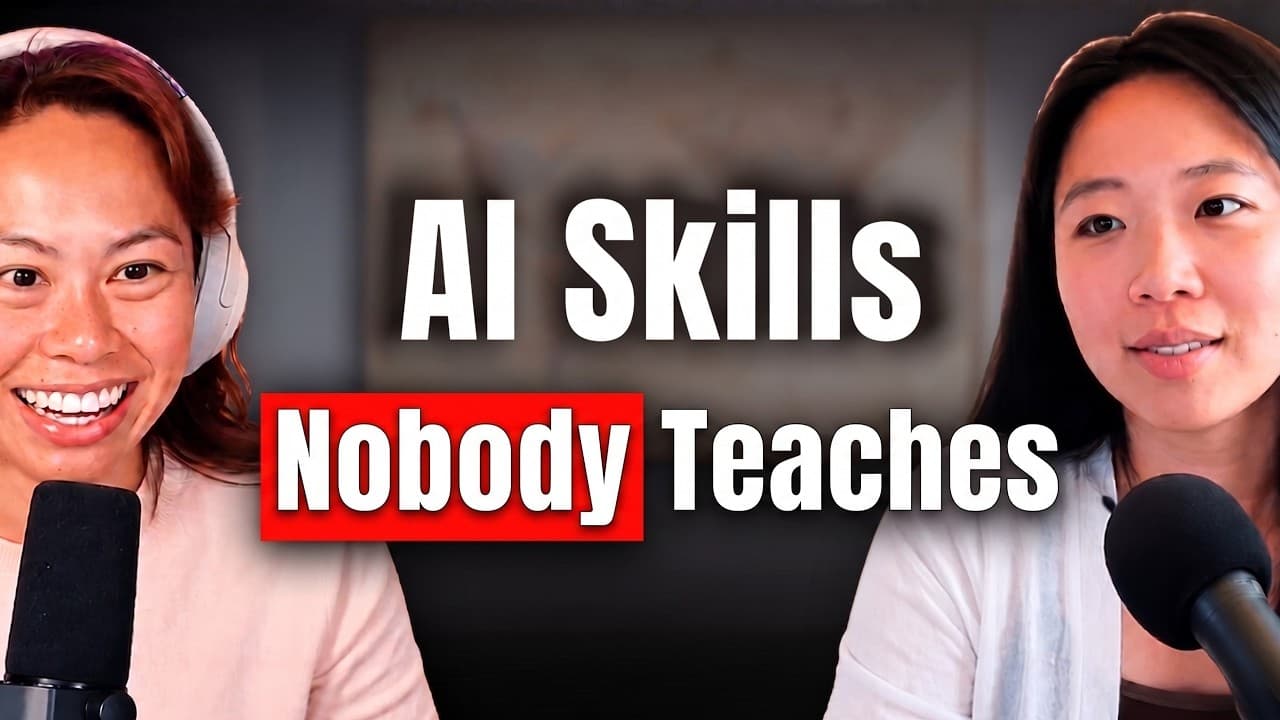
So I raised a couple million dollars for that as the CEO >> and you sold it to millions. >> The startup was 7 years, 6 years and 364 days felt like failure. We hired machine learning PhDs to build separate models. Our entire 20s we were just broke. One YouTube in the morning repurposed into a newsletter then I have lunch and then 20 Tik Toks. >> Ho... Read More
Key Insights
- AI learning is most approachable when beginners apply it to interests or problems they already understand. Ramonov suggests starting with an ordinary use case, such as identifying a plant from a photograph, rather than treating AI education as a demanding technical curriculum.
- Generative AI responds to correction and additional direction in ways that older consumer technology often does not. Users can challenge an uncertain answer, explain what they dislike, provide a preferred example, and continue the conversation until the output better matches their expectations.
- A collaborative mindset is central to productive AI use. Ramonov advises treating tools such as ChatGPT or Claude as partners that can receive questions and feedback, rather than regarding them as all-knowing sources whose first answers must be accepted without discussion.
- Modern AI consolidates tasks that previously required separate models and specialized teams. Ramonov’s earlier startup hired machine learning PhDs and gathered labeled data for sentiment analysis, question identification, transcription, and summarization, while current tools can perform those tasks together with higher-quality results.
- Consistent publishing helped Ramonov establish a personal brand before launching her current startup. The conversation connects that existing audience to her ability to distribute content widely, repurposing one morning YouTube production into a newsletter and numerous short-form videos.
- Free education can function as both public access and audience development. Ramonov says Silicon Valley mentors freely shared knowledge with her when she was young, so she now offers similar access while helping people explore AI, new income streams, and alternative career paths.
- Audience feedback can reshape an educator’s market focus. Ramonov initially created technical material about agents and automations, but interactions with curious people who found those terms confusing led her to broaden her teaching for complete beginners.
- A solo AI business can benefit from combining software, content, and distribution. The description states that Ramonov built Blotato without employees and grew to three million followers, while the conversation emphasizes that her current startup is easier, more enjoyable, and more profitable than her first company.
- More videos from this channel:
- More from this channel: Sandy Lee AI
Install to Summarize YouTube Videos and Get Transcripts
Explore YouTube Video Summarizer or Get YouTube Transcript Extractor
Questions & Answers
Q: How should a complete beginner start learning AI?
A complete beginner should use an AI tool for a familiar task or personal interest instead of beginning under intense pressure. Ramonov gives plant identification during a hike as one example: take a photograph, ask the tool what the plant might be, and then question its answer. This process teaches the essential habit of interacting, correcting, and refining rather than accepting the first response.
Q: How can feedback improve answers from ChatGPT or Claude?
Feedback gives the AI more information about what the user actually wants. If an answer seems wrong, ask follow-up questions or explain the specific problem. If a social media post has the wrong style, describe what is unsuitable and provide an example of a preferred result. Ramonov says this iterative exchange can improve the output and help the system learn the user’s preferences over time.
Q: Why should users treat AI as a collaborative partner?
AI can respond to questions, corrections, examples, and changing instructions during an interaction. That differs from older technology described in the conversation, which may simply repeat an incorrect response or remain broken. Treating AI as a collaborative partner encourages users to test its work and guide it toward a solution, instead of fearing it or assuming its first answer is authoritative.
Q: What AI tasks once required specialized machine learning teams?
Ramonov’s first company hired machine learning PhDs to create separate systems for tasks including speech transcription, sentiment analysis, question identification, conversation summarization, and the detection of objections or frustrations. Each task could require gathering data, labeling it, and training a dedicated algorithm. She contrasts that process with current generative AI tools, which can perform several of those functions from a meeting or conversation.
Q: How did Sabrina Ramonov build an audience for her AI business?
Ramonov built a personal brand before launching her current startup and developed a routine centered on consistent content. The conversation mentions producing one YouTube item in the morning, turning it into a newsletter, and then creating twenty TikToks. The description also states that she grew to three million followers, showing how repeated publishing and content repurposing supported substantial distribution for her solo business.
Q: Why does Sabrina Ramonov teach AI concepts for free?
Ramonov connects free teaching to the pay-it-forward culture she experienced in Silicon Valley. Mentors shared knowledge and created opportunities for her when she was young and had not yet accomplished much. She wants other people to receive comparable educational access, understand AI possibilities, and avoid being left behind, rather than limiting useful instruction to expensive courses, consulting arrangements, or masterminds.
Q: Can someone make money with AI without a technical background?
The conversation presents a path based on learning practical AI use, building a personal brand, publishing consistently, and solving audience problems, rather than requiring advanced technical credentials at the outset. Ramonov expanded her education beyond technical agents and automations after meeting beginners interested in income and career opportunities. The description says her current company, Blotato, was built solo without employees and became a million-dollar AI business.
Q: What changed between Ramonov’s first and current AI startups?
Her first startup took nearly seven years and depended on difficult speech recognition and natural language processing work, specialized machine learning experts, labeled data, and separate task-specific models. She describes most of that period as feeling like failure and says she and her team were broke throughout their twenties. Her current startup benefits from an established personal brand and accessible AI tools, and she calls it easier, more enjoyable, and more profitable.
Summary & Key Takeaways
-
Sabrina Ramonov began studying AI at UC Berkeley in 2011, later co-founded a company focused on speech recognition and natural language processing, and spent nearly seven years building it. That startup used specialized machine learning models to transcribe conversations, detect objections and frustrations, identify questions, and recommend useful responses.
-
Modern generative AI makes capabilities available to ordinary users that previously required machine learning PhDs, separately labeled datasets, and task-specific algorithms. Ramonov recommends beginning with personally relevant uses, asking follow-up questions, correcting weak answers, and supplying examples so the system can adapt its responses to the user’s needs and preferences.
-
Ramonov’s current approach combines free AI education, consistent content creation, and a solo software business. According to the description, she built Blotato without employees while growing an audience of three million followers. Her broader message is that beginners can pursue AI opportunities without a technical background, large team, or high-pressure learning process.
Read in Other Languages (beta)
Share This Summary 📚
Summarize YouTube Videos and Get Video Transcripts with 1-Click
Try YouTube Summary with ChatGPT & Claude or YouTube Transcript Generator
Explore More Summaries from Sandy Lee AI 📚





Summarize YouTube Videos and Get Video Transcripts with 1-Click
Try YouTube Summary with ChatGPT & Claude or YouTube Transcript Generator